




























With only 620,000 inhabitants, Montenegro is positioning itself as a luxury destination compared to Spain and Croatia. The government is committed to a quality model that already attracts 2.5 million visitors a year.
Montenegro (literally, Black Mountain) is starting to make a big splash in the European tourism sector. With just over 620,000 inhabitants, this small country, which can be reached by car in two hours from one end to the other, is opting for a tourism development model based on quality rather than quantity.
 ADVERTISEMENT
ADVERTISEMENT
ADVERTISEMENT
"We want to position ourselves as a quality tourist destination, with high quality services and accommodation," explains Montenegro's Minister of Tourism, Simonida Kordić, in an interview with Euronews. "Montenegro has virtually untouched nature, which offers great possibilities for active tourism and especially for those looking for authentic experiences."
The figures support this optimism. In recent years, Montenegro has attracted 2.5 million visitors a year, a remarkable figure for a country of its size, the eighth smallest in Europe. Tourism accounts for about a quarter of its GDP, making it one of the main pillars of the national economy.
Luxury hotels
Major international hotel groups such as Hilton, Hyatt, Melia, Radisson and Iberostar, among others, have set their sights on the Montenegrin coast with large complexes in exclusive enclaves such as Porto Montenegro and the Bay of Kotor.
Today, the country boasts some 500 hotel establishments, including a growing network of five-star hotels and boutique accommodations that seek to appeal to the discerning traveller.
At the same time, the country is increasing air links to major capitals. "In total, we have some 60 airlines to and from most European destinations," Kordić says. "We are very committed to improving connectivity." Increasingly, she adds, visitors from Western Europe are flocking to the country, along with tourists from the United States, China and Israel.
Montenegro is connected by more than 130 destinations with direct flights from its two international airports: 60 connections to Tivay and 70 to the capital Podgorica, and direct flights from Madrid and Barcelona to the Balkan country this summer.
Crossroads of cultures
Located at a historic crossroads between East and West, Montenegro borders Serbia, Bosnia and Herzegovina, Croatia, Albania and Kosovo. This strategic position has left a diverse cultural imprint, visible in its architecture, cuisine and traditions.
Its compact size makes it possible to experience surprising contrasts in a single day: breakfast in the mountains and, in the afternoon, a swim in the Adriatic. "It is one of the most exciting destinations because it offers a huge diversity of natural, cultural and other options that you wouldn't expect from a country of this size," Kordić stresses.
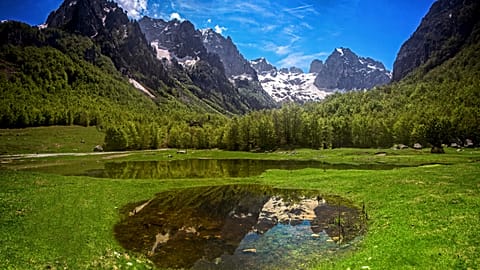
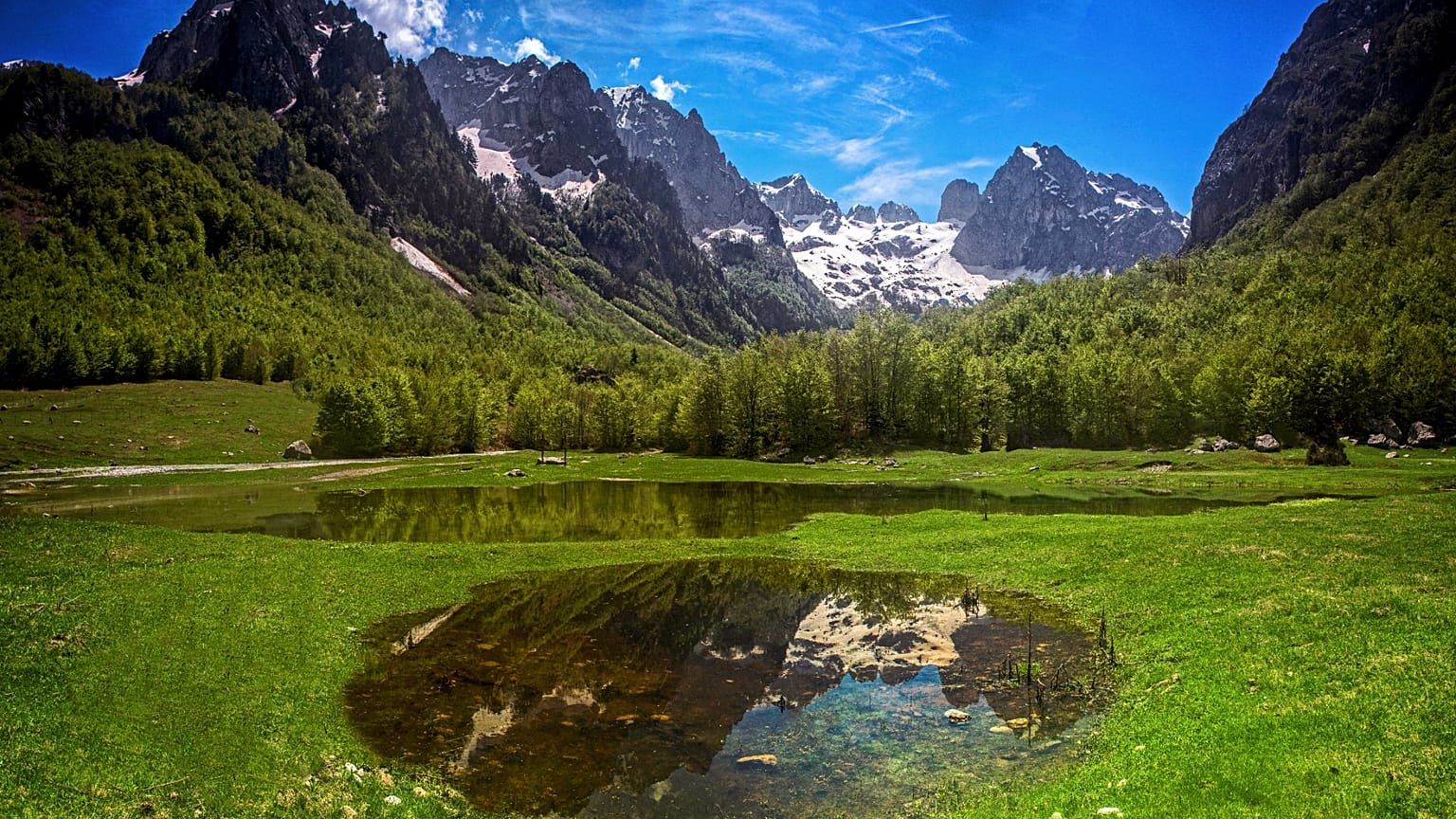
The country is a natural paradise with five national parks. The largest of these, in the north, the Durmitor National Park, a UNESCO World Heritage Site, attracts thousands of hikers from all over Europe. Right next door is the Tara Canyon, the second longest in the world after the Grand Canyon of the Colorado, amidst lush forests and alpine lakes.
Descending inland towards the coast is another symbol of the country, this time a religious one: the Orthodox Ostrog Monastery, an important pilgrimage site built in the 17th century on a stone cliff in the Ostroška mountain massif, with a breathtaking view.
The Adriatic Coast
However, the part that attracts the most international tourism is the coastline with almost 300 kilometres along the Adriatic Sea. Budva, with 2,500 years of history, is the epicentre of Montenegrin tourism, the Saint-Tropez of the Balkans with its nightlife, beaches and luxury yachts.
At the southern tip of the country is Ulcinj, with Velika Plaza beach, one of the longest beaches in Europe with more than 13 kilometres of fine sand. The entire Montenegrin coastline is lined with ancient fortresses that offer spectacular panoramic views of the Adriatic.
Other notable cities include Cetinje and Kotor. The former, home to the official residence of the country's president, is the former royal capital of Montenegro (today the capital is Podgorica to the east), between the Bay of Kotor and the Skadar side, the largest in the Balkans.
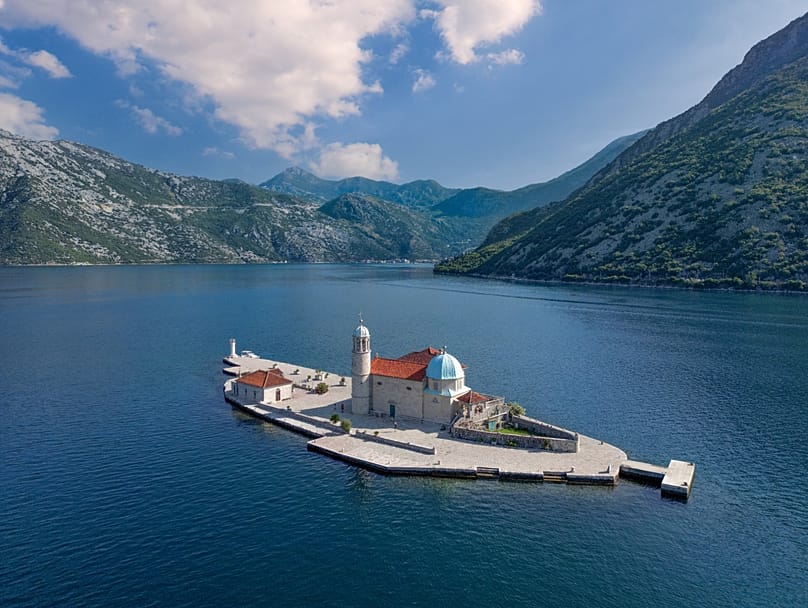
Kotor is a walled city of medieval origin, a UNESCO World Heritage Site. It is known as the city of cats because hundreds of them roam its streets protected by the municipality and with its own museum, the Cat Museum. The bay of Kotor,with its 30 kilometres inland, becomes a picture postcard landscape between the mountains and the sea.
In a European context where travellers are looking for authentic, sustainable and differentiated experiences, Montenegro presents itself as a convincing alternative. Its combination of dramatic mountains, luminous coastline, historical heritage and strategic ambition make it one of the great revelations of continental tourism.
"Here you can enjoy the real way of life, not something artificially created as a tourist product. We offer a new and genuine experience," says the tourism minister.
With the euro as its currency (it adopted the euro without being a member of the EU and without a formal agreement), its sights set on Europe as a perennial EU candidate and a clear strategy for international positioning, Montenegro is moving forward with the expectation of becoming a member in 2028. The Black Mountain is no longer a secret; it is a destination that claims its place on the European tourist map.