
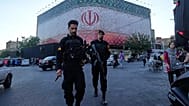
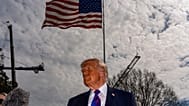





























French President Emmanuel Macron is hosting his last G7 summit before leaving office next year. High on the agenda are Russia's war on Ukraine, the conflict in the Middle East, Chinese competition, AI and child safety online.
The leaders of the G7 nations are making their way to Évian, France, for a three-day summit just hours after the United States and Iran reached a framework deal that opens a 60-day window of negotiations. US President Donald Trump is due to arrive at the meeting in the afternoon.
 ADVERTISEMENT
ADVERTISEMENT
ADVERTISEMENT
Among other topics on the agenda are Russia's war on Ukraine, unfair Chinese competition, child safety online and the disruptive rise of artificial intelligence.
Follow our live blog for updates.

 ${title}
UK bans social media for under-16s with online child protection on G7 agenda
UK Prime Minister Keir Starmer announced on Monday morning his government will ban the use of social media platforms including TikTok, Instagram and X by under-16s, saying it wants "to give kids their childhood back".
The UK government says the social media ban will follow the same model as the one put in place by Australia, the first of its kind in the world. That ban took legal effect last December, and places the obligation on the social media companies rather than young people or their families.
France and other EU countries are also looking into a possible national ban for minors, prompting European Commission President Ursula von der Leyen to commit to developing a potential proposal for an EU-wide social media ban by this summer to avoid the bloc's fragmentation on the matter.
Online child safety is expected to be discussed at the G7 summit this week. While there is a growing consensus among Western nations that tech companies should not be allowed to disregard the wellbeing of minors, there is also a deep divide between those pushing for a full-on ban and those who support a more targeted approach.
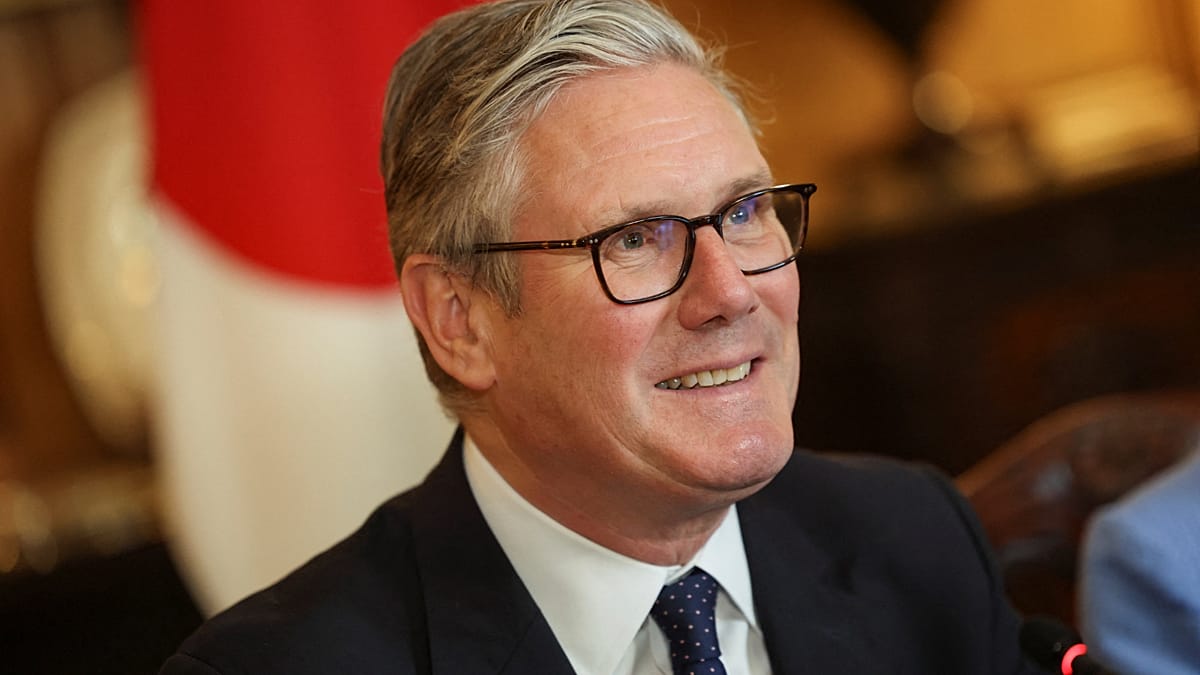
UK's Keir Starmer announces social media ban for under-16-year-olds
Australia, Canada, Brazil and Indonesia have introduced legislation or announced age-based restrictions or requirements for children’s access to social media.…
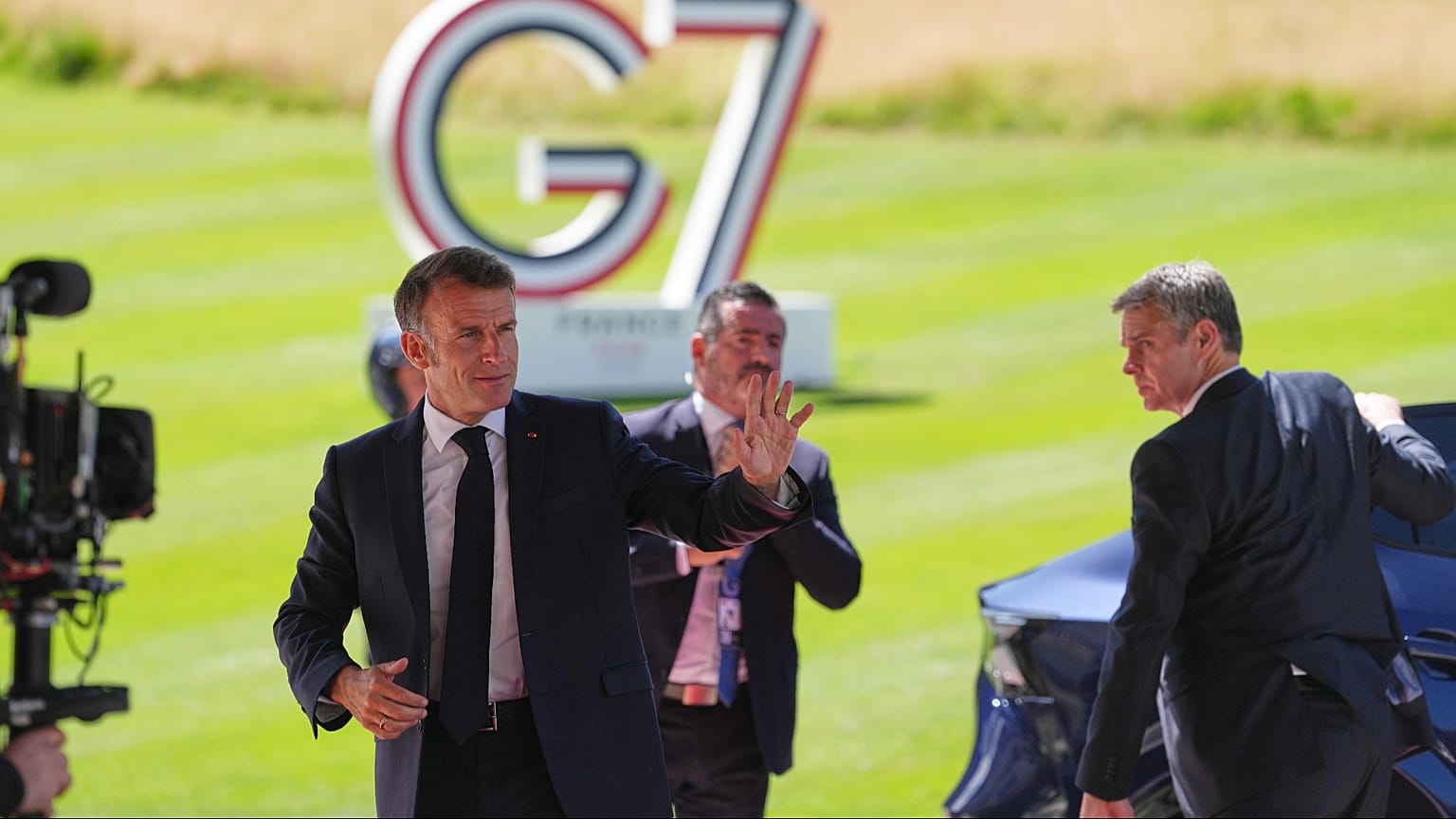
Host Emmanuel Macron arrives
The host of the G7 summit, Emmanuel Macron, has arrived at the venue.
This marks the French president's last G7 after almost 10 years in office. Under the French constitution, he is barred from running for a third consecutive term.
"Welcome, everybody," he told reporters, before joining Braziliain President Lula da Silva inside.
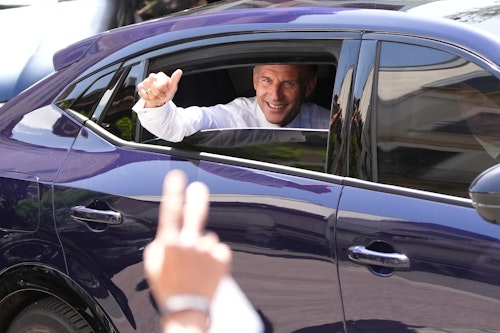
Credit: Associated Press
Costa and von der Leyen meet Swiss president after contentious referendum
Before making their way to the G7, António Costa, the president of the European Council, and Ursula von der Leyen, the president of the European Commission, met this morning with Guy Parmelin, the president of the Swiss Confederation. (Reminder: Évian is right across the Swiss border.)
The meeting comes a day after Swiss voters’ rejection of a contentious initiative that would have capped the wealthy country's population at 10 million people. The referendum was closely watched in Brussels because, had it been approved, it would have derailed the complex agreement between the EU and Switzerland that enables freedom of movement and access to the single market.
"At a time of global economic and political turbulence, our latest package of agreements modernises our relationship and will contribute to the stability, prosperity, and economic and legal security of citizens and businesses on both sides," Costa said on social media.
Trump held calls with Zelenskyy and Putin on Sunday
Donald Trump held separate phone calls with Volodymyr Zelenskyy and Vladimir Putin ahead of the G7 summit, it has been confirmed.
Although no formal bilateral has been scheduled between Trump and Zelenskyy, both are due to join a dedicated working session on Ukraine on Tuesday, and officials expect them to meet on the margins.
Kremlin aide Yuri Ushakov said Trump’s conversation with Putin included a discussion on ending Moscow’s war against Ukraine, though the Russian government framed it as Trump promising "to exert influence" over Europe and Ukraine.
I have just had a great conversation with @POTUS. I congratulated President Trump on his birthday, and we have had quite a detailed discussion about many key things – peace, surely, was among them. I wished President Trump every success, above all in his work to end Russia’s war… pic.twitter.com/VKqPh80olB
— Volodymyr Zelenskyy / Володимир Зеленський (@ZelenskyyUa) June 14, 2026
Ushakov also reiterated once again that Putin is not willing to meet Zelenskyy outside Russia.
“If he wants a meeting, let him come to Moscow,” he said.
Hours after this weekend's calls with Trump, Moscow launched 70 missile and over 600 drones against Ukraine, killing at least five people in Kyiv and injuring 29.
Poland joins French call to tighten EU’s trade defences against China
Warsaw confirmed to Euronews on Monday that it had signed a France-led non-paper calling on the EU to strengthen its trade defence instruments to address Chinese overcapacities.
The non-paper was initially signed by France, Italy and Lithuania. Madrid also signed it, but later downplayed its support, saying the document was technical rather than political.
The issue of trade imbalances caused by China’s export-driven economy is on the agenda of the G7 summit.
One of the objective of the three-day meeting will be to “bring China into dialogue”, a senior EU official said, “a dialogue that bring results”.
The G7 countries held a video call with Beijing last Thursday.
Tightening the EU’s trade defence tools will also be a key issue on the agenda of EU leaders, who will gather for a summit of their own on Thursday and Friday.
Brazil's Lula da Silva arrives — but says nothing to the press
Brazil's President Luiz Inácio Lula da Silva is the first leader to arrive at the Group of Seven summit in Évian-les-Bains, eastern France.
Lula arrived wearing a cream fedora and trim suit jacket, smiling to the scrum of international journalists outside the Hôtel Royal before entering the lakeside resort.
Brazil is not a member of the G7 summit, but was invited by French President Emmanuel Macron as part of France’s role as the current G7 presidency holder.
Brazil, alongside India, the Republic of Korea and Kenya, is a partner country.
What's in the US-Iran framework deal to end the Iran war?
Washington and Tehran have confirmed they have reached a framework deal to end the war that has been shaking the world's economy with the closure of the Strait of Hormuz's supply routes and the damage to oil and gas infrastructure in the Gulf region.
The exact details of the framework agreement are not yet known, as the deal is meant to be formalised with a signing ceremony in Switzerland on Friday. Meanwhile, ensuring stability in the Middle East and the freedom of navigation in the Strait of Hormuz is expected to take centre stage at the G7 as leaders flock to Évian, France.
Both France and the UK have been working on setting up a military mission to clear mines and ensure freedom of navigation through the critical waterway. The EU's Operation Aspides, deployed in the Red Sea to face the Houthis' threat to international shipping in the area, might be repurposed or expanded for the task.
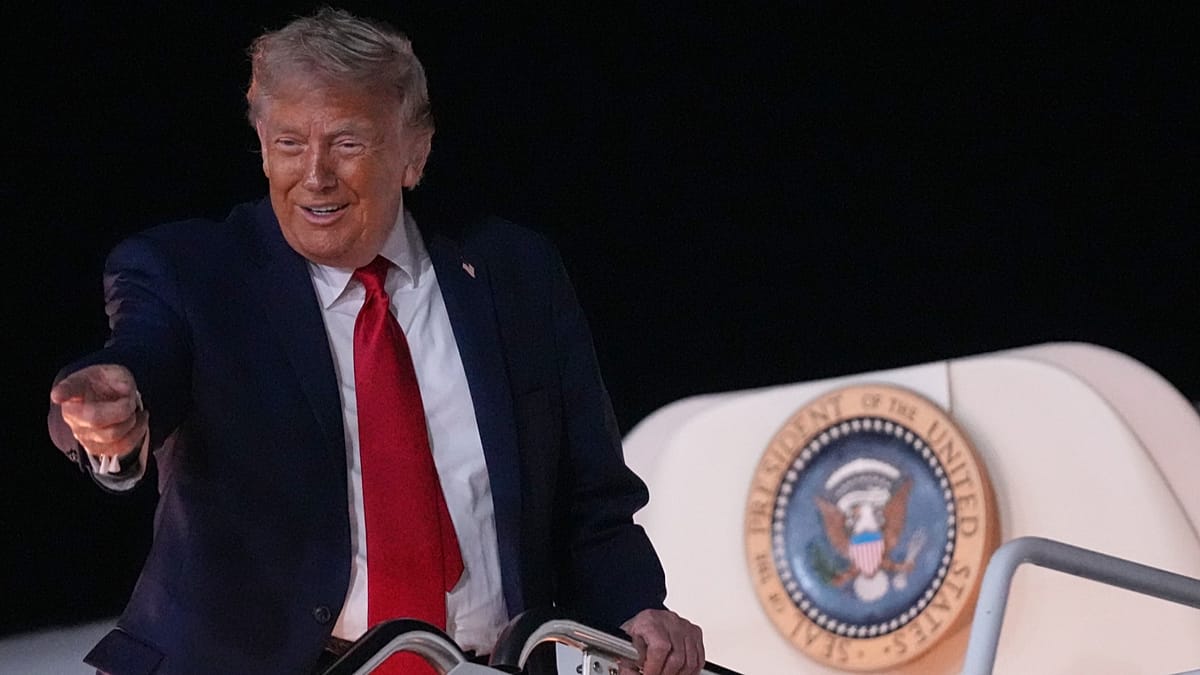
Trump says US-Iran peace deal ‘complete,’ to be signed on Friday
Tehran has since confirmed that the “text of the memorandum of understanding” has been agreed on and is to be signed in Switzerland, opening the door to 60-day…
G7 leaders will aim to find ‘common solutions’ to ‘global tensions’, Macron says
French President Emmanuel Macron said upon his arrival in Evian on Sunday evening that the objective of the G7, which is taking place in the French city over three days this week, is to find “common solutions” and ease “global tensions".
"The focus of the discussions will be on fostering new agreements and greater alignment among the G7 countries,” Macron said.
The G7 will begin on Monday evening with a working dinner entitled: “Working together to address major international challenges”.
Zelenskyy expects G7 to react to Russia's massive overnight attack against Ukraine
Volodymyr Zelenskyy said he is counting on a response from the G7 countries following large-scale Russian strikes on Ukrainian cities overnight on 15 June.
Moscow hit several multi-story residential buildings in Kyiv and the main cathedral of the city's Kyiv Pechersk Lavra, one of Ukraine's most significant religious and cultural sites.
“This is how Russia shows the world its intention to continue the war,” Zelenskyy said on X.
“It is very important that there be a response from the G7 countries, which are now gathering for their summit – and that this response be decisive and substantive: more pressure on the aggressor and more support for Ukraine’s air defence, especially anti-ballistic capabilities.”
Zelenskyy is set to attend the G7 summit in Évian-les-Bains at the invitation of French President Emmanuel Macron.
But before departing from Ukraine, he has visited the site of the Russian attack at the Kyiv Pechersk Lavra.
When asked by a journalist what he would say to Vladimir Putin following this attack, Zelenskyy replied: ‘We’ll have our say."
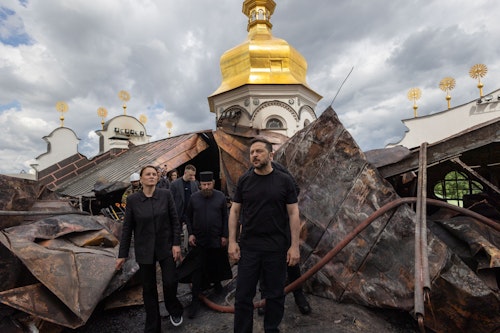
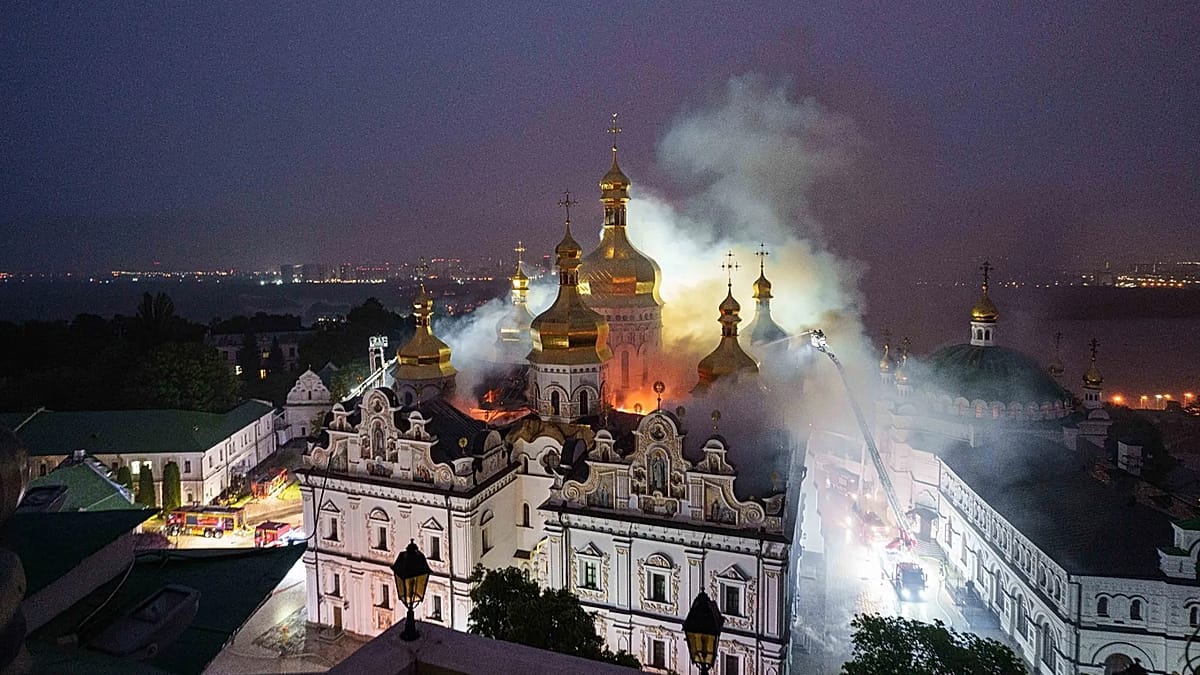
Russian strikes on Kyiv kill at least 11 and leave cathedral in flames
The wave of attacks came as news of a US-Iran deal started to open a path to peace in the Middle East war, highlighting the lack of progress toward an end to o…
Enlargement ‘Mega Monday’: How Ukraine, Moldova are edging closer to EU membership
As G7 leaders meet in Évian to discuss Ukraine, both Ukraine and Moldova are expected to formally open the first “cluster” of accession talks on joining the European Union later tonight in Luxembourg, ending a two-year stalemate.
In what is a notoriously complex process of aligning with EU rules and standards, candidate countries go through a series of reforms categorised into six thematic "clusters". The first, known as "Fundamentals" covers rule of law, the judiciary and democracy, and is always the first to be opened and last to be closed -- making it pivotal in defining the pace of accession.
Today’s talks come after a two-year political deadlock driven by the former Hungarian government’s firm opposition to opening accession negotiations with Ukraine, citing concerns over the rights and freedoms of the Hungarian minority in Ukraine’s Transcarpathia region. This indirectly held back Moldova, which has been "coupled" in its accession journey with Kyiv's.
The election of Péter Magyar in April and the lifting of the Hungarian veto paved the way for today's talks to take place. Hungary's Foreign Minister Anita Orbán earlier on Monday hailed a "new chapter" for Hungary in Europe yet she cautioned that the "fulfilment and implementation'" of an agreement struck recently between Kyiv and Budapest on the right of the Hungarian minority "is a fundamental condition in the European integration process of Ukraine".
Expectations are also high that both Ukraine and Moldova could kick-start the remaining five "clusters" of negotiations by the summer, with EU enlargement chief Marta Kos saying on Monday that all remaining clusters should be opened by the end of July.
Yet politics could come back to hinder the process. Opening the remaining clusters would mean kick-starting talks on Ukraine's access to the EU's landmark agriculture financing programme, the Common Agricultural Policy (CAP), a prospect that countries such as Poland and France, are sceptical of.
Both countries filed for EU application in the wake of Russia's full-scale invasion of Ukraine, and consider European integration key to their future security.
'Even under the most optimistic scenario, recovery will be slow,' EU Council briefing reads
Energy analysts estimate that even in the most optimistic case—where the Strait of Hormuz fully reopens—recovery would still be gradual. This concern will feature at the energy ministers’ meeting on 26 June and will be discussed by G7 leaders alongside other middle powers attending the high-level event in France.
"Even if flows resume in June, upstream production would reach only 80% of pre-war levels after approximately four months, while refining runs would recover to 70% of prewar levels within three months," reads a Council briefing seen by Euronews.
Refining activity in the Gulf States would take months to return to normal after any reopening of the Strait, while product shipments to the EU would require an additional 30 to 40 days in transit. As a result, fuel markets could remain tight throughout the summer, regardless of when maritime traffic resumes.
The prospect of prolonged disruption in the Strait of Hormuz has been driving a broader debate among energy ministers over energy security. With the ceasefire deal between the United States and Iran looming close, European leaders at the G7 may rejoice, despite the unpredictability of past ceasefires.
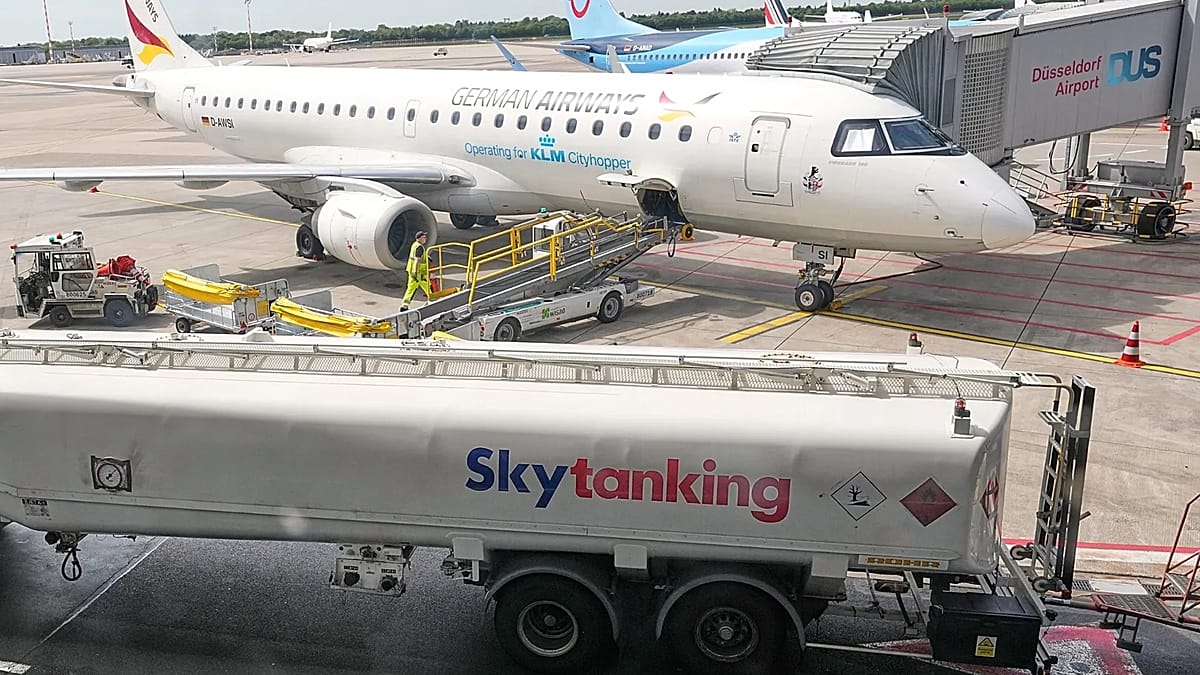
EU eyes jet fuel reserves as Strait of Hormuz crisis threatens supply
With the peak summer season drawing near, EU energy ministers are wary that jet fuel supply may be further strained, even as analysts see "sharp movement" towa…
Five minutes to G7 game-time
Your Euronews correspondent Angela Skujins here reporting from a balmy Évian-les-Bains, where the Group of 7 leaders will soon start streaming in for three crunch-talk days centred on geopolitics, trade and Washington's potential framework deal to end the war in Iran.
Our first arrival will be President of Brazil Luiz Inácio Lula da Silva at 11:30am, before European Commission President Ursula von der Leyen and European Council President Antonio Costa will walk down the red carpet. Later in the day, we are expecting to see UK Prime Minister Keir Starmer, Canadian Prime Minister Mark Carney and Italian Prime Minister Giorgia Meloni roll through.
But the big name on today’s agenda is US President Donald Trump, fresh off his announcement late Sunday evening that a potential framework deal to end the war in Iran may be minted in a few days’ time in Switzerland.
Only time will tell whether tonight’s working dinner, themed, “Working together to address major international challenges”, will bear more fruit and give fresh impetus to the talks.
In terms of what’s happening right now: ravenous journalists are turning to French pastries for fuel. (This unfortunate vegan reporter asked the catering staff what the meat- and-dairy-free options were, and they pointed to a paltry collection of fruit. “It’s all delicious!” they promised).
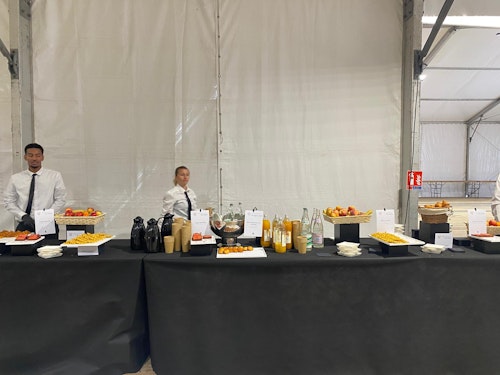
Much like the pain au chocolat, the Gendarmerie are also making a large impression. The small French resort town has been transformed into a warren of streets blocked off by police officers strictly controlling who comes in and who comes out. Hopefully this doesn’t mean our leaders will get lost.
AI to land on G7 leaders' (lunch) table as Trump triggers first kill switch
Artificial Intelligence will be the centre of a working lunch that G7 leaders will have on Wednesday. Formally, the plan is to discuss themes such as how AI delivers real economic value, how to keep societies secure and resilient, and how to protect the generations who will grow up alongside this technology.
In practice, the US government's recent decision to block non-American citizens from using Anthropic's most powerful models, Fable 5 and Mythos 5, is set to be the elephant in the room. The export control measures were taken on national security grounds, citing the models' capacity to identify and exploit cyber vulnerabilities.
For the EU, the episode is its worst nightmare coming true: Washington has effectively pulled the plug on its most advanced technology, in what might be the latest boost for Brussels' tech sovereignty agenda. On Sunday, European Commission spokesperson Thomas Regnier warned that such measures "should not be discriminatory against partners."
Anthropic's export ban 'should not be discriminatory,' Commission says
Brussels pushes back after Americans-only order locks Europeans out of Anthropic's top AI models, calling out discriminatory practices. #EuropeNews
Trump threatens France with trade war over digital tax on big tech
US President Donald Trump threatened France on Monday with a tariff war if Paris does not “get rid” of its digital tax on big tech.
“I asked him not to charge American companies, and if they do, I have no choice but to charge a 100% tariff on all champagnes and all wines coming out of France,” Trump told The New York Post. “All [Macron] has to do is get rid of the sales tax, and he wouldn’t have that kind of pressure.”
The threat comes as Europeans are due to vote on Tuesday on a trade deal signed with the Americans last July, capping US tariffs on EU goods at 15 percent while the EU commits to removing its own tariffs on US industrial products.
However, since the agreement was concluded, France has been pushing for an exemption for wines and spirits, one of the EU's top exports to the US.
On Monday, Trump directly targeted the 3 percent duty Paris imposes on revenue generated from digital services in the country by companies earning more than €25 million in France and €750 million globally.
E4 calls for 'urgent' reopening of Strait of Hormuz
The so-called E4 (Germany, France, the United Kingdom and Italy) have welcomed the ceasefire deal reached by the US and Iran and stressed the importance of restoring "unconditional and unrestricted" navigation in the Strait of Hormuz, a vital waterway for gas and oil exports.
"We are committed to playing our part to achieve this — in accordance with our respective constitutional requirements — including through a strictly defensive and independent mission to reassure commercial shipping and conduct mine clearance operations," the four countries said in a joint statement.
The four nations say they are "prepared" to lift sanctions on Iran provided the country takes "clear, verifiable steps" to address its nuclear programme and guarantee its civilian purpose.
'Crucial return to peace, multilateralism and diplomacy,' IMO says
Arsenio Dominguez, Secretary-General of the International Maritime Organization (IMO), welcomed the ceasefire and the peace deal affecting the Strait of Hormuz announced by US President Donald Trump and Pakistani Prime Minister Shehbaz Sharif on Sunday evening.
"This signals a crucial return to peace, dialogue, multilateralism and diplomacy, and in particular, an important step toward restoring safety in this vital maritime corridor for seafarers and ships, as well as safeguarding the fundamental principle of freedom of navigation," reads the IMO statement.
The IMO said it is working in close collaboration with member states and partners to implement this plan safely and effectively. But it notes that its implementation will "require time to ensure that all necessary safety and security guarantees are in place".
What to expect from this G7
Technology and geopolitics will dominate the G7 summit in Évian, where host French President Emmanuel Macron will seek to paper over divisions between the group and the United States.
Our reporters, Maria Tadeo and Angela Skujins, are on the ground and have this preview on what to expect.
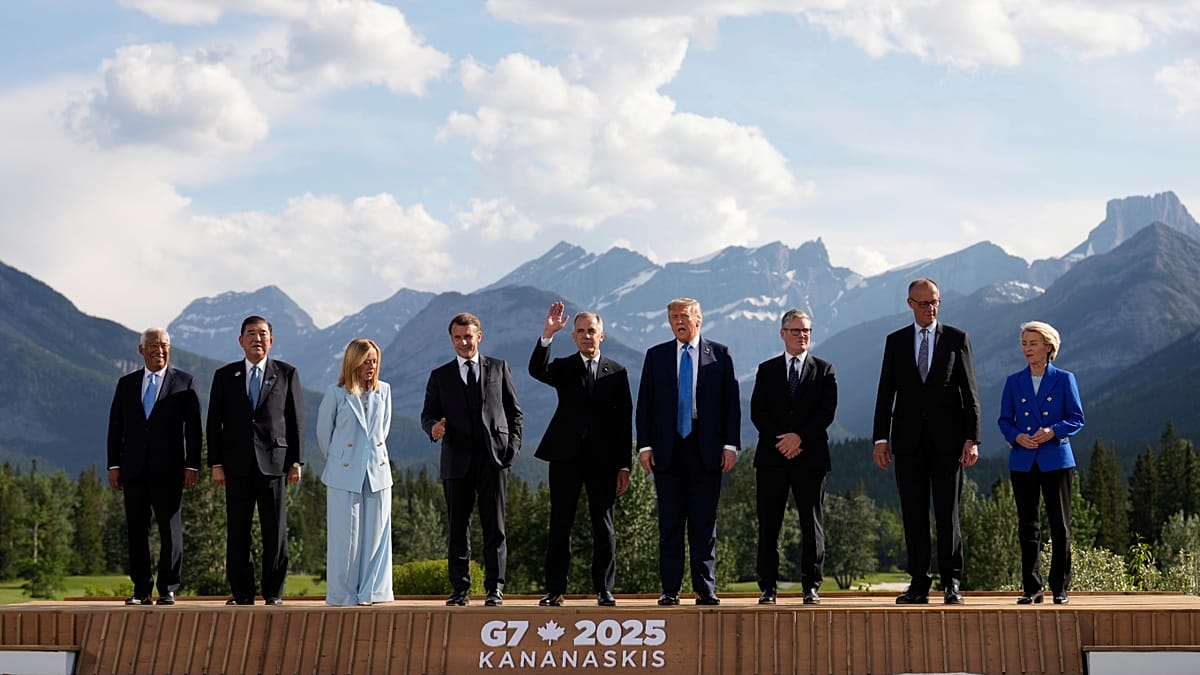
Iran, tech and Trump to top Macron's G7 summit
Heads of state from the G7 are bracing themselves for the arrival of US President Donald Trump at the first day of a major summit in Évian-les-Bains, with an a…