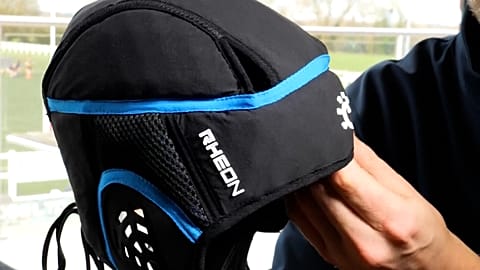
















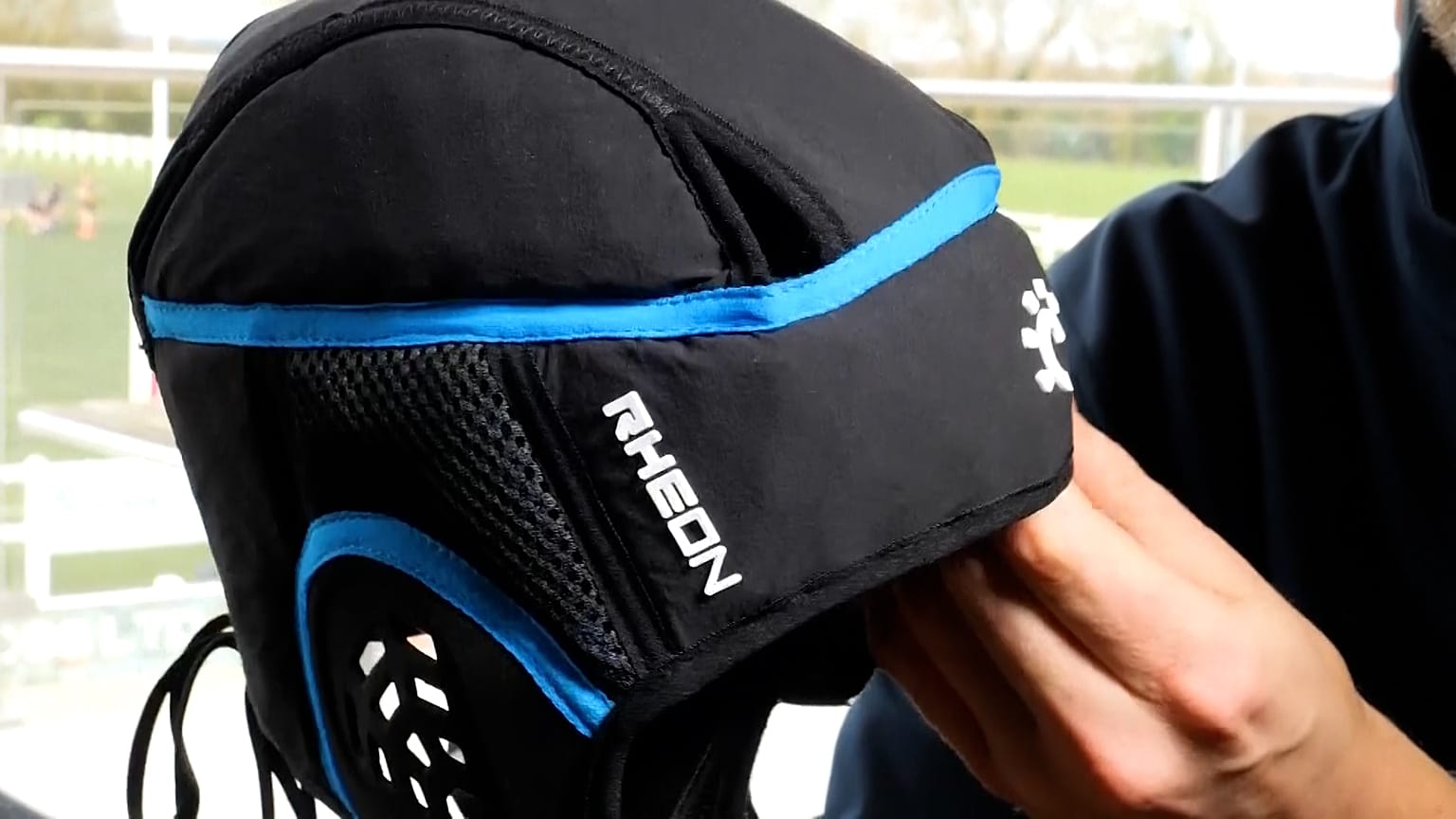














The material stays soft and flexible during normal play but stiffens instantly on impact to absorb energy, potentially lowering the force transferred to the brain.
A new super-polymer developed in London could make rugby safer, with its makers claiming it absorbs energy in a way that may reduce concussions and head injuries.
 ADVERTISEMENT
ADVERTISEMENT
ADVERTISEMENT
Rugby is a contact sport with a bruising reputation. Limbs fly, and bodies clash, leaving players with scratches, cuts, and broken bones. But one organ that requires special attention is the brain, and concussions are always an area of particular concern in the game.
Unlike American football, helmets are not worn, and protective headgear - known as scrum caps - is not mandatory. Existing scrum caps are designed to prevent abrasions or cauliflower ear, rather than significantly soften impacts.
With this in mind, the company RHEON has entered the market with a new technology it hopes can improve safety in the game.
How the material works
It started with a NASA project, aimed at space shuttle foam replacements, that led to over 15 years of development at Imperial College, London.
" It's a highly energy-absorbing material. It behaves similarly to a mixture of cornstarch and water, so it's non-Newtonian. Or in simple words, dynamic material," said Roman Chaika, the Development Director at RHEON.
"So when it's in its natural state, it's soft and flexible. So it allows for comfort next to the player's head. But during the event and the impact or collision, it suddenly stiffens up to absorb that impact energy," he added.
Lab testing footage shows a dummy head attached with sensors, and a weight is dropped at 3.4m/s to match speeds and impacts experienced in rugby. Compared with existing materials available in the market, RHEON claims up to 34 percent lower peak rotational acceleration.
Centurion Safety, a company specialising in head protection, has partnered with RHEON to bring the material into rugby.
"There are a couple of white papers that we studied, which noted that the frequency of concussion in rugby is greater than in something even like boxing," said Nick Branston, Centurion Safety’s Technical Director.
"So we recognised there was a need. We recognised that it was an opportunity. And then in talking to RHEON about the possibility of using the material, it seemed like a really good match."
The difficulty of spotting concussions
Medical experts caution that concussions are difficult to diagnose during a match, and misjudged impacts can have serious consequences.
"If in doubt, sit it out. And I think that is worth considering. As I said, there are risks. Both kind of short, medium and long term. There have been some really tragic cases in the short term of concussions that haven't been identified straight away," said Dr Mike Forsythe, lead for Head Injury and Concussion at Meliora Medical.
He added: "The player has continued to play and then suffered what was likely to be a further concussion and although this is very rare, it is catastrophic so we do need to have a low threshold for that."
Centurion has allowed youth players to trial the RHEON scrum cap to assess both its safety and comfort.
"Yeah. So I took a knock in the game. I think it was head-on head contact, obviously I did feel it a bit, but there wasn't any long-lasting sort of effect to that, which you might, I'm not sure, you might find with a regular scrum cap," said Tom Honan, 17.
The RHEON scrum cap is being developed in line with World Rugby Union guidelines and is expected to launch by the end of the year, with a likely price below £100 (€114).