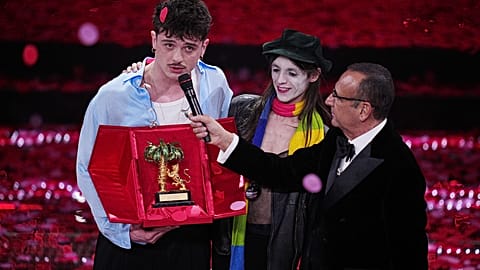



























With the song 'Per sempre sì', singer-songwriter Sal Da Vinci won the 76th edition of the Sanremo Festival, the musical jamboree watched by millions of Italians that determines who will compete at the Eurovision Song Contest.
New York-born Neapolitan singer-songwriter Sal Da Vinci won the 76th edition of the Sanremo Festival with the song 'Per sempre sì', which tells an intense love story between two people that culminates in marriage.
 ADVERTISEMENT
ADVERTISEMENT
ADVERTISEMENT
"I dedicate my victory to Naples, my city, and to my family," Da Vinci said as he accepted the Golden Lion of Sanremo, presented by Mayor Alessandro Mager.
It was a case of second time lucky for Da Vinci after he came third in 2009.
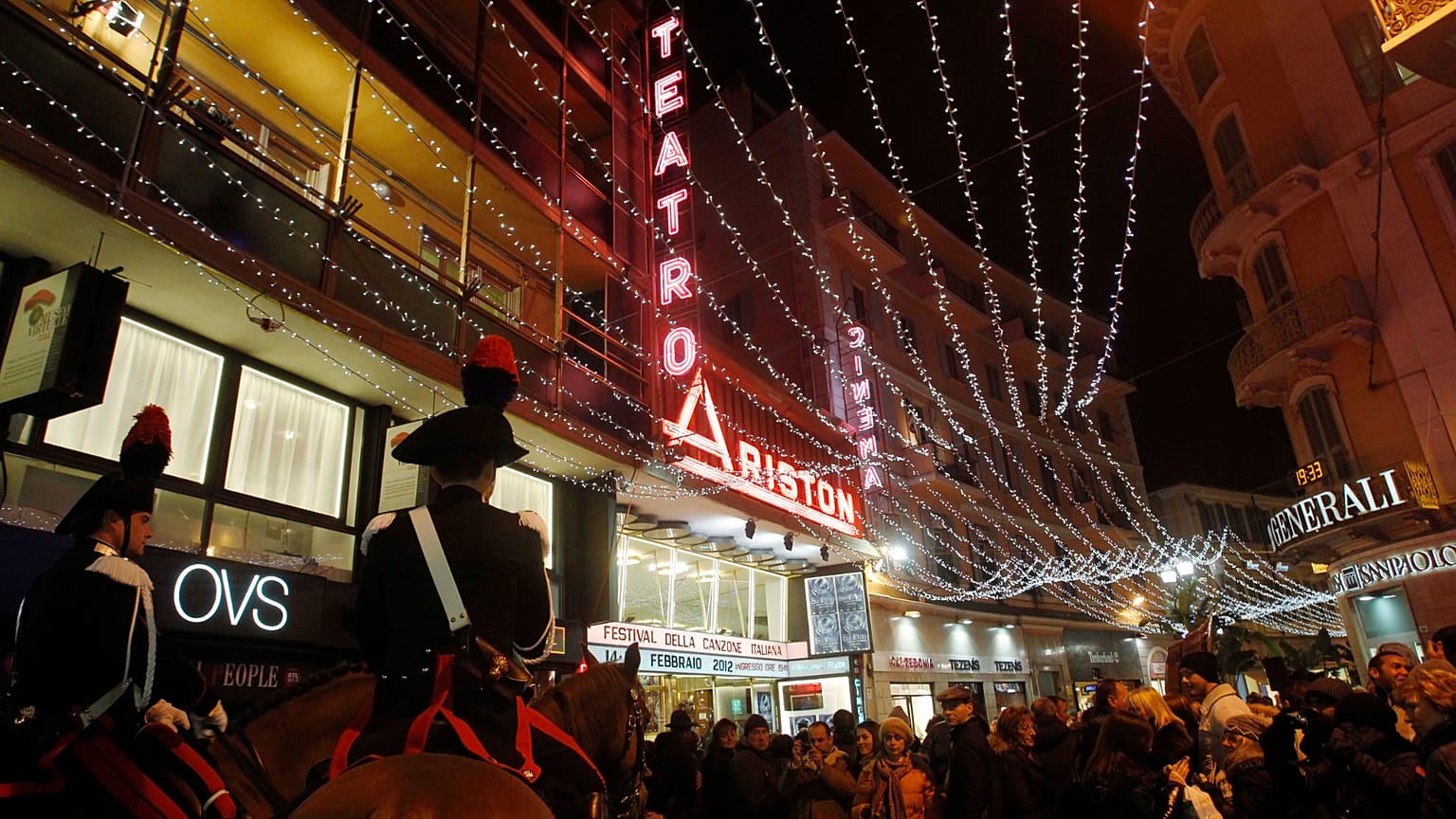
"I had the pleasure of taking the stage at the Sanremo Festival in 2009 and it was a great emotion because it was a dream I had been chasing for many years, there were almost 13 attempts that went wrong," he said in recent days, recounting his previous experiences at the Ariston theatre.
As usual, the winner of the Sanremo Festival can directly enter the Eurovision Song Contest as Italy's candidate, a move born out of the success of the Italian competition.
However, the Neapolitan singer has not yet confirmed whether or not he will take part at the grand finale being held in the Austrian capital, Vienna in May.
Other Sanremo successes
In addition to the festival winner, other prizes were also awarded during the night. The Roman singer-songwriter Fulminacci took the 'Mia Martini' Critics prize with the song 'Stupida Fortuna'.
Serena Brancale with 'Qui con me' won the 'Lucio Dalla' press prize,whilethe 'Sergio Bardotti' prize for best lyricswent to the duo Fedez and Marco Masini with the song 'Male necessario'.
The 'Giancalo Bigazzi' prize for best musical composition went to the singer Ditonellapiaga with 'Che fastidio!'.
Last Thursday, the award for new entries was given to Nicolò Filippucci for the song 'Laguna'.
Hit parade and political expression
The 76th edition of the Sanremo festival was presented by Carlo Conti, in his fifth Festival, paired with Italy's most awarded singer abroad Laura Pausini.
Despite a drop in ratings and share recorded during the five evenings, the festival was the most watched event of the week in Italy, confirmingthe close bond and popularity between the Italian public and the country's biggest televised music event.
The Sanremo festival has always been a stage that attracts political controversy, and this year was tensions were high with a crucial referendum vote on a justice reform bill less than a month away.
But only a few singers made their feelings clear prior ahead of the contest at the prestigious Ariston theatre and none at all once they'd climbed up the steps to perform.
For many, the most significant political moment came from Gianna Pratesi, an early guests on the evening, and one of Italy's surviving centenarians. She used her platform to pay tribute to the 80th anniversary of the referendum that transformed the country from the Savoy monarchy to the Republic.
Recounting her experience of voting back in 1947, Pratesi, 105, said that everyone in her family was a leftist and with the referendum the country said 'ciao, ciao' to the fascists. The audience in the hall applauded and laughed at the frankness with which she addressed the crowd.
Home grown favourites and local heroes
This year's festival chose to focus on Italian music and stars with links to the country.
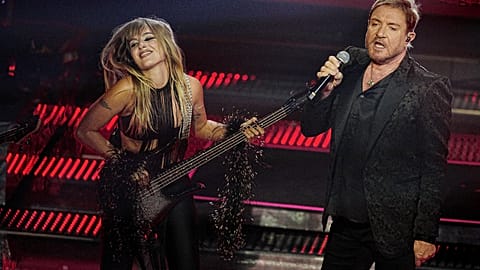
Italian-born American singer-songwriter Alicia Keys paid homage to her Sicilian grandparents and performed a duet with Eros Ramazzotti to celebrate the remake of the Italian singer's classic 'L'aurora'.
Keys then sang an excerpt from her hit 'Empire state of mind', but her show only lasted a few minutes because if experienced several technical problems**.**
Other international personalities who took the stage at the Ariston were Turkish actor Can Yaman, who was co-host during the first evening, and Russian model Irina Shaik.