
















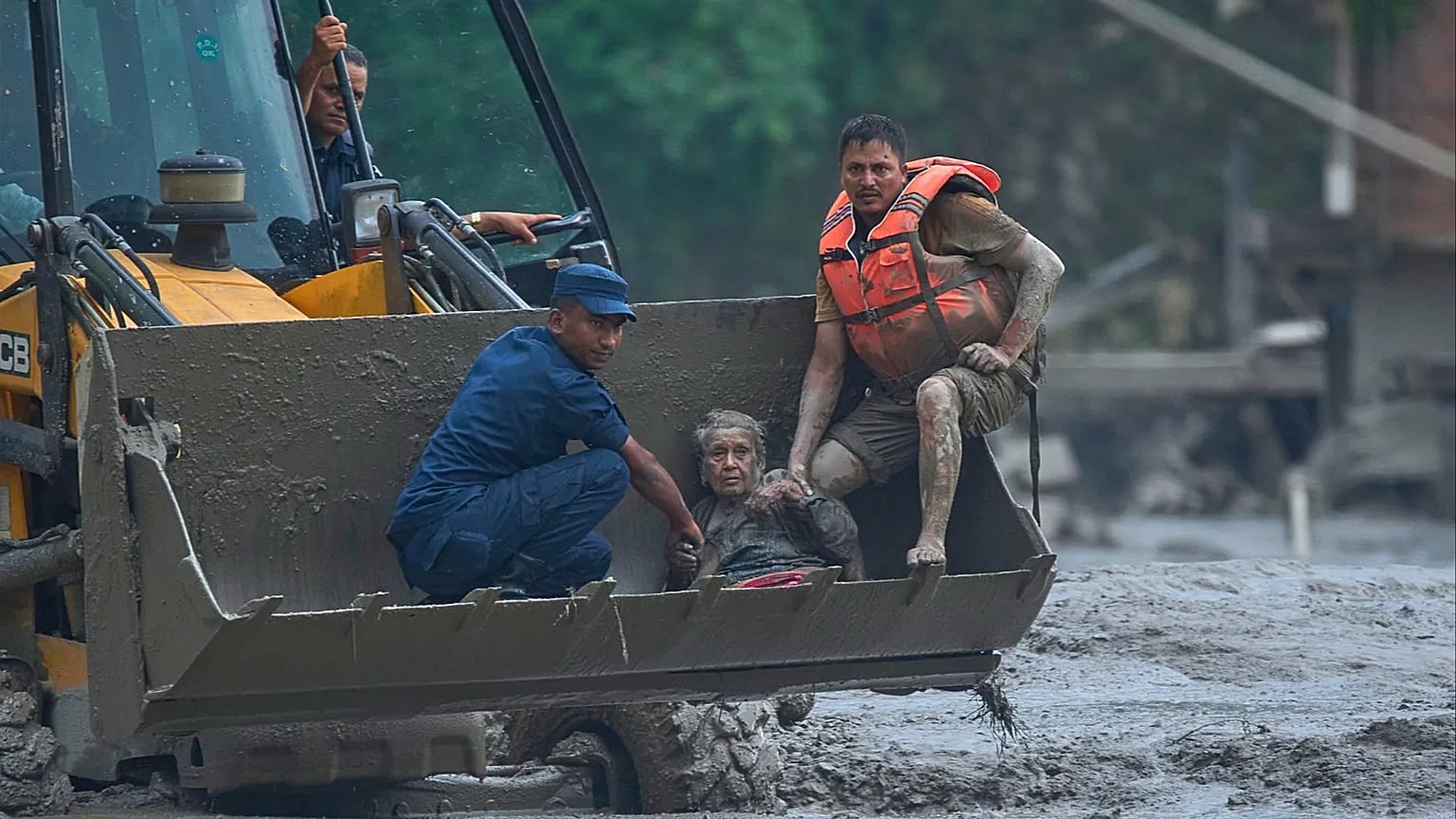













Officials in Nepal earlier said 403 people, including 341 foreigners, were reported missing.
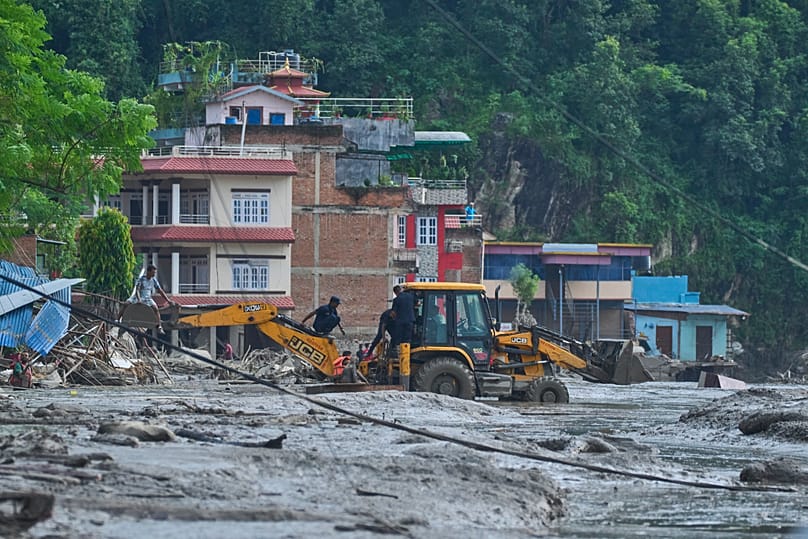
At least 162 were killed in Nepal and three others in Tibet after massive flash floods in a border area of Nepal and China swept through communities on Wednesday, China’s state media reported, warning that up to 1000 people remain missing in Nepal and Tibet from the disaster.
 ADVERTISEMENT
ADVERTISEMENT
ADVERTISEMENT
Mudslides in Tibet left three people dead and 558 missing; some 260 of the 558 missing people in Tibet were foreigners, and two villagers were rescued, both China's state news agency Xinhua and broadcaster CCTV reported Thursday morning.
Drone footage in Nepal showed roads destroyed and buildings buried by thundering water the colour of wet cement.
“When I reached Dhunge bazaar, in half an hour, the flood came and damaged all the market. People were preparing to go to the office then,” a Tibetan resident, Shoyam Rajbhandari, said. “How many people are missing or dead, we don’t know.”
Foreign nationals are among those missing
Australia’s Foreign Minister Penny Wong told reporters Thursday at least 34 Australians on pilgrimages and hiking tours were missing.
“We understand these Australians were part of separate pilgrimage and tour groups,” Wong told reporters in Adelaide, Australia.
The Nepalese government had not yet requested help, but Australia was coordinating with Nepal, the United Nations, the Red Cross and other organisations on a humanitarian response, she said.
55 Malaysians in Kathmandu are now unreachable due to serious infrastructural delays, according to Malaysia's Foreign Ministry, which increased the number of missing on Thursday. It stated that it is closely collaborating with authorities to determine the safety and locations of Malaysian casualties, but there is no formal confirmation of their presence.
Early Wednesday, the US Geological Survey reported a magnitude 4.4 earthquake about 66 kilometres north of Kathmandu, near the border.
The USGS later updated its analysis to say the seismic event it measured was a magnitude 5.2 glacial collapse that sent debris flowing downstream with catastrophic impact on communities.
It said its determination was based on data from nearby seismic stations, long-period seismic waves and satellite imagery, and that no earthquake had occurred.
Avalanche from glacier caused disaster, experts say
Climate experts at the Kathmandu-based International Centre for Integrated Mountain Development said an avalanche from a glacier likely caused Wednesday’s flash flood.
“Hydrological observations indicate the exceptional speed and magnitude of the flood wave,” they said in an emailed statement, noting that water levels at one point on the Trishuli river rose by as much as 9 metres over half an hour.
The Lhende Khola River, a tributary of the Bhotekoshi, had maximum flooding, they said.
“The Lhende Khola has flooded twice in 14 months, this time triggered by an ice rock avalanche from a glacier on the Nepal side that blocked the river and released a sudden surge downstream,” said Saswata Sanyal, a disaster risk reduction specialist at the climate research group.
The catastrophe in Tibet and Nepal is not a one-off. Over the past year, the Lhende Khola river system has flooded twice, and in one of the most heavily inhabited areas of the globe, populations, infrastructure, and water supplies are at risk due to the increasingly unstable Himalayan glacier system.
The region’s steep valleys are economic lifelines and travel corridors but are precarious when disaster strikes.
The region saw similar flash floods in August last year, when a glacial lake in Tibet overflowed because of high temperatures.
Nine people were killed, and critical infrastructure, including a bridge connecting Nepal and China, was damaged.