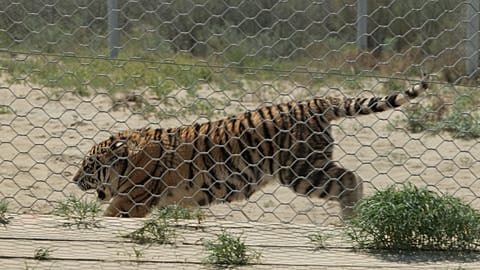
















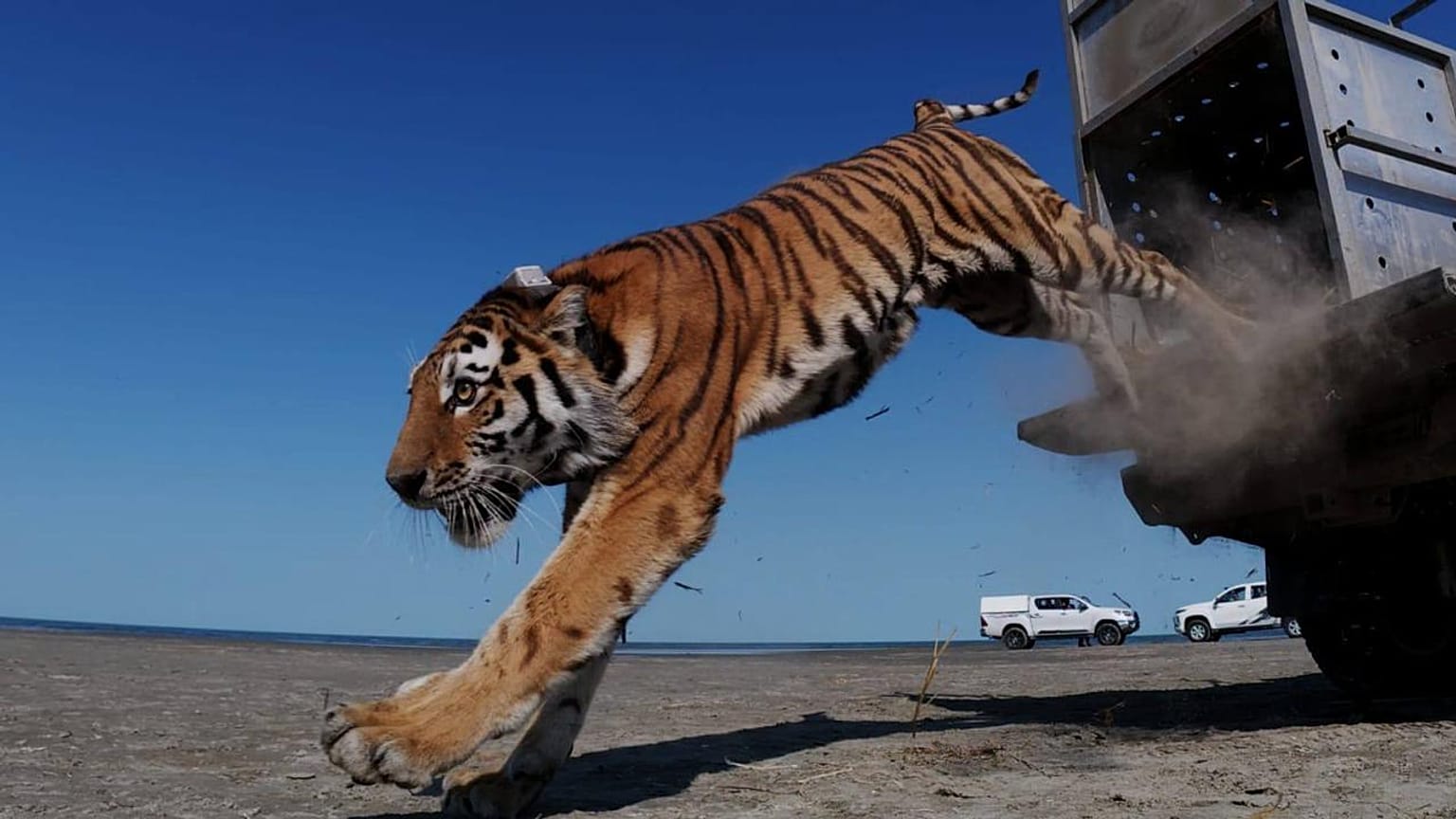














More than 70 years after tigers disappeared from Kazakhstan, a female Amur tiger named Umit has been released into the wild. The release is part of a programme to restore the species to its historic range in Central Asia.
Named Umit – the Kazakh word for "hope" – the female Amur tiger has become the face of one of Kazakhstan's most ambitious wildlife conservation projects. Scientists hope Amur tigers will restore a wild tiger population to Central Asia, where the species disappeared more than 70 years ago.
 ADVERTISEMENT
ADVERTISEMENT
ADVERTISEMENT
One of four Amur tigers brought to Kazakhstan from Russia in May, Umit is the first to be released into the wild in the Ile-Balkhash Nature Reserve.
Before her release, Umit spent two months under close observation as wildlife experts assessed her health, behaviour and hunting skills to determine whether she could live independently in the wild.
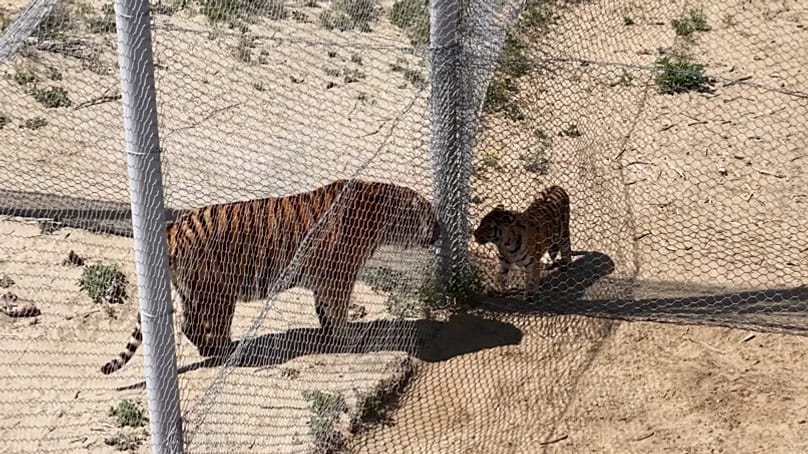
The adult male tiger remains under close observation as experts continue to assess whether he is ready for release.
Meanwhile, the two cubs, which arrived in Kazakhstan at the age of six months, will remain under the care of wildlife experts until they reach 18 months old.
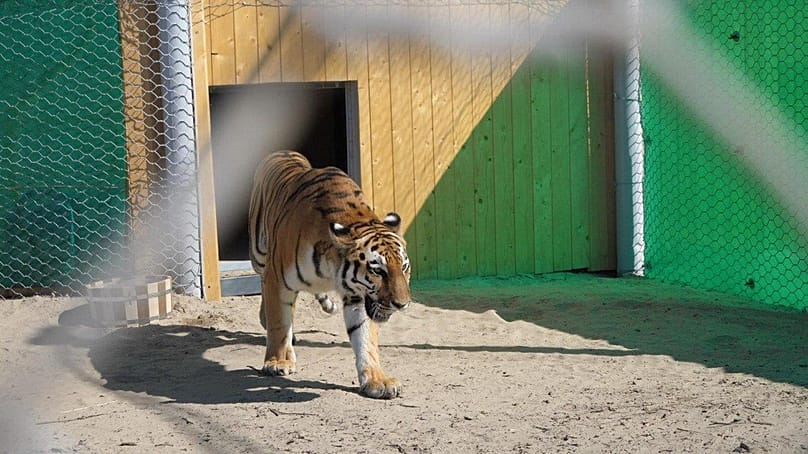
Overall, the reintroduction programme consists of two stages. During the first stage, the tigers are kept in a large enclosed habitat, where they adapt to the local environment. In the second stage, they are released into the wild in the Ile-Balkhash Nature Reserve.
Although the Ile-Balkhash Nature Reserve is a protected area, it is not fenced, meaning tigers are free to roam across their natural habitat.
To monitor Umit after her release, conservationists fitted her with a GPS/GSM satellite tracking collar. Authorities also say residents living near the reserve will be alerted if a tiger comes within five kilometres of a village.
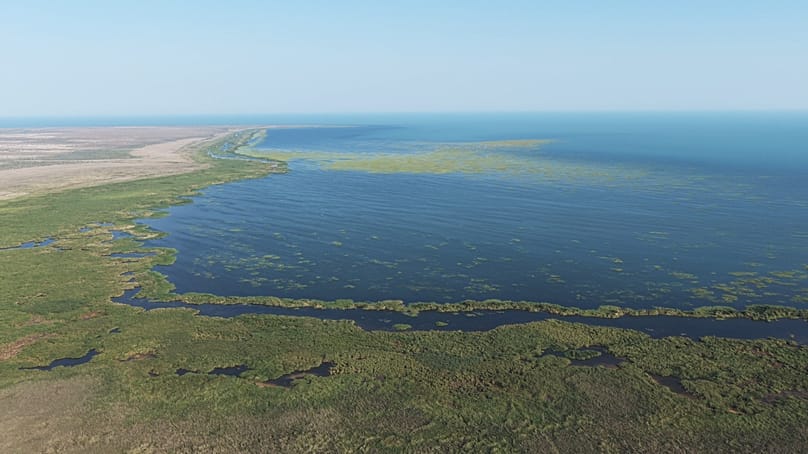
"The safety of people living near the reserve is our top priority," officials from Kazakhstan's Ministry of Ecology said.
"We've put measures in place to prevent conflicts between people and tigers, including a dedicated team that will respond if an animal approaches a populated area."
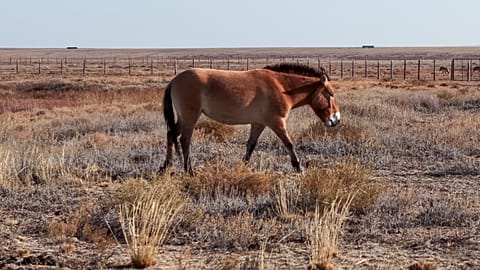
Preparing enough prey for the tigers took years. Since 2018, wildlife experts have been rebuilding the reserve's prey base by reintroducing Bukhara deer from Kazakhstan and Russia and relocating kulans from Altyn-Emel National Park.
An adult tiger needs to hunt around 50 to 70 large animals every year to survive, according to Kazakhstan's Forestry and Wildlife Committee.
Why Kazakhstan chose Amur tigers to restore an extinct species
Although the Turan tiger became extinct more than 70 years ago, genetic research has shown that its closest living relative is the Amur tiger.
For conservationists, Umit's release is only the beginning. They say restoring a wild tiger population will take decades. They say the programme will only be considered a success once tigers are breeding in the wild and the population can sustain itself without human support.
If the programme succeeds, Kazakhstan will become the first country in the world to restore a wild tiger population to a region where the species had disappeared.
Breeding the next generation of wild tigers
Alongside the four Amur tigers brought from Russia in May, the Ile-Balkhash Nature Reserve is also home to Kuma and Bohdana, a pair of Amur tigers transferred from the Netherlands in 2024.
The two tigers arrived from the Stichting Leeuw big cat sanctuary, where they had spent their entire lives in captivity. Because they lack the experience needed to survive independently in the wild, they will remain in a large enclosed habitat at the reserve.
Their role is to support the breeding programme and help create future generations of tigers. If Kuma and Bohdana produce cubs and experts confirm that the young animals can survive independently in the wild, their offspring could one day be released into Kazakhstan's wilderness.