




























Tehran fired fresh barrages of drones and missiles early on Thursday as the Iran war nears the two-week mark. Air raid alerts were sounded in Israel as authorities warned of incoming Iranian fire, as Gulf states brace for more attacks.
Welcome to our live coverage of day 13 of the Iran war, as Tehran continues to fire strikes at Israel and countries of the region and targets commercial ships in the Strait of Hormuz, threatening oil logistics and the global economy.
 ADVERTISEMENT
ADVERTISEMENT
ADVERTISEMENT
Israel says it has detected multiple incoming Iranian missiles in the early hours of Thursday, adding that its army was working to intercept the barrage. The IDF also said the Tehran-backed Hezbollah group in Lebanon fired rockets across the border on Thursday.
Meanwhile, the price of Brent crude spiked back to above $100 (€86.6) a barrel on Thursday, just days after it soared to $120 (€104), spiralling global markets and heightening concerns over energy stability, as war grips one of the largest oil and gas producing and exporting regions in the world.
Follow our live blog for the latest updates from our journalists in the region and worldwide.

 ${title}
Iran war day 13 concludes with first regime-released statement from new ayatollah
This concludes our live blog for Thursday, as Iran war nears its two-week mark.
Among the most important developments of the day, Iran’s new Ayatollah Mojtaba Khamenei made his first public statement since the war’s onset on 28 February, albeit through a written statement released by the Tehran regime.
Meanwhile, contradictory reports surfaced on Mojtaba Khamenei’s state, with some sources claiming he was lightly wounded in the initial US-Israeli strikes on Tehran, which resulted in the death of his father, the late Ayatollah Ali Khamenei.
Other sources maintain he remains hospitalised with serious injuries, while further questions remain on whether anyone has full control over the IRGC, an elite military unit that responds solely to the ayatollah, which has been reportedly acting in a decentralised way following instructions from Tehran made prior to the war.
Tehran also continued its campaign of targeting neighbouring countries, while at the same time launching attacks against shipping vessels in the Strait of Hormuz, which remains a chokepoint for global shipping, particularly of world’s oil supplies.
Our reporters in the region have said that Iran’s attacks on Gulf countries also continued, with alarms sounded in Doha yet again, as other countries including Saudi Arabia said their air defences were actively intercepting Tehran’s missile and drone swarms.
Stay with us as we bring you the most important news of the day, and revisit our blog below for the latest information on what is happening in Iran and the region.
Tehran has 'no intention to block Hormuz,' Iran's UN ambassador tells Euronews
Iran’s ambassador to the United Nations in Geneva told Euronews on Thursday that Tehran "does not have any intention to block the Strait of Hormuz,” contradicting the first public statement of the newly-chosen ayatollah who threatened the opposite.
“Iran has not any intention to block the Strait of Hormuz. Whatever situation the state of Hormuz is suffering from is because of the war imposed on the region. There is a war around the Straight of Hormuz. There is the exchange of fire," Ambassador Ali Bahreini said.
Euronews spoke to Iran’s ambassador to the UN just hours before Tehran released the first statement from the new Ayatollah Mojtaba Khamenei, who reportedly vowed to keep the Strait of Hormuz closed in order to pressure Iran’s enemies, according to a statement read on state-run TV.
Read more here in our exclusive interview:
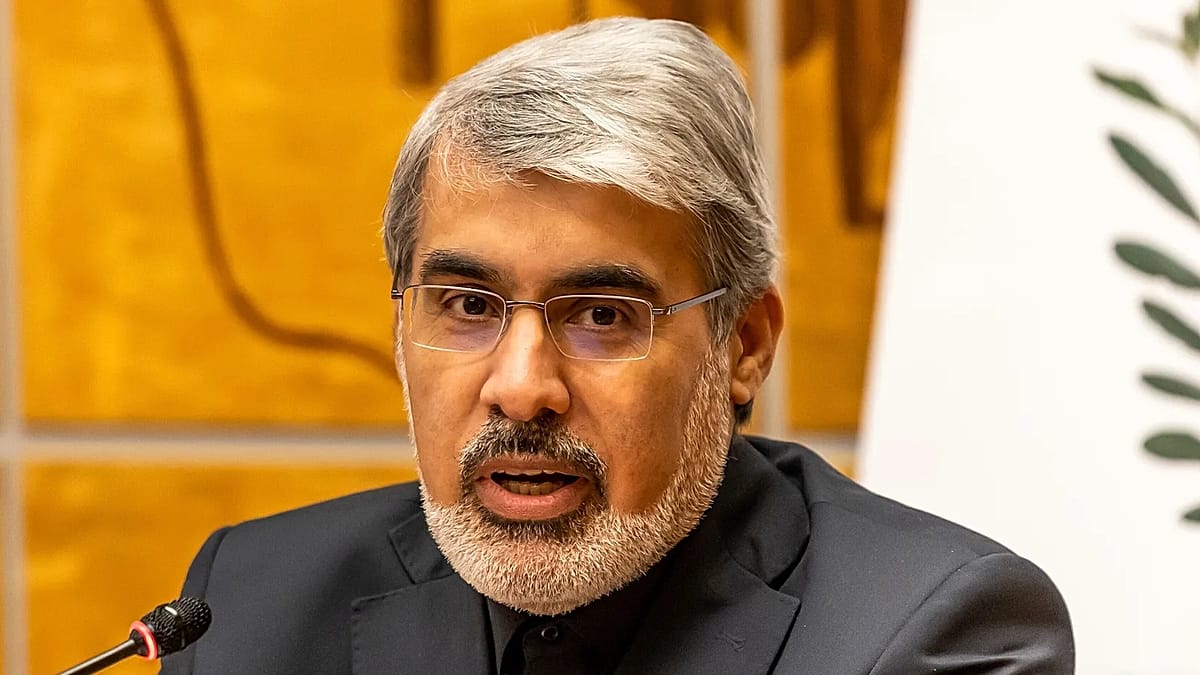
Iran does not want to block Hormuz, Tehran diplomat says
In sharp contradiction to the new Ayatollah Mojtaba Khamenei’s statement on Thursday, the Iranian ambassador to the UN told Euronews that Iran does not plan to…
Italian personnel 'temporarily' withdrawn from Iraq's Erbil, Rome says
Italy is temporarily withdrawing all personnel from a military base in Iraqi Kurdistan which came under a drone attack, completing a retreat that was already under way, Rome said Thursday.
"A retreat was already planned" before Wednesday's attack, which caused no injuries, Defence Minister Guido Crosetto told Italian news programme TG1, in what he said it was "only a temporary retreat".
The withdrawal was confirmed by Foreign Minister Antonio Tajani in parliament, after he earlier expressed on X the "strongest condemnation of the drone attack on the Italian base in Erbil".
Italy has soldiers in Erbil training Kurdistan security forces as part of an international force.
Crosetto said 102 personnel had recently returned to Italy from the base, while 141 were present on the base at the time of the drone attack.
Deputy foreign minister rejects Iran laying mines in Hormuz
Iran is not laying mines in the Strait of Hormuz, Deputy Foreign Minister Majid Takht-Ravanchi said, after US President Donald Trump said US forces had struck 28 Iranian mine-laying vessels in the waterway.
"Not at all. This is not true," said Takht-Ravanchi in an interview with AFP when asked about reports of Iran laying mines in the strategic strait that sees one-fifth of world oil pass through it.
Trump says Iran football team's World Cup participation would not be 'appropriate'
In an ongoing debate over Iran's participation in the upcoming FIFA World Cup this summer, US President Donald Trump said on Thursday that the national team is welcome to take part in the tournament, but that it would not be "appropriate," citing safety concerns.
"The Iranian national (football) team is welcome to the World Cup, but I really don’t believe it is appropriate that they be there, for their own life and safety," Trump said in a post on Truth Social.
Sports Minister Ahmad Donyamali said on Wednesday that Iran would not partake in the World Cup — co-hosted by the US, Canada and Mexico — over the killing of late Ayatollah Ali Khamenei in US-Israel strikes on Tehran on 28 February.
"Considering that (the US) has assassinated our leader, under no circumstances can we participate in the World Cup," Donyamali told state-run TV.
IRGC vows to keep Hormuz closed after new ayatollah's call to do so
Iran's Revolutionary Guards vowed on Thursday to keep the strategic Strait of Hormuz closed after a call to do so by the Islamic Republic's new leader, Ayatollah Mojtaba Khamenei.
"In response to the order of the commander-in-chief, we will deliver the harshest blows to the aggressor enemy while maintaining the strategy of closing the Strait of Hormuz," said Guards navy commander Alireza Tangsiri in a post on X.
Mojtaba Khamenei has not made any public appearances since the Iran war began on 28 February. His first statement since was read on state-run TV earlier on Thursday.
Iranian missile strikes near Jerusalem's Temple Mount, Israeli foreign ministry says
A barrage of rockets aimed at Jerusalem on Thursday saw one missile strike in the vicinity of Temple Mount, the Israeli foreign ministry said on Thursday.
"One of (the missiles) struck a few hundred meters from the Old City, the Western Wall, Al-Aqsa Mosque and the Church of the Holy Sepulchre," the ministry said in a post on X.
"Protecting lives and worshippers' safety comes first. That is why prayer at all holy sites has been temporarily suspended," it added.
The ministry also shared a video in the same post on social media showing smoke billowing after the Iranian missile's impact in Jerusalem.
Tehran has been launching daily barrages on targets in Israel, including its cities, since the beginning of the Iran war on 28 February.
US energy secretary: Military 'not ready' to escort cargo ships through Hormuz
The US military is currently "not ready" to escort tankers through the critical Strait of Hormuz because all its assets are focused on striking Iran, Energy Secretary Chris Wright said Thursday.
Wright's comments came as an attack on two oil tankers off Iraq killed at least one person, and oil prices briefly soared past $100.
"It'll happen relatively soon, but it can't happen now. We're simply not ready," Wright told CNBC. "All of our military assets right now are focused on destroying Iran's offensive capabilities and the manufacturing industry that supplies their offensive capabilities."
He added that it was "quite likely" such escorts would be taking place by the end of the month.
Since 28 February, Tehran has been targeting neighbouring countries' energy facilities and tankers in Hormuz in a bid to inflict damage to the world's energy trade and destabilise global markets.
In his first address, shared by the Tehran regime via a state-run TV channel on Thursday, new Ayatollah Mojtaba Khamenei vowed to continue blocking the Hormuz passage, a maritime bottleneck through which 20% of global oil trade passes each year.
Turkey speaking with both Iran and US to end the war, foreign minister says
Turkey is talking to both Washington and Tehran in a bid to end the Iran war, Foreign Minister Hakan Fidan said Thursday.
"We have been experiencing the most intense moments of the war in the last few days," he told a news conference in Ankara alongside his German counterpart Johann Wadephul.
"The question is, what chances are there for negotiation, to what extent is it possible?" he added.
"This war should end as soon as possible... We are talking to the Iranian side, and we are talking to the American side," he said, adding that in his opinion, the attack on Iran "is as unjust and unlawful as Iran's attacks on Gulf countries."
Since 28 February, Turkey has engaged in "intense" diplomatic efforts to end the confrontation, Fidan said.
IDF issues evacuation orders to large swath of Lebanon amid imminent attacks on Hezbollah targets
The Israeli military issued an evacuation warning to Lebanese residents in the country's south to move north of the Zahrani River, some 54 kilometres from the border with Israel, IDF spokesperson said Thursday.
“Out of concern for your safety, we direct this to all residents south of the Zahrani River - you must evacuate your homes immediately,” the Israeli military’s Arabic-language spokesperson, Avichay Adraee, said on X.
“Anyone near Hezbollah elements, their facilities, or their combat means is endangering their life. Any building used by Hezbollah for military purposes may become a target,” he warned.
Lebanon’s health ministry says hundreds of people were killed and over a thousand others were injured in Israeli attacks across the country since the Iran war erupted on 28 February.
Israel says it only targets Hezbollah members, infrastructure and resources in its operations, as they vowed to eliminate the Iran-backed militant group.
Over 800,000 people in Lebanon have been displaced over the past 10 days, according to the latest UN figures, and thousands more remain at risk.
Read more about the situation on the ground here:
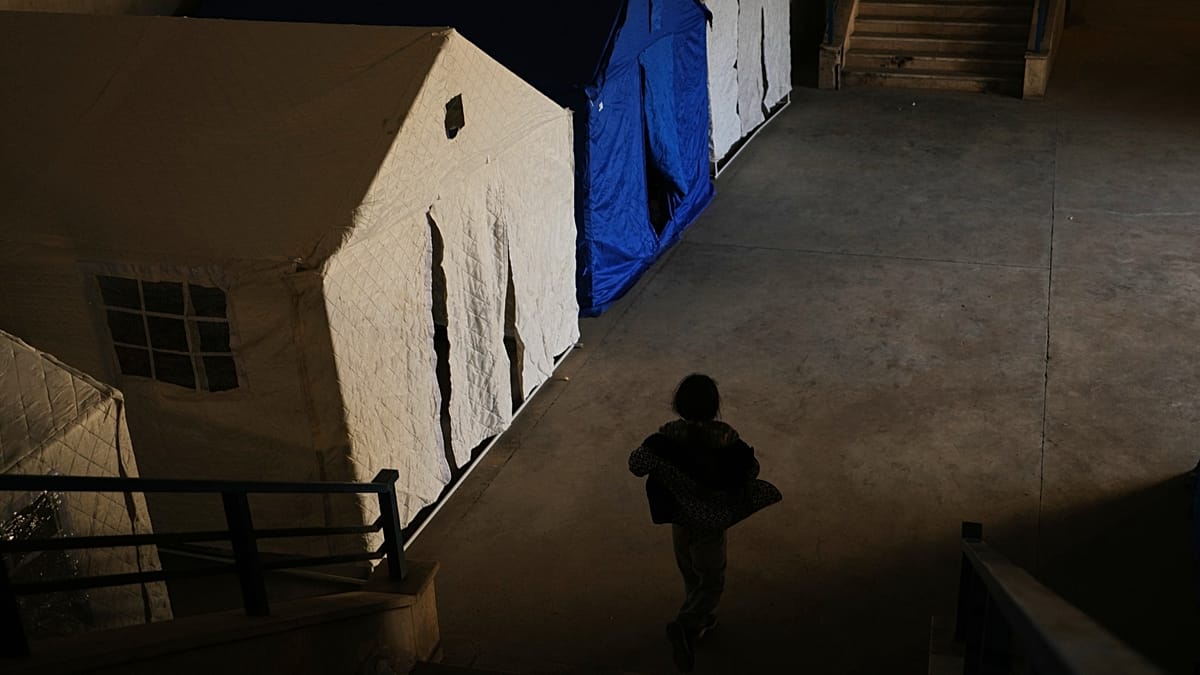
Lebanon’s displaced face high rent, tepid state response and war fears
Hundreds of thousands flee southern Lebanon after Hezbollah fires on Haifa, facing chaotic evacuations, profiteering landlords and limited state aid.
Tehran ‘encourages’ Trump to follow through on electricity infrastructure attack threat
Iran’s top security official Ali Larijani responded to US President Donald Trump’s threat to target electricity sites in Iran, and in a post on X on Thursday, warning that it would carry dire consequences for US troops in the region.
“Trump has said "we can take apart Iran's electric capacity within one hour, but we have not done it,” he wrote.
“Well, if they do that, the whole region will go dark in less than half an hour and darkness provides ample opportunity to hunt down US servicemen running for safety.”
Trump has said "we can take apart Iran's electric capacity within one hour, but we have not done it."
— Ali Larijani | علی لاریجانی (@alilarijani_ir) March 12, 2026
Well, if they do that, the whole region will go dark in less than half an hour and darkness provides ample opportunity to hunt down US servicemen running for safety.
Israeli military warns of more incoming missiles and drones from Iran
Sirens warned of incoming missiles in the Tel Aviv metro area and parts of the Israeli-occupied West Bank. Meanwhile on the northern border, sirens warned of multiple drone infiltrations from Lebanese territory, after renewed clashes with the Iran-backed Hezbollah group.
This is the fifth warning of missiles from Iran on Thursday alone. The sirens in the north are sounding several times an hour.
Preventing Tehran from getting nuclear weapons more important than oil prices, Trump says
US President Donald Trump on Thursday said that stopping Tehran from getting nuclear weapons was more important to him than controlling oil prices.
"The United States is the largest oil producer in the world, by far, so when oil prices go up, we make a lot of money," Trump said in a post on his Truth Social platform.
"But, of far greater interest and importance to me, as president, is stopping an evil empire, Iran, from having nuclear weapons, and destroying the Middle East and, indeed, the world," the US president concluded.
Trump's words came as Iranian state-run TV read what it said was the first written statement by the new Ayatollah Mojtaba Khamenei, in which he pledged Iran would continue to use the Strait of Hormuz to disrupt the passage of cargo ships.
Some 20% of the annual global oil trade passes through the Strait of Hormuz, an Iran-controlled chokehold.
Mojtaba Khamenei has not made any public appearances since the beginning of the Iran war last Saturday, with questions remaining over his condition after multiple reports he was wounded in the US-Israeli strikes resulting in the death of his father and former Ayatollah Ali Khamenei.
Ayatollah Mojtaba Khamenei vows to keep blocking Strait of Hormuz in first address since becoming supreme leader
Iran’s newly-appointed Ayatollah Mojtaba Khamenei, son to the late Ali Khamenei, has vowed to continue blocking oil exports through the Strait of Hormuz.
In a written statement read on state-run TV, Mojtaba Khamenei has also warned of continuing Iranian assault on neighbouring Gulf states, so long as the US bases they host remain open and serving as launchpads for attacks against his country.
In the statement, he reiterated that attacks on Gulf nations, including Qatar, the UAE, Saudi Arabia, Bahrain and Kuwait are not offensive in nature, as he underlined his country’s “friendship” with its neighbours, but justified them as crucial acts of “self-defence”.
The younger Khamenei has also pledged to avenge the death of Iranian “martyrs” and promised further attacks against US and Israeli "enemies".
Khamenei has yet to make a public appearance since his appointment, with information out of Iran stating he might have been seriously injured in the US-Israeli attacks on Tehran that resulted in the death of his father last Saturday.
Washington says global oil trade facing ‘significant disruption’
US Energy Secretary Chris Wright offered the assessment as oil prices surged in morning trading in the US after more oil tankers were attacked by Iran and the critical Strait of Hormuz remains effectively closed.
“We’re in the midst of a significant disruption in the short term to fix the security of energy flow for the long term,” said Wright.
He added the world will face “short term pain to solve long term problem” as the US and Israel try to “defang” Iran.
Greece imposes price controls on fuel and household staples
Athens has introduced a series of emergency measures aimed at stabilising prices amid recent hikes caused by the war in Iran.
Government spokesman Pavlos Marinakis said the measures take immediate effect through to 30 June, capping profit margins mostly at 2025 levels.
The controls affect retail and business sales of gasoline and diesel, as well as a list of household products including food, cleaning supplies and personal hygiene items.
Marinakis separately announced a government working group to study the feasibility of adopting microreactor technology.
Earthquake-prone Greece has previously avoided investing in nuclear power but now views emerging modular technology as safer and a potential complement to renewable energy for price stability and decarbonisation.
Bangkok demands apology from Iran after cargo ship attack
Thailand’s Foreign Ministry conveyed its “strongest protest” to the Iranian ambassador in Bangkok after a Thai cargo ship was struck and set ablaze in the Strait of Hormuz. Thailand requested a statement of apology from the Iranian authorities.
The deputy permanent secretary for foreign affairs, Sirilak Niyom, also requested clarification of facts surrounding the incident, according to the ministry’s statement.
Iran’s Ambassador Nassereddin Heydari “expressed his condolences and gave assurances to promptly convey Thailand’s protest to the capital,” the statement said.
A search is still ongoing for three crew members while 20 others were rescued on Wednesday without serious injuries but might need psychological support, Thai officials said.
Israel says it attacked Iranian nuclear site
The Israeli military said on Thursday that it struck a nuclear facility in Iran in recent days.
Israel had destroyed the “Taleghan 2” site in an airstrike in October 2024. Earlier this year satellite photos raised concerns that Iran was working to restore the facility.
In a statement, the Israeli military said it hit the facility again in recent days.
Airstrike hits a militia base in western Iraq killing 14 people
An airstrike on a base of an Iran-aligned Iraqi militia known as the Popular Mobilisation Forces (PMF) killed at least 14 fighters in western Iraq early on Thursday.
According to two sources from the PMF, 36 other fighters were injured in the Akashat area. It was the biggest loss suffered by the force since the start of the US-Israel war on Iran.
The sources said the airstrike targeted a site belonging to the 19th Brigade of Ansar Allah al-Awfiya in the desert area near Iraq’s western border. They spoke on condition of anonymity because they were not authorised to discuss the attack, which was also reported by the Iraqi military, and accused the US and Israel of carrying out the attack.
The PMF is a coalition of Iran-aligned militias under the control of the Iraqi army. Iraq has been drawn into the latest fighting, with some PMF factions targeting US bases in Iraq, including in northern Iraq’s Kurdistan region in recent days.
IRGC says it targeted 'American forces' in UAE, Iraq and Kuwait
Iran's Revolutionary Guards (IRGC) said on Thursday they had targeted Israel as well as US sites in the United Arab Emirates, Iraq and Kuwait.
"The gathering place of American forces on Sheikh Zayed Road (Dubai) and the location of American forces at Ahmad Al-Jaber Airport (Kuwait) were targeted," said the IRGC-run Sepah News website.
"The residence of American marines at Al-Dhafra base (UAE) and the mobile American bases in Iraq, along with the gathering place of Zionist executioners in Tel Aviv have been struck," it added.
Although Tehran says it is only targeting US military sites in countries across the region, its ongoing missile and drone attacks have resulted in damage to infrastructure — energy in particular — and civilian targets such as airports, residential buildings, schools and hotels, and have resulted in civilian casualties.
Tehran accuses EU of 'nothing less than complicity' in Iran war
Tehran's foreign ministry spokesman accused the European Union on Thursday of "complicity" in the US-Israeli attacks on Iran.
"The European Union's indifference and acquiescence in the face of US and Israeli aggression, brutalities and atrocities amounts to nothing less than complicity," Esmaeil Baqaei said in a post on X.
While the incident involving an Iranian-made drone targeting a UK airbase in Cyprus remains the only direct attack on European soil related to the Iran war, Tehran has warned the continent against taking part in the intervention, threatening to strike European countries and cities.
Could Tehran attack Europe, and what can NATO do to protect it? Read more in our explainer here:
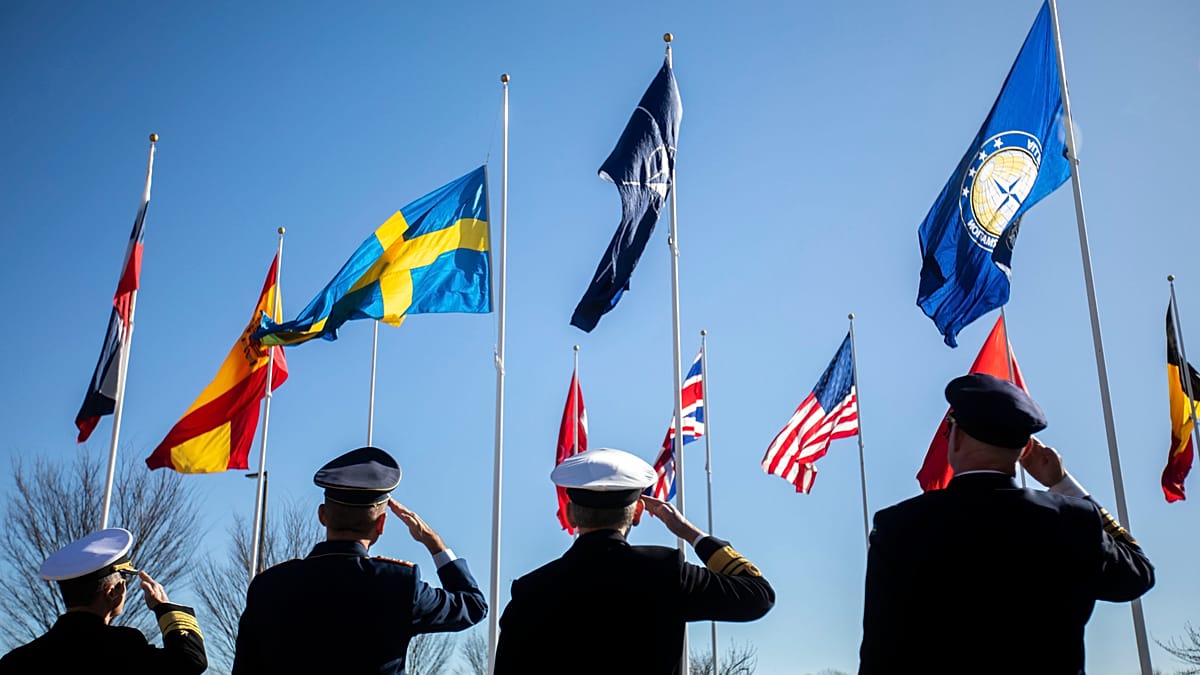
As Iran war reaches Europe’s borders, can the NATO shield hold?
As the Iran war escalates, European cities are now within range of Tehran’s arsenal. We asked NATO how it would defend against a strike, and an expert on polit…
What do we know about Mojtaba Khamenei’s condition?
Iran's new Ayatollah Mojtaba Khamenei has not appeared publicly since his appointment by the Assembly of Experts, fuelling uncertainty about his health and whereabouts following the attack that killed his father.
Initial reports suggested Mojtaba Khamenei had been killed alongside his father Ayatollah Ali Khamenei in US-Israeli strikes on Tehran last Saturday.
However, it emerged that while his mother, father, wife and possibly other family members all died in the strike, he survived.
Read the full article:
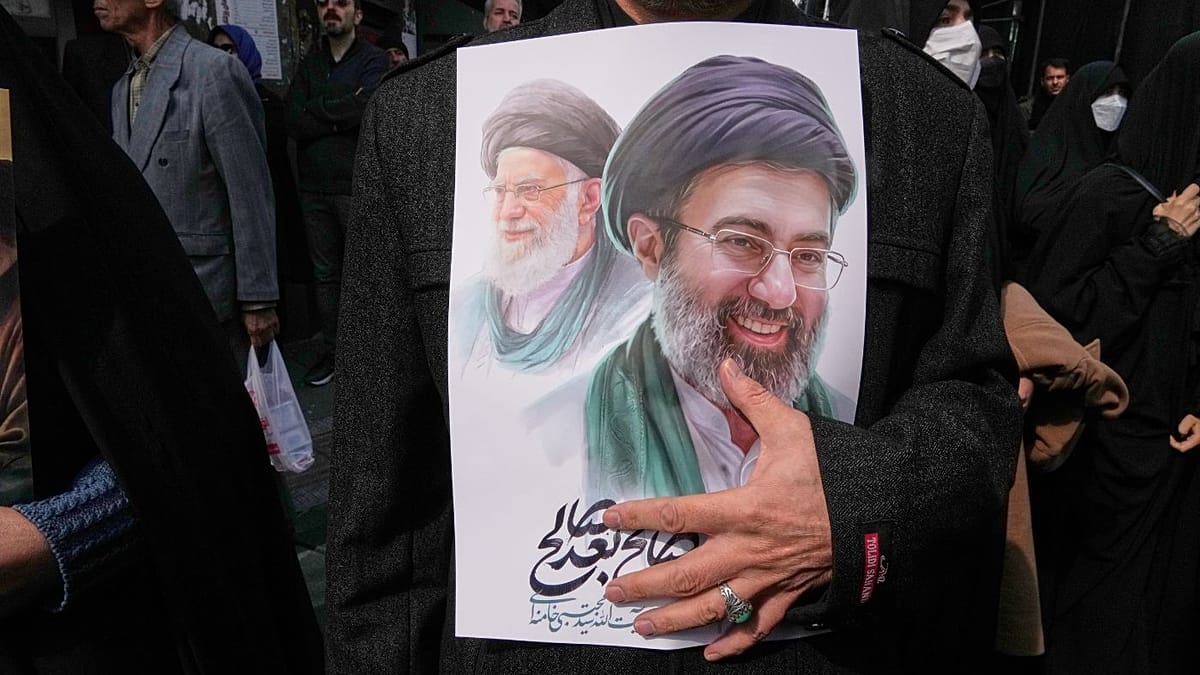
Missing in action: What we know about Mojtaba Khamenei’s condition
Mojtaba Khamenei’s secretive rise as Iran’s new ayatollah and absence from public has fuelled speculation over his injuries, whereabouts and whether he really…
Iran war displaces more than three million inside the country, UN says
Up to 3.2 million people have been displaced inside Iran since the US and Israel launched their war on Tehran almost two weeks ago, the United Nations refugee agency said on Thursday.
"Between 600,000 and one million Iranian households are now temporarily displaced inside Iran as a result of the ongoing conflict, according to preliminary assessments, representing up to 3.2 million people," said Ayaki Ito, who heads UNHCR's emergency support team.
"This figure is likely to continue rising as hostilities persist, marking a worrying escalation in humanitarian needs," he said in a statement.