

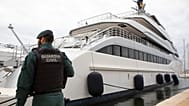















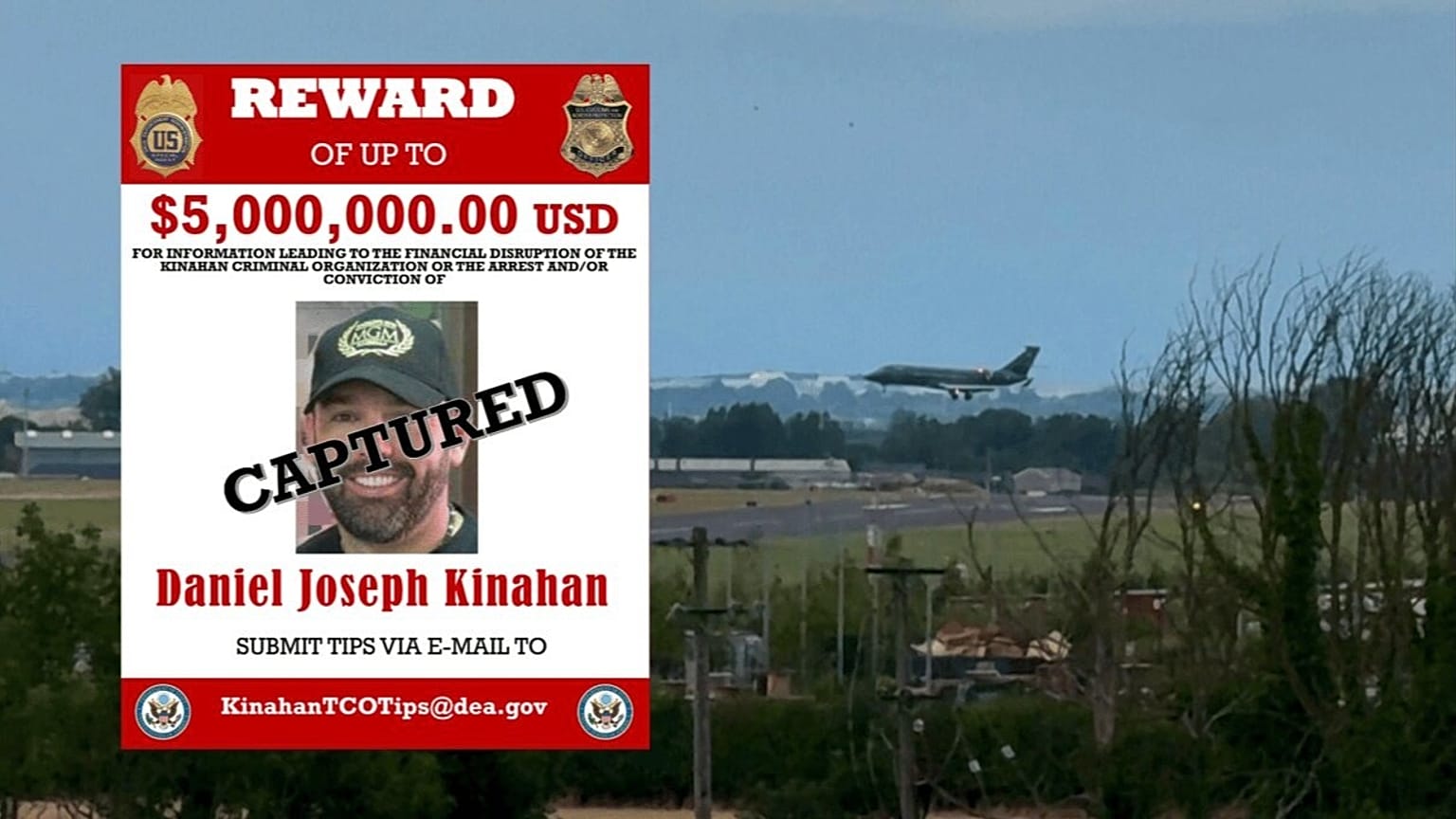













Kinahan is believed to have run the Kinahan organised crime group, which is suspected of trafficking narcotics into Ireland, the UK and Spain, as well as a slew of other charges, including money laundering and murder.
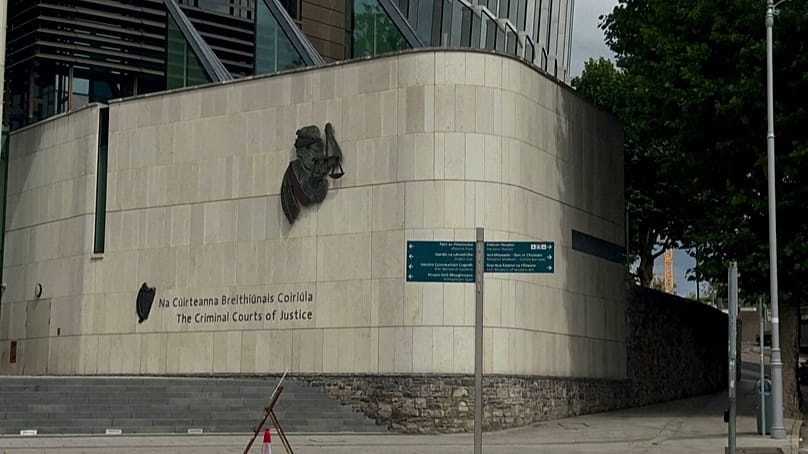
An Irish court on Sunday charged alleged cartel boss Daniel Kinahan with directing a criminal organisation and remanded him in custody after his extradition from Dubai on a government jet.
 ADVERTISEMENT
ADVERTISEMENT
ADVERTISEMENT
The 49-year-old Irishman appeared in court after being flown back on Sunday evening from Dubai on the basis of an arrest warrant issued by Ireland.
He is alleged to be one of the leaders of a transnational group, known as the Kinahan Organised Crime Group (KOCG) or the Kinahan cartel.
The alleged leader of an Irish organised crime group has been extradited to Ireland from Dubai to face charges that he ran an international drug smuggling and money laundering empire with tentacles that stretched to the UK, Europe and the United States.
Air Tracker data showed an Irish Air Corps plane, which departed from Dubai landing at a military airport on the outskirts of the Irish capital Dublin on Sunday evening, after courts in the United Arab Emirates refused to block his extradition.
The Special Criminal Court handles all organised crime and terrorism cases, as well as others where prosecutors believe the ordinary courts are inadequate to ensure the “effective administration of justice.” Cases are heard by a panel of three judges without a jury.
Huge security operations were reportedly underway to ensure Kinahan faces justice. Protocols include armed police, members of the armed forces and the prison service — which recently acquired a bombproof escort van to transport organised crime suspects, terrorists and other high-risk prisoners.
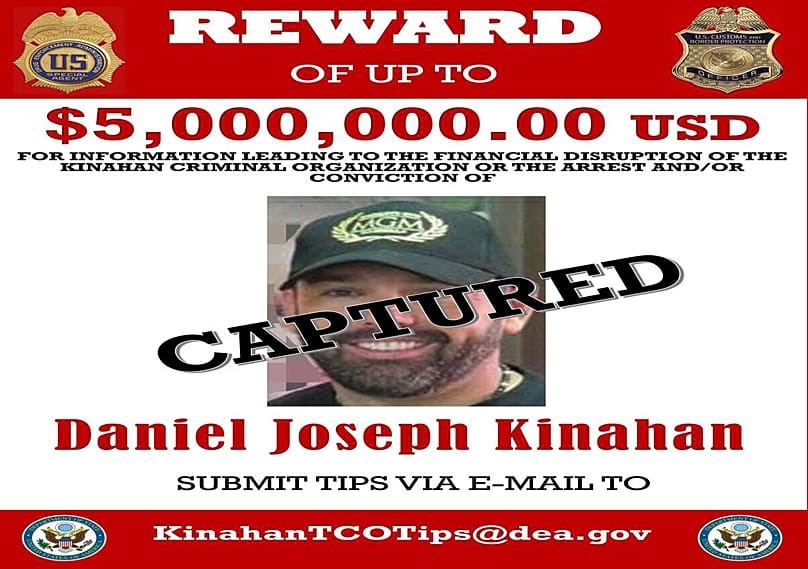
The security precautions come amid allegations that the Kinahans are engaged in a bloody gang war with another Irish organised crime group.
“Since February 2016, the (Kinahan Organised Crime Group) has been involved in a gang war with another group in Ireland and Spain, resulting in numerous murders, including of two innocent bystanders,” the US Treasury Department said in 2022, when it sanctioned six members of the Kinahan gang and three businesses linked to it.
Irish police, with the help of authorities in the UK, Spain and the US, have been pursuing members of the Kinahan organisation for the past decade. They allege that the gang smuggled tens of millions of euros worth of illegal drugs, as well as guns into Europe, then used a network of apparently legitimate enterprises to launder the profits.
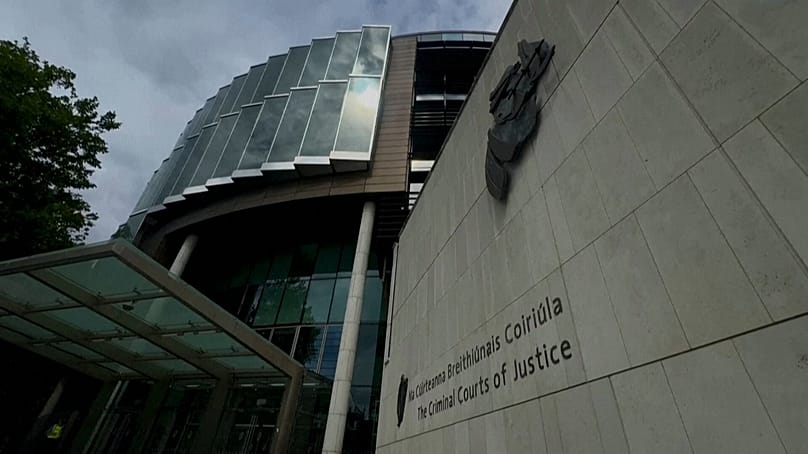
Daniel Kinahan is believed to have run the day-to-day operations of the gang from his base in Dubai, the US Treasury said, including buying “large quantities of cocaine” from South America, organising its distribution in Ireland and attempting to smuggle drugs into the UK.
Kinahan has also instructed gang members to deliver money to a number of people in prison, including one who was convicted of attempting to murder someone on behalf of the organisation, the US agency added.
In March of 2022, the head of the Kinahan organization in Britain, Thomas “Bomber” Kavanagh, was sentenced to 21 years in prison after he was convicted or orchestrating drug shipments into the UK. Two other men were sentenced to 20 years and 19 1/2 years for their part in the crimes.
In September of 2022, Spanish police arrested an Irishman suspected of laundering money for the Kinahan crime group after raiding a property in Malaga on the Costa del Sol.
The group was suspected of registering companies in the UK, Spain and Gibraltar, then creating a brand of vodka promoted in bars and nightclubs along the Costa del Sol to disguise the source of its earnings, according to the UK’s National Crime Agency, which assisted in the investigations.
“The Kinahan organised crime network transcends national boundaries, which is why international law enforcement operations like this are necessary,” the agency said at the time.