




























Collectors, sellers and restorers are giving new life to historical objects through flea markets, antique salons and private museums.
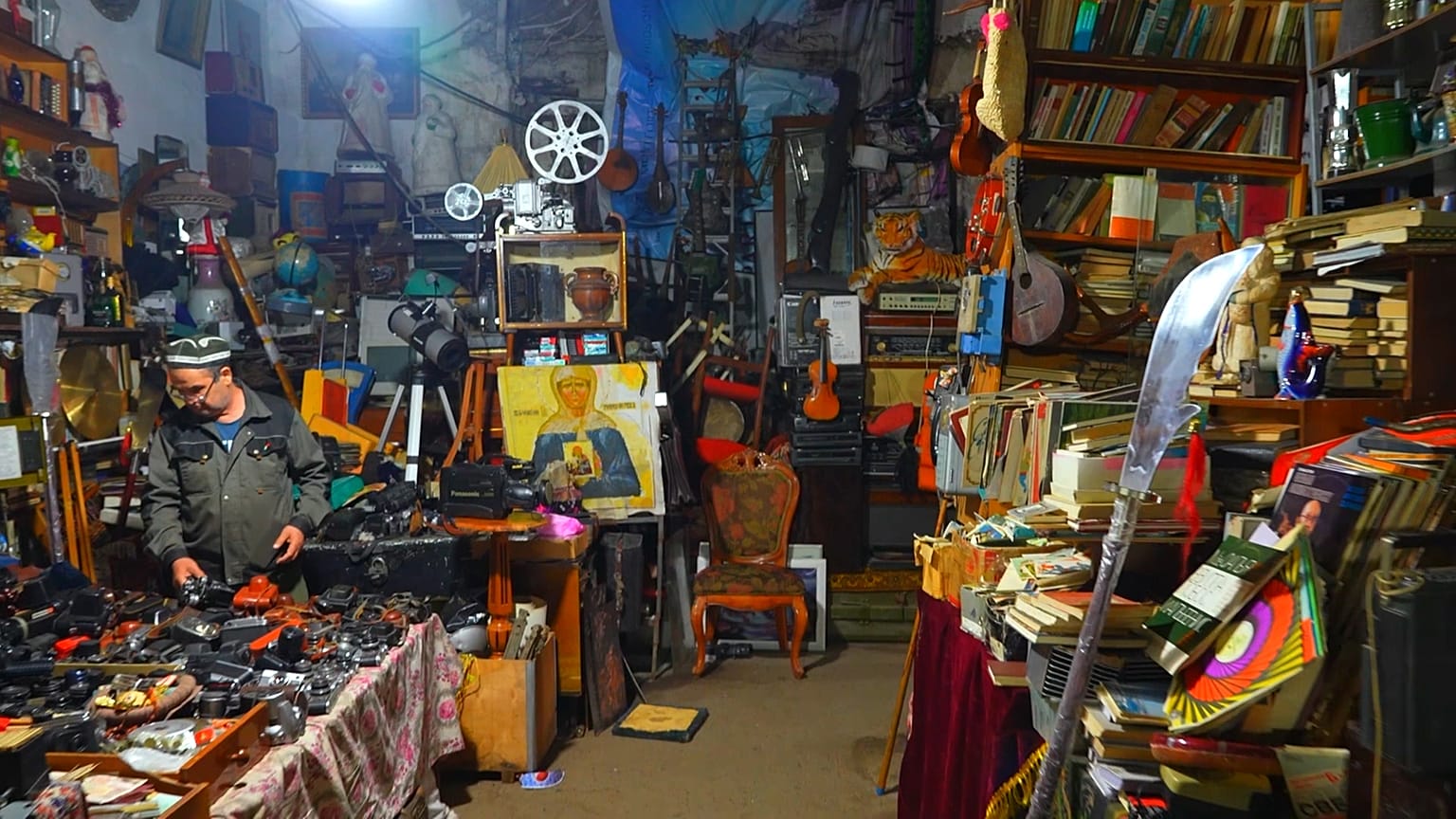
At first glance, it looks like a random collection of objects: old furniture, worn books, crystal sets, embroidered fabrics, cameras and copperware. But behind every item is a story, a memory and often decades of preservation.
 ADVERTISEMENT
ADVERTISEMENT
ADVERTISEMENT
Across Uzbekistan, flea markets and antique spaces reveal another side of the country’s cultural life, shaped by personal collections, family histories and everyday objects that have survived through generations.
In Tashkent, interest in antiques and vintage items is becoming increasingly visible, attracting both locals and foreign visitors. What began as a small family initiative has gradually developed into a long-running business focused on preserving historical objects.
One of the country’s best-known antique salons has been operating for more than 30 years, bringing together vintage furniture, crystal, paintings, rare photographs and decorative objects in one space.
Inside, many of the items are not the kind usually found in traditional museums. The work behind the scenes involves research, restoration, attribution and historical evaluation.
Owner Lyubov Shapulina says she entered the field by continuing her parents’ work.
“I did not come into the antiques business as a profession, I am continuing my parents’ work,” she explains.
According to Shapulina, the business first focused on contemporary art before gradually shifting towards antiques as more people began bringing older objects for evaluation and sale.
“If earlier this work was about intuition and simply good taste, today I approach it primarily as professional work,” she says. “We are engaged in attribution and pay attention to the historical context of each item.”
Over time, she says antiques became more than commercial objects.
“When you have been in this field for more than 25 years, you begin to treat antiques as part of the historical and cultural heritage of our region.”
Today, she notices growing interest among younger audiences and local businesses, particularly in interior design.
“We go into hotels or guesthouses and already see elements of antiques in the interior – antique cabinets, suzani textiles, embroidery, carpets. I can see real changes and a strong interest in the history of Uzbekistan.”
Her collection now includes around 2,000 objects, ranging from antique furniture to contemporary paintings. Antique salons, she says, often work closely with modern artists as well.
“It’s a kind of symbiosis. We cannot exist without each other.”
Among her main specialisations is antique furniture restoration, a field she describes as technically demanding.
“We restore carved elements, repair losses and restore colour. Sometimes we buy furniture in very poor condition and fully restore it.”
Beyond curated salons, Uzbekistan’s open-air flea markets continue to attract collectors, tourists and casual visitors searching for unusual objects.
One of the country’s best-known markets is Yangiabad Bazaar in Tashkent, where antiques are sold alongside spare parts, electronics and household goods.
For nearly 20 years, seller Abdurashid Matboboyev has specialised in vintage photographic and film equipment.
“My main field is photographic equipment – photo and cinema equipment,” he says. “That interest stayed with me from my youth.”
Today, many of his customers are foreign tourists, especially photographers searching for vintage lenses and accessories.
“You can recognise them from afar, they usually have cameras around their necks,” he says.
Working with international visitors has also helped him pick up several languages over the years.
“I can speak some English, a little Japanese, some Chinese, and a bit of Italian and French.”
Matboboyev says interest in older technology is also growing among younger local buyers.
“Young people today are becoming interested in old items,” he says. “They say they want that old quality.”
He believes vintage aesthetics are gradually returning to cafés, restaurants and public spaces across the country.
“The trend is coming back,” he says.
From Tashkent, the journey continues east to the Bagdad district of the Fergana region, where collector Mirzaolim Tursunov has transformed his home into a private museum filled with more than 3,000 objects.
What began as a coin collection in the 1990s eventually expanded into a much larger archive of books, medals, copper objects and handcrafted artefacts.
“The very first item I acquired was a coin from the Kushan period,” he says. “That’s how it all began.”
Tursunov says his fascination with history developed during childhood through stories told by older family members.
“At first, it was just a hobby. Over the years, that interest grew stronger and eventually became the meaning of my life.”
Many of the objects that interest him most are linked to craftsmanship, including engraved copperware and items featuring Arabic inscriptions.
“When you see these objects, you begin to think about how people used them in the past,” he says. “It shows how intelligent and skilled our ancestors were.”
Unlike some collectors, Tursunov says he is not interested in resale value.
“I collect these items for our people, for my children, for our nation. I want to preserve them as part of our heritage.”
His private museum now regularly receives school groups and foreign visitors, including tourists from the United States and Ireland.
From Fergana, the route continues to Bukhara, where smaller antique markets attract collectors and tourists interested in historical objects and numismatics.
Seller Dilorom Jumayeva says visitors are often drawn to ceramics, suzani textiles, old books and teapots.
“People who come here immerse themselves in history,” she says. “It feels as if they step into the past through the objects they see.”
Among the objects in her collection is a book more than 400 years old, which attracts strong interest from foreign tourists.
“Visitors from Iran, Arab countries and China are very impressed when they see it,” she says.
Like many sellers, Jumayeva continues searching for new objects across Uzbekistan, travelling to different regions and working with experts to verify authenticity and historical value.
“There is a strong flow of tourists, especially those interested in antiques and numismatics,” she says.
Walking through Bukhara’s flea markets, visitors move between antique tools, vintage photographs, Soviet memorabilia and traditional household items once used in daily life.
In these spaces, objects continue to move from one owner to another, carrying stories, memories and cultural meaning that evolve over time.
Read more