














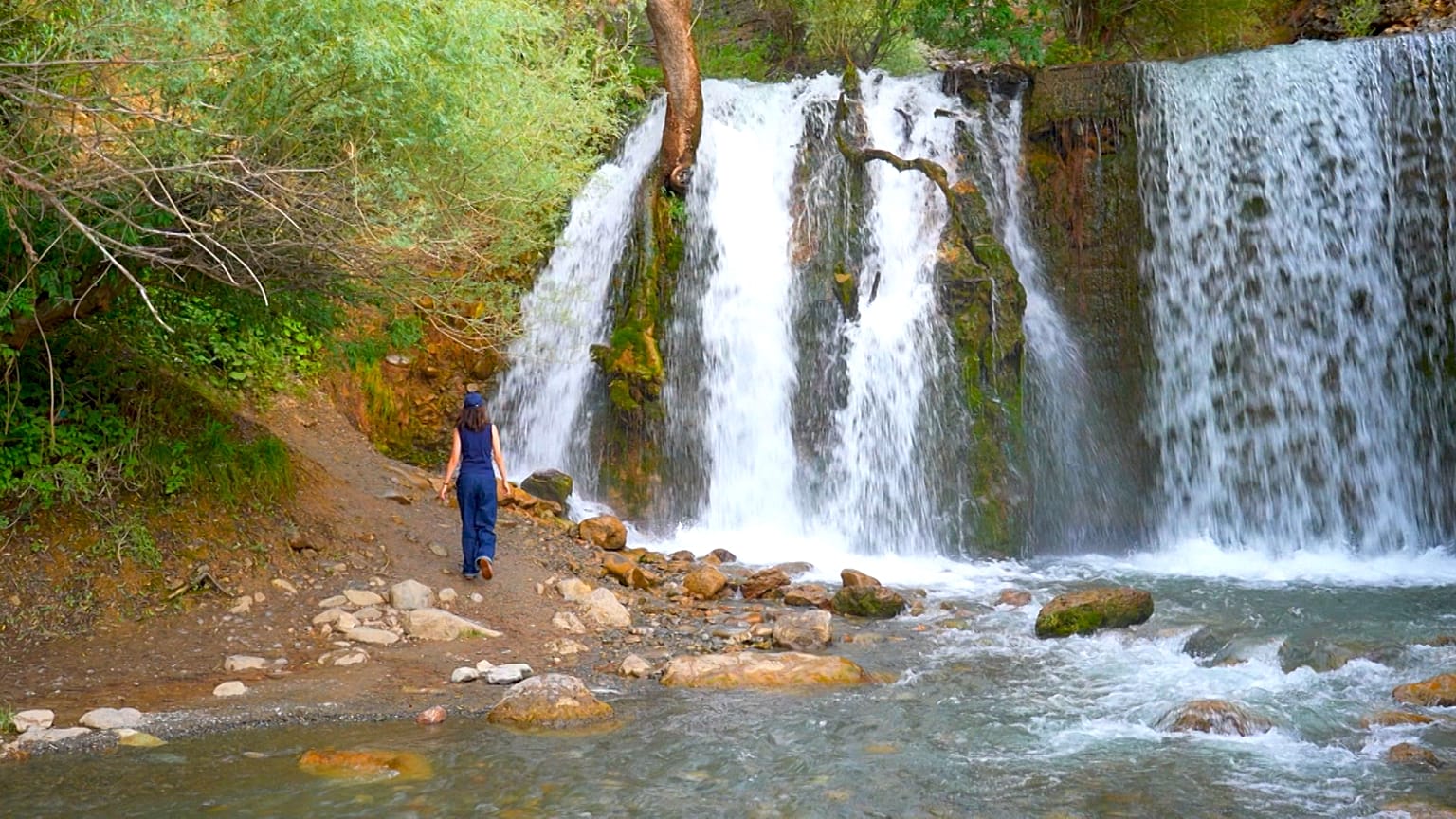














Mountain rivers, hidden waterfalls and centuries-old reservoirs show how water has shaped settlement, trade and tourism across Uzbekistan, offering visitors a different perspective on the country.
More than 600 rivers and streams flow across Uzbekistan. Together with around 300 natural and artificial lakes and more than 50 major reservoirs, they supply drinking water, support agriculture and hydropower, and increasingly attract visitors looking to explore the country's diverse landscapes.
 ADVERTISEMENT
ADVERTISEMENT
ADVERTISEMENT
Water has influenced where people settled, how communities developed and why travellers stopped across what is now Uzbekistan. The Ugam river, the waterfalls of Jizzakh and the historic hovuzs (pools) of Bukhara each tell part of that story. Today, many of these places continue to serve local residents while offering a different way to explore Uzbekistan.
The waterways of the Tashkent region
Just over an hour from Tashkent, the Ugam river flows through the foothills of the Western Tian Shan before continuing into the Bo'stonliq District. Fed by snowmelt and mountain springs, it is one of Uzbekistan's main mountain waterways, supplying nearby communities while supporting local ecosystems and agriculture.
The river has also become one of the region's most popular destinations for outdoor recreation. Recreation areas, swimming pools, restaurants and picnic sites line parts of its banks during the warmer months.
“Along the Ugam river there is a children's playground, various pools, special recreational areas where guests can relax, a restaurant, and facilities where people can prepare their own food,” says Ravshan Temirov.
Further into the mountains, another attraction has developed in the village of Nanay. An irrigation canal originally built to supply household gardens now creates a waterfall that attracts visitors throughout the summer.
According to local guide Dilshod Ashurmetov, the waterfall itself is the result of hashar, the long-standing tradition of voluntary community work that remains common across Uzbekistan.
“This waterfall was created long ago through hashar, community work. We have special vehicles and young men assigned to bring visitors to the waterfall and then take them back. There are tapchans and seating platforms where people can relax, eat food and spend their free time,” he explains.
For local visitor Sabohat Zakirova, the attraction is the peaceful environment around the flowing water.
"My little grandson had a cough. After coming here, his cough went away. We've spent fifteen days relaxing here by the waterfall, and we hope to come again next year,” she says.
Qizilsuv and the springs of Jizzakh
Several hours to the south, the landscape changes. In the mountains of Jizzakh region, natural springs emerge from rocky slopes, feeding streams and waterfalls that continue flowing throughout the year.
"The waterfall you see here is natural. It is formed by springs that gather above and flow down naturally. People living below also use it as drinking water. In winter, this spring water does not freeze," says Jahongir Shukurov, head of division at Baxmal State Forestry.
One of the best-known sites is Qizilsuv waterfall, hidden within the forests of Bakhmal district. Surrounded by rocky cliffs and greenery, it has become increasingly popular with hikers and nature lovers seeking cooler temperatures during the summer months.
Researchers have identified naturally elevated levels of iron in the spring water, while local authorities are considering projects that would expand tourism infrastructure, including camping areas and recreation facilities.
“We conducted research and laboratory analysis, which showed that Qizilsuv contains a high level of iron,” says Akbarjon Qolberdiyev, chief engineer at Bakhmal State Forestry.
He says the area currently receives between 2,000 and 3,000 international visitors each year, alongside between 30,000 and 50,000 domestic tourists.
For many people, however, the attraction is much simpler.
“This is my first time coming to the stream known as Qizilsuv. What I liked most was the cleanliness of the water, its clarity and its softness,” says visitor Nargiza Oqilova.
The reservoirs that sustained Bukhara
Unlike the mountain rivers of eastern Uzbekistan, water in Bukhara had to be collected and stored.
Located on the edge of the Kyzylkum Desert, the city depended on a network of public reservoirs known as hovuzs. They supplied drinking water, supported everyday life and became gathering places where residents could rest beneath the shade of trees during the hottest months of the year.
Among the best preserved is Lyabi Hauz, one of Bukhara's best-known architectural ensembles. Developed during the sixteenth and seventeenth centuries, it grew around a large stone-lined reservoir that became one of the city's main public spaces. According to local legend, statesman Nadir Divan-Begi financed the construction after selling a valuable jewel he had received during his travels, choosing to leave a public monument for future generations.
Researcher Iskandar Hamroev from Bukhara State University says the reservoirs served far more than one purpose.
“Bukhara is located near the Kyzylkum desert, and the weather is very hot. People came here to rest under the trees. The pools also served as water reserves. Today, people mainly come here to sit and relax,” he says.
Another surviving reservoir, Bolohovuz, stands opposite the Ark fortress. Built in the early eighteenth century during the Ashtarkhanid dynasty, it supplied water to the Emir's residence, government officials and nearby neighbourhoods. Its name comes from the Persian-Tajik words bolo (upper) and hovuz (pool), reflecting its position in the upper part of the historic city.
“Bolohovuz was created because there was a need for water. The residents of the surrounding neighbourhoods also used the water according to their everyday domestic needs,” Hamroev explains.
Although these rivers, waterfalls and reservoirs served different purposes, they share a common role in Uzbekistan's history. They supported settlements, sustained communities and shaped the trade routes that connected people across Central Asia. Today, they continue to offer a different perspective on the country's landscapes, beyond its better-known Silk Road monuments.
Read more