




























Nvidia CEO Jensen Huang spoke for almost three hours in California, unveiling a series of new softwares from his company that will bring autonomous AI to businesses, space and robotaxis.
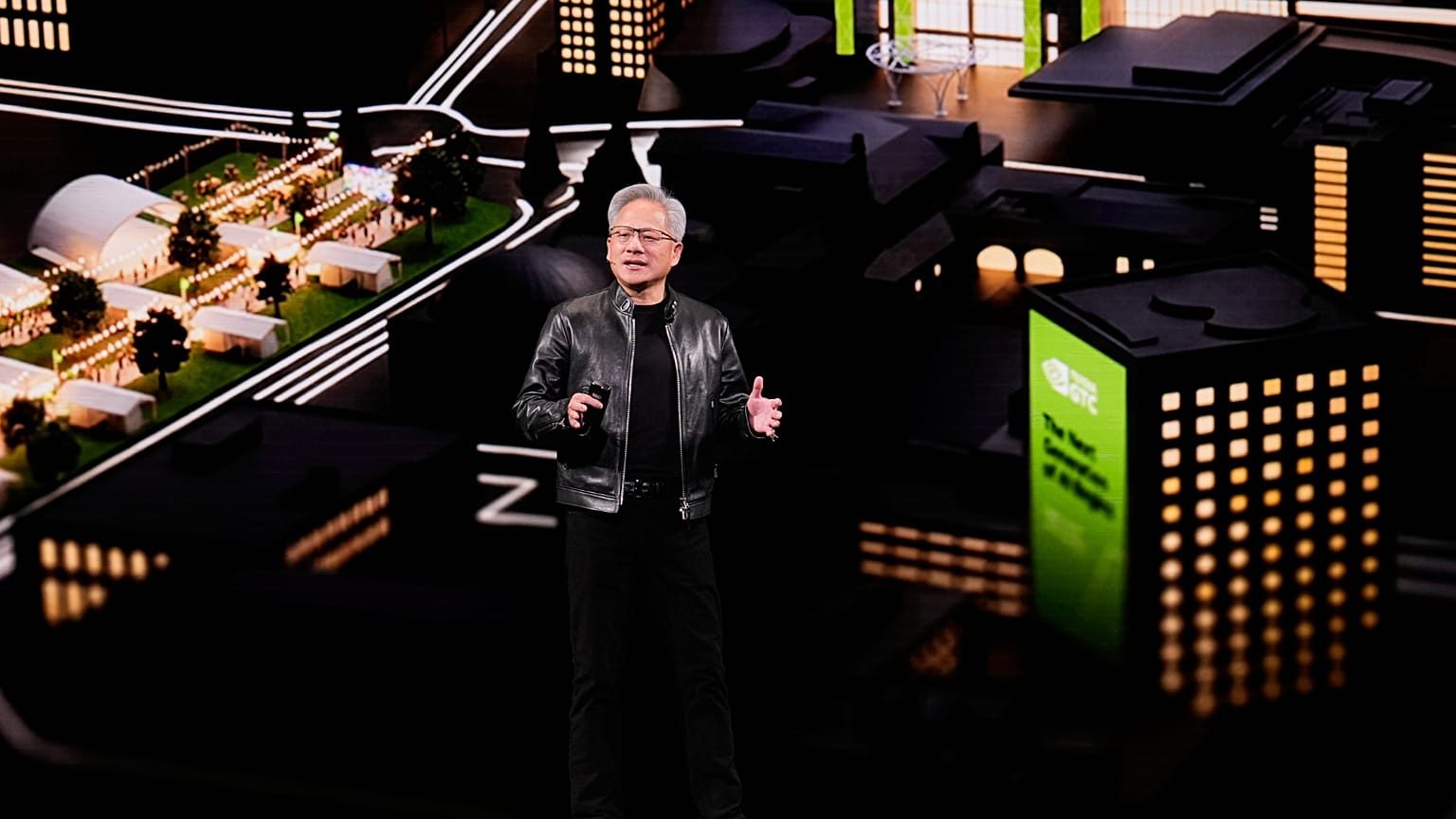
Nvidia’s CEO Jensen Huang unveiled a series of breakthroughs in artificial intelligence (AI), autonomous vehicles, and space computing at the company’s annual conference in San Jose, California.
 ADVERTISEMENT
ADVERTISEMENT
ADVERTISEMENT
Highlights included NemoClaw, an open source platform for AI agents, the Space-1 Vera Rubin Module capable of running AI directly in orbit, and a new partnership with European rideshare app Bolt to expand autonomous vehicles across the continent.
Huang framed these innovations as the next phase of computing, aiming to bring smarter, faster, and more autonomous technology from the cloud to the streets, and even into space.
‘NemoClaw’ brings AI agents to businesses
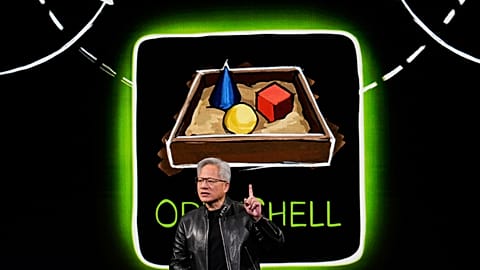
Nvidia launched an open source command called NemoClaw, which enables businesses to run AI agents with enhanced security and privacy controls.
AI agents are autonomous software programs that can make decisions and take action without human interference.
Nvidia’s NemoClaw builds on OpenClaw, an AI personal assistant software written by Austrian developer Peter Steinberger.
Agents built through OpenClaw manage calendars, book flights, or chat amongst themselves on a social media platform. It is the software behind MoltBook, the controversial social media platform where bots interact without human involvement, despite some studies claiming the AI bots are not fully autonomous.
Huang acknowledged that OpenClaw previously had access to sensitive information, including employee and financial data that it could share across agents. Nvidia worked with Steinberger to make a safer model for enterprises.
“You can download it, play with it, and connect it to the policy engine … of all the companies in the world,” Huang said.
OpenClaw has had a “profound” influence on the AI sector, Huang said, calling it the most popular open source project “in the history of humanity”.
“The implication is incredible,” Huang said. “Every single company in the world today needs to have an OpenClaw strategy. This is the new computer.”
Steinberger recently joined OpenAI to “build an agent that even my mum can use,” but his software will remain open source under a foundation.
Space computers in development
Huang unveiled the Space-1 Vera Rubin Module, a graphics processing unit (GPU) and computer that will power space-based data centres.
The model will deliver up to 25 times more compute than Nvidia’s other chips, which will enable advanced AI tasks from space, the company said in a press release after Huang’s keynote.
The additional computing power enables more advanced tasks to be performed in orbit, such as running large language models (LLMs) required to train AI models.
The Space-1 Vera Rubin will also be able to instantly process data from space instruments without having to first send that data back to Earth, the company said.
Huang said it’s still “very complicated” to build data centres in space, noting that cooling the computers working in the data centres is still a major hurdle.
He also highlighted other space-ready models, such as the IGX Thor robotics technology, which is now radiation-approved. The model supports real-time AI, safety features and autonomous operations, which lets satellites process the data they collect on board.
Nvidia did not give a release date for the Space-1 Vera Rubin model, only that it “will be available at a later date.”
Nvidia and Bolt: bringing autonomous vehicles to Europe
Nvidia also shared on the sidelines of the GTC that it will be partnering with rideshare app Bolt to scale autonomous vehicles (AV) in Europe.
Bolt will get access to Nvidia’s Level 4 robotaxi platform, which is capable of operating without human intervention. The platform uses car data from lidar, cameras and radar systems to process live road conditions. Bolt will also use Nvidia AI tools to recreate diverse driving behaviours on European streets.
The partnership looks to create a “European-led AV offering that ensures our continent remains at the forefront of mobility innovation while maintaining full control over our data and technology,” according to Jevgeni Kabanov, president and head of autonomous driving at Bolt.
Bolt already signed autonomous vehicle partnerships with Pony.AI, a Chinese self-driving company, and Dutch automaker Stellantis, with European trials set for 2026. Bolt aims to bring 100,000 autonomous vehicles to its operations by 2035.
Huang also announced another partners for Nvidia’s robotaxi platform, including automakers BYD, Hyundai, Nissan and Geely. Huang also mentioned a similar partnership with Uber to deploy robotaxi-ready vehicles into their network.
“The ChatGPT moment of driving cars has arrived,” Huang said. “We now know we can successfully autonomously drive cars.”
The announcement from Bolt comes as several other operations, including ridesharing app Uber, German automaker Volkswagen and autonomous driving company WeRide, are either planning AVs or have already launched pilot projects in several European cities.