














Supporters of the tech argue that autonomous vehicles could help reduce accidents caused by human error, but London’s iconic black cab drivers remain sceptical.
Robotaxis could begin operating on London’s streets as early as this year.
 ADVERTISEMENT
ADVERTISEMENT
ADVERTISEMENT
But does the technology work, and is it better than a human brain that's memorised the many thousands of streets around central London?
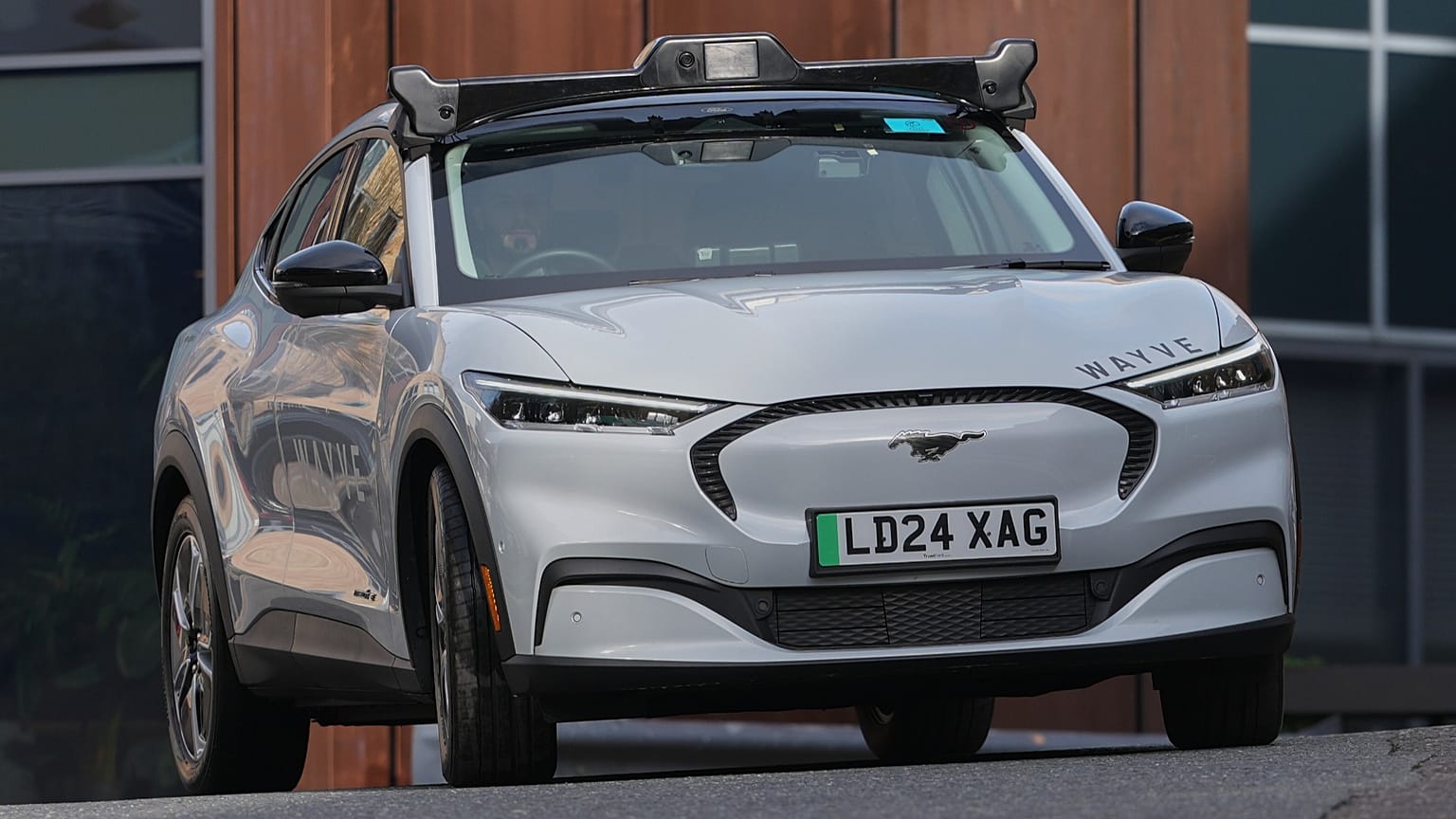
In north London, a steering wheel turns smoothly through traffic with no hands touching it. The vehicle, developed by UK autonomous driving company Wayve, moves through congested streets, responding to traffic lights, cyclists, junctions and pedestrians in real time.
A safety operator sits behind the wheel, ready to intervene if necessary, as required under current UK regulations - but the AI system is doing the hard work.
“Autonomous driving is one of the most complex engineering problems we have today. It requires developing a safety critical system that's affordable to be mass-manufactured around the world, and has the flexibility to operate in many markets, this is an extraordinarily difficult engineering problem," said said Alex Kendall, the co-founder and CEO of Wayve.
He continues: "But the good news is that AI provides a way to develop a level of intelligence that means that we can drive anywhere with mass market hardware."
AI takes on the streets of London
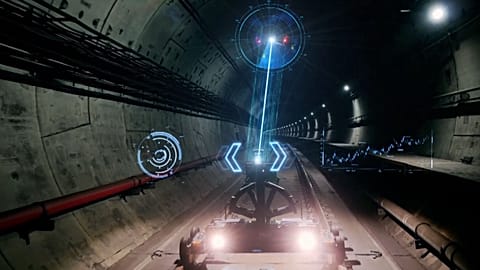
Unlike earlier generations of self-driving cars that relied heavily on detailed pre-mapped routes and expensive hardware stacks, Wayve says its model is trained using huge amounts of driving data, whcih allows the vehicle to interpret its surroundings and make decisions more like a human driver would.
“We believe at Wayve that there is a new approach that moves away from this mapping hardware, and expense and moves to an end-to-end, AI-driven approach. This is the same approach that made ChatGPT or AlphaGo possible… we can do away with all of this complexity and replace it with one end-to-end neural network,” Kendall said.
Inside the vehicle, the safety operator’s role has increasingly shifted from active driver to supervisor, monitoring the system’s decisions rather than constantly correcting them.
“I think I spend more time not driving behind the wheel than driving because it's come to that level,” said Vitor Velosa, vehicle safety operator at Wayve.
Is London ready to fully let go of the wheel?
Supporters of the high-tech vehicles argue that autonomy could ultimately improve road safety, given that human error remains the leading cause of traffic collisions.
But London’s iconic black cab drivers, who must complete The Knowledge - a test dating back to 1865, that requires memorising 320 routes across the city, aren’t entirely convinced.
Driver Frank O'Beirne thinks that black cabbies like himself can embrace new technology, but doesn't think London is ready for robotaxis just yet.
He says: "Will it be a fad? You know, technology's evolving. Okay, we're not riding horses and carts. We are, in fact, in a £75,000 (GBP) electric vehicle. So we're always evolving. Are we there yet? No way. I don't want to be like an ignorant taxi driver. No, we're not there yet. I just can't see it."
Will it be "taxi for Wayve" or will autonomous cars be a fixture of London's streets of the near future? 2026 is an important year in autonomous driving and if the public approves then they're likely here to stay.