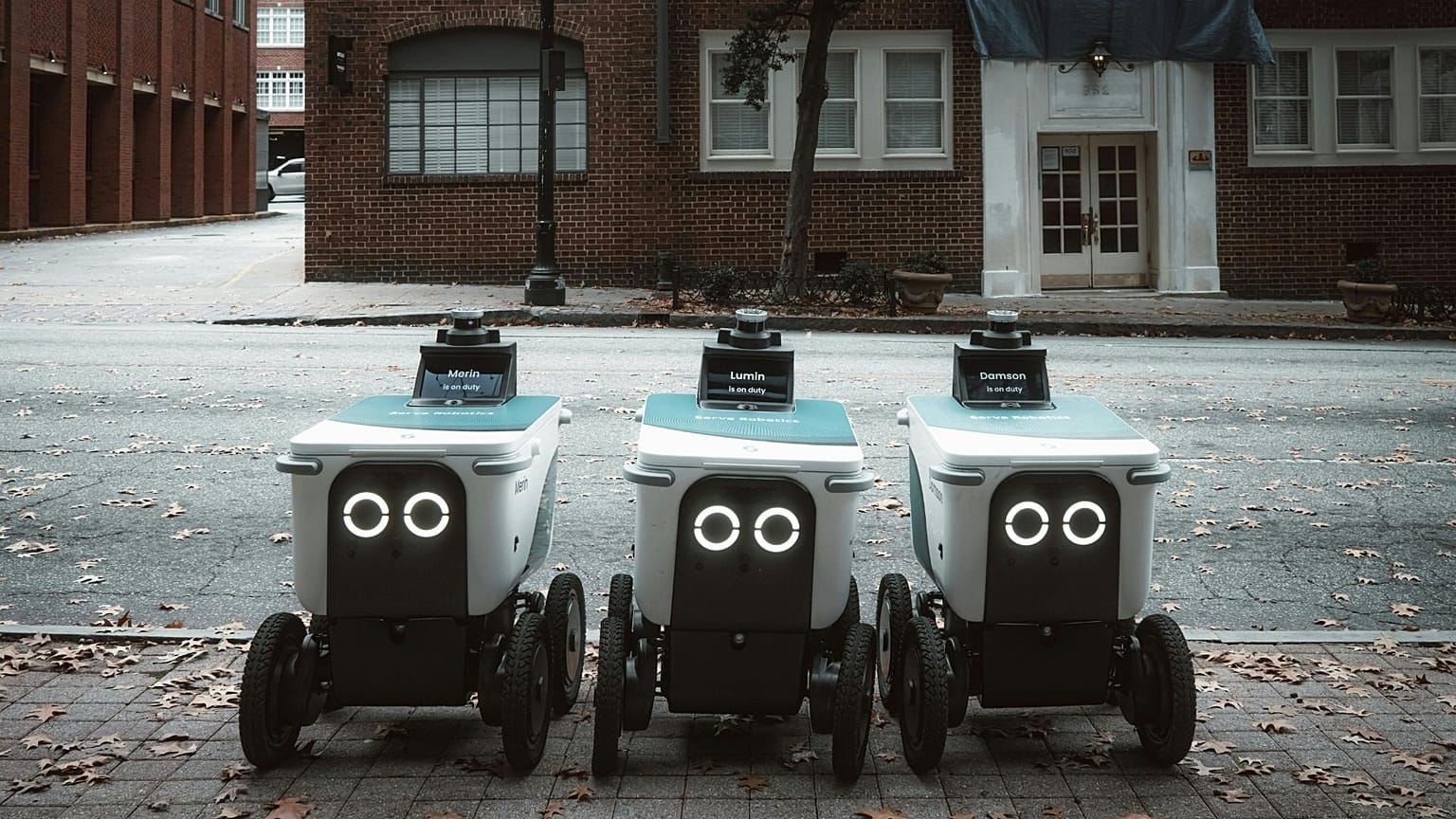













A robot that suddenly loses track of where it is has long been a major challenge for engineers. Now, researchers say a new AI system could help “kidnapped” robots find their way again, even in environments that constantly change.
Robots losing track of where they are is a long-standing challenge known as the “kidnapped robot” problem, but researchers say they have developed a new AI system that could help solve it.
 ADVERTISEMENT
ADVERTISEMENT
ADVERTISEMENT
A research team at the Miguel Hernández University of Elche in Spain has developed a new localisation method for autonomous robots, which uses 3D LiDAR technology to scan surroundings with laser pulses to create a map-like representation of the environment.
It allows robots to recover their position even after being moved, powered off or displaced, the researchers say.
Reliable and safe localisation is key for service robotics, logistics automation, infrastructure inspection, environmental monitoring, and autonomous vehicles.
Many autonomous robots rely partly on satellite navigation systems such as GPS, but those signals can become weak near tall buildings and often do not work well indoors.
The researchers say their system, known as MCL-DLF (Monte Carlo Localisation – Deep Local Feature), enables robots to rely more effectively on onboard sensors rather than external infrastructure.
The system first identifies a general area by recognising large structures such as buildings or vegetation. It then narrows down the robot’s exact position by analysing smaller details, a process designed to mirror how humans orient themselves in unfamiliar places.
“This is similar to how people first recognise a general area and then rely on small distinguishing details to determine their precise location,” said Míriam Máximo, lead author of the study and a researcher at Miguel Hernández University of Elche.
Using AI, the system learns which environmental features are most useful for localisation and maintains several possible location estimates at once and continuously updates them as new sensor data arrives.
Researchers say this helps improve reliability when surroundings look similar or have changed over time.
The technology was tested over several months on the university campus under varying conditions, including different seasons and lighting.
Researchers say the system showed stronger positioning accuracy and more consistent performance across changing environmental conditions from seasonal shifts to lighting and vegetation changes, compared with conventional approaches.
The new system could help robots operate more independently in real-world environments where conditions are rarely static.