





























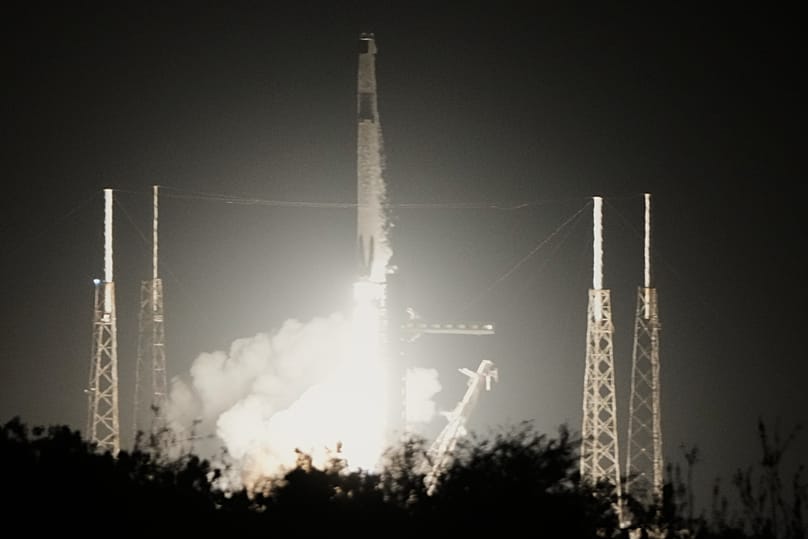
“It turns out Friday the 13th is a very lucky day,” SpaceX Launch Control radioed once the astronauts reached orbit.
A fresh team of astronauts launched toward the International Space Station on Friday aboard a SpaceX rocket, set to take over for crew members who had been brought back to Earth in what marked NASA's first medical evacuation from orbit.
 ADVERTISEMENT
ADVERTISEMENT
ADVERTISEMENT
NASA requested the expedited launch to quickly fill the positions left vacant by the evacuated astronauts.
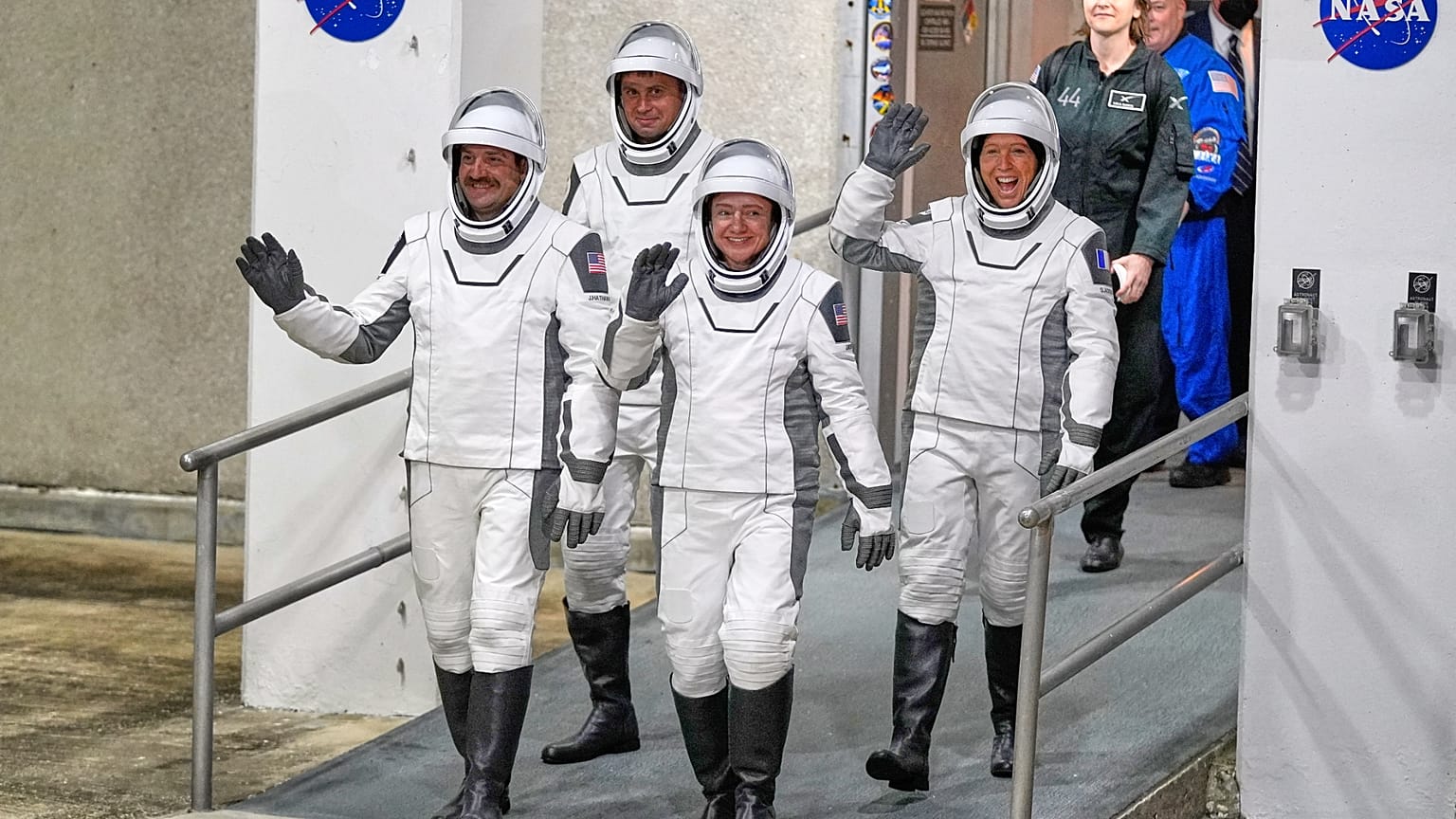
The incoming crew—comprising astronauts from the United States, France, and Russia—is scheduled for an eight- to nine-month stay that will extend through until autumn. They arrive on Saturday and will restore the space station to its complete crew complement.
Once the spacecraft reached orbit, SpaceX Launch Control jokingly noted, "It turns out Friday the 13th is a very lucky day." Mission commander Jessica Meir responded with enthusiasm: "That was quite a ride."
During the month-long crew shortage, NASA suspended spacewalks and postponed various tasks while awaiting the replacements. Americans Meir and Jack Hathaway, alongside France's Sophie Adenot and Russia's Andrei Fedyaev, will now join the skeleton crew of three astronauts—one American and two Russians—who maintained station operations in the interim.
NASA said it saw no need for additional pre-launch medical screenings or specialised diagnostic equipment, expressing confidence in existing protocols aboard the station. However, an onboard ultrasound machine, typically used for research purposes, was pressed into urgent service on January 7 to examine the unwell crew member.
NASA has declined to identify the astronaut or disclose details about their condition. All four returning crew members were hospitalised immediately upon their Pacific Ocean splashdown near San Diego.
It marked the first instance in 65 years of human spaceflight that NASA terminated a mission early due to medical concerns.
Satisfied with medical procedures already in place, NASA ordered no extra checkups for the crew ahead of liftoff, and no new diagnostic equipment was packed.
An ultrasound machine already up there for research went into overdrive on Jan. 7 when used on the ailing crew member. NASA has not revealed the ill astronaut’s identity or health issue. All four returning astronauts went straight to the hospital after splashing down in the Pacific near San Diego.
With missions becoming longer, NASA is constantly looking at upgrades to the space station’s medical gear, said deputy programme manager Dina Contella.
“But there are a lot of things that are just not practical, and so that’s when you need to bring astronauts home from space,” she said earlier this week.
In preparation for moon and Mars trips, where health care will be even more challenging, the new arrivals will test a filter designed to turn drinking water into emergency IV fluid, try out an ultrasound system that relies on artificial intelligence and augmented reality instead of experts on the ground, and perform ultrasound scans on their jugular veins in a blood clot study.
They will also demonstrate their Moon-landing skills in a simulated test.
Adenot is only the second French woman to launch to space. She was 14 when Claudie Haignere flew to Russia’s space station Mir in 1996, inspiring her to become an astronaut. Haignere travelled to Cape Canaveral to cheer her on.
“I thought it would have been a quiet joy with pride for Sophie, but it was so hugely emotional to see her with a successful launch," Haignere said.
Hathaway, like Adenot, is new to space, while Meir and Fedyaev are making their second station trip. Just before liftoff, Fedyaev led the crew in a cry of “Poyekhali" — Russian for “Let's Go” — the word uttered at liftoff by the world's first person in space, the Soviet Union's Yuri Gagarin, in 1961.
On her first mission in 2019, Meir took part in the first all-female spacewalk. The other half of that spacewalk, Christina Koch, is among the four Artemis II astronauts waiting to fly around the moon as early as March. A ship-to-ship radio linkup is planned between the two crews.