












Polling published by the Swedish Psychological Defence Agency last week found that 64% of Swedish adults think attempts by foreign actors to influence Sweden this year are either very or quite likely.
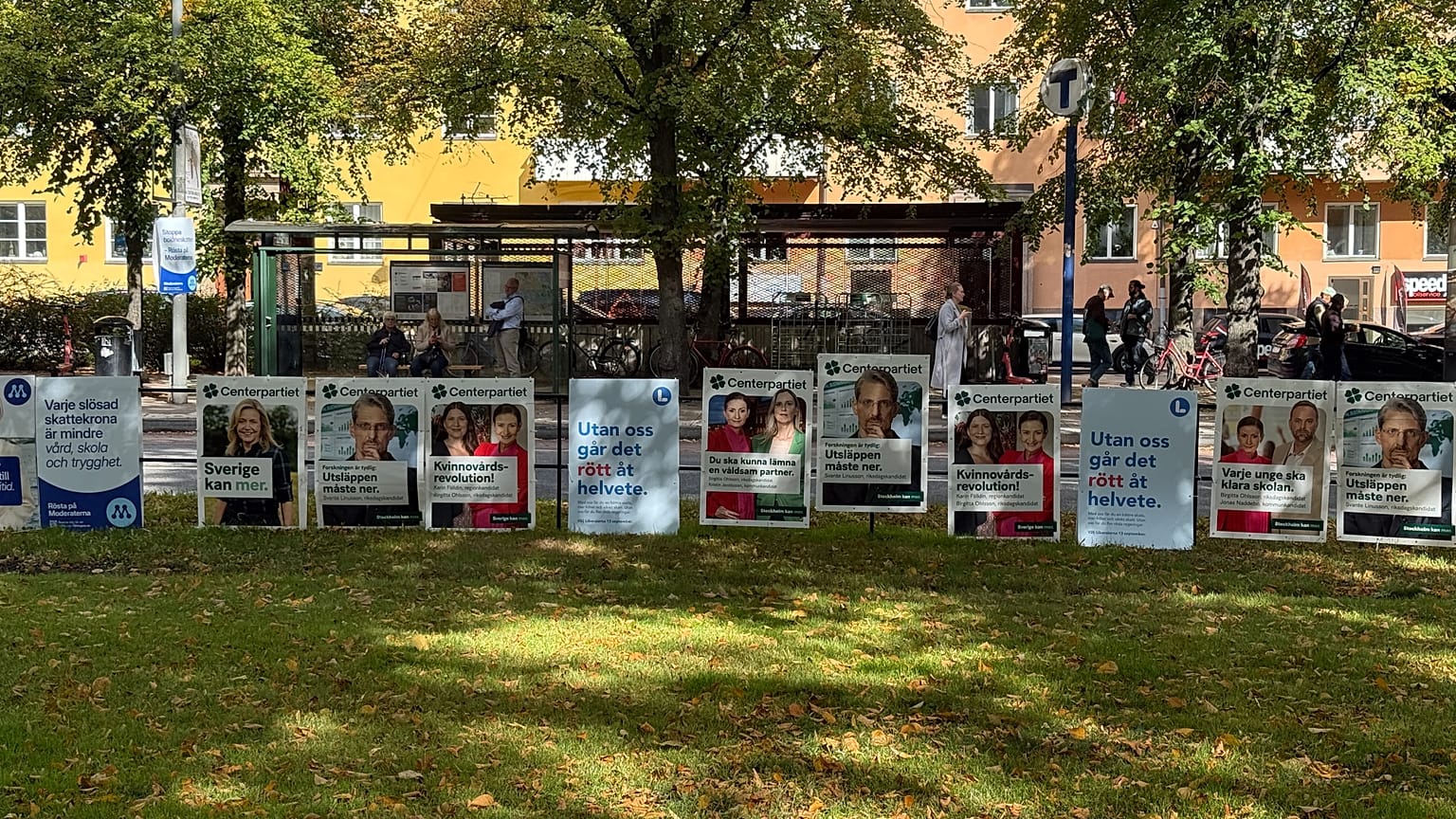
Sweden is stepping up efforts to detect foreign information influence and organised attempts to manipulate political debate ahead of its general election on 13 September, as artificial intelligence (AI) and social media reshape how political information is produced and consumed.
 ADVERTISEMENT
ADVERTISEMENT
ADVERTISEMENT
“The current security situation, rapid pace of technological developments and experience from other elections in Europe have highlighted a need to increase resilience to foreign malign information influence,” the Swedish government said in a statement ahead of the election.
Last week, the Swedish Psychological Defence Agency published a report on a partly AI-powered network of around 1,200 fake accounts on X, named Holiday, that generated more than 50,000 posts, comments and shares during 2025 and 2026 and was used for malign influence against Sweden and other countries.
The first accounts were spotted by Sweden’s central bank after staff took part in an agency-led exercise, and the network was later removed by X.
Holiday has not been linked directly to this year’s election, but the agency said it released the findings close to the vote to raise awareness of such tactics.
AI and TikTok are changing the information environment
The potential routes for influence are also changing as younger voters increasingly encounter politics through TikTok and AI tools.
According to an April report published by Sweden's Internet Foundation, one in 10 Swedes uses AI services to ask questions about politics or social issues. Among first-time voters, that rises to one in four.
“The recommendation algorithm can be exploited to amplify the visibility of particular political content,” Matteo Magnani, a professor at Uppsala University who researches digital opinion formation, told Euronews Next.
“Another is that extreme and emotionally charged content may be recommended more frequently than less sensational content because it tends to generate higher engagement,” Magnani added.
Generative AI could also make organised attempts to exploit those systems easier to scale. Magnani said networks can cheaply generate large volumes of material across many accounts, increasing the likelihood that some will be amplified by recommendation algorithms.
In February, Swedish public radio identified four TikTok accounts featuring AI-generated young women that shared far-right and anti-immigration content, including messages rejecting the idea of “white guilt”. The broadcaster found indications that the accounts were being operated by the same actor.
“By flooding the platform with content, these networks increase the likelihood that some of their videos will be picked up and amplified by the recommendation algorithm,” Magnani said.
How worried should Swedes be?
Polling published by the Swedish Psychological Defence Agency last week found that 64% of Swedish adults think attempts by foreign actors to influence Sweden this year are either very or quite likely.
According to the state-run Swedish Defence Research Agency, which is monitoring election-related online activity for signs of manipulation, the volume of posts related to voting rose from around 1,000 a day to almost 2,400 a day shortly before early voting began.
“You would, for example, see coordinated posting, posting of identical content. You would see fake accounts,” Ola Svenonius, a senior researcher at the Swedish Defence Research Agency, told Euronews Next.
“But the scale is not large,” said Svenonius, adding that researchers have not attributed the activity they are seeing to any organised foreign campaign.
Migration is one area researchers are watching closely. Svenonius said narratives historically pushed by Russian misinformation actors include claims that Sweden is being "Islamified," that migrants have been brought into the country to support left-wing parties and claims of electoral fraud.
“When we look at the topics that Russia has been pushing before, this is outgrowing every other topic, even support for Ukraine,” Svenonius said of migration.
The Swedish Psychological Defence Agency says Sweden and its upcoming election are not currently a priority target for Russian information influence.
“My take was that the Russians would rather focus on the German state elections,” Svenonius said, reaching a similar conclusion.
Svenonius, who has tracked Sweden’s election information environment since 2018, said the country is now “way better equipped” than in previous elections to identify suspicious activity and that awareness among authorities is higher.
“We should be concerned,” Svenonius said. “We shouldn’t be panicked, but concerned for sure.”