















From Roman roads to robotaxis: London's autonomous driving challenge as Waymo begins learning the city.
London may be famed for its black cabs, but by the end of this year, the capital could witness something unprecedented: robotaxis navigating its notoriously complex streets.
 ADVERTISEMENT
ADVERTISEMENT
ADVERTISEMENT
US company Waymo has started trialling its autonomous taxis, driving past historic sites such as Big Ben.
Equipped with sensors, radars, cameras and microphones, the cars can navigate London's busy streets without a driver - or at least that's the plan.
Currently, they have a safety driver behind the wheel, ready to take over at a moment's notice.
Waymo is gathering real-world driving data across 19 London boroughs to learn the unique driving habits and challenges of UK roads.
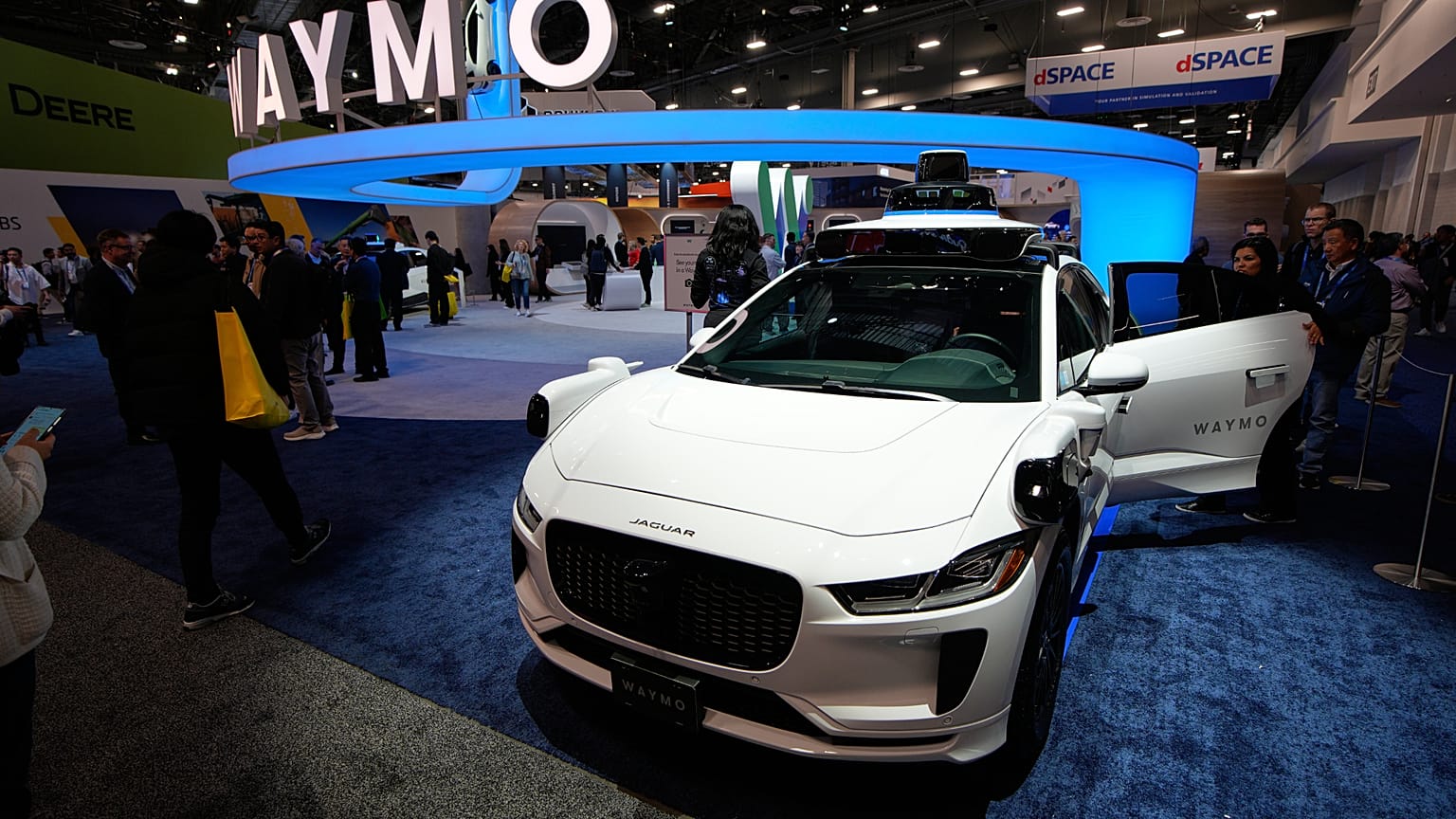
At London's Transport Museum in Covent Garden, Waymo is showing off its Jaguar I-PACE autonomous vehicle at a launch event.
Working closely with the Mayor of London and UK transport authorities, Waymo finally has the green light to begin testing its autonomous cars in the UK.
"The government is about to introduce new legislation that will make it possible for Waymo to apply for an operating permit," said Ben Loewenstein, head of UK policy and government affairs at Waymo.
"That is a fully driverless commercial operating permit that we hope to obtain and begin running a service for Londoners this year," he added.
The idea of driverless cars operating on one of the most congested road networks in the world might sound scary, but Waymo is keen to talk about its safety record.
Is it safe?
The American company claims its vehicles are involved in 90 percent fewer crashes causing serious injury or worse, compared to the average for human drivers over the same distance in the cities it operates in the US.
It also claims it reduces crashes with pedestrians that cause injuries by 92 percent.
Each car is armed with a suite of sensors, radars and cameras which Waymo claims can see - and react - better than the most alert human driver.
Waymo says that its vehicles have four different sensors, including LiDAR, cameras, radar, and microphones.
"What that creates is a 360 degree view of the world around us at all times. We can see in the dark. We can see in ways that human beings cannot see, and that is directly relevant to the safety performance that we are able to demonstrate in the communities where we're already deployed," Loewenstein said.
Waymo currently runs a fleet of around 1,000 vehicles in San Francisco, with around 700 in Los Angeles - it also operates in other major US cities like Phoenix, Miami, Austin, and Atlanta.
London will be its first European operation, and it is also trialling in Tokyo, its first Asian operation.
'A succession of Roman roads'
London's roads are known for the red double-decker bus and the ubiquitous black cab.
Black cabs can be hailed from the street - allowing pick-ups and drop offs at the user's convenience.
The drivers - or cabbies - are thoroughly trained via a lengthy process called the Knowledge - where recruits memorise routes, roads and shortcuts across London.
Unlike younger US cities, which were built on grid systems that better accommodate cars, many streets of London date back to Roman and Medieval times.
Steve McNamara, the general secretary of the Licensed Taxi Drivers Association (LTDA), which represents the interests of black cab drivers, is unconvinced that autonomous vehicles will work in London's unique road network.
"How are they going to make it work in London? The uniqueness of London as a world city is just that, it's unique," he said.
"It's a succession of Roman roads that grew into medieval villages that grew into cart tracks, that evolved into the city we know now. You've only got to look at the names, all the old Roman roads and Aldgate and Eastgate and Eastcheap, all old roads."
"During the day the population of London they reckon now is over 10.5 million people, so many people back at work, it's virtually impossible to drive anywhere without somebody walking in front of you," he added.
The LTDA is keen to point out that Waymo is not a taxi service in the true sense, but a private hire vehicle, meaning it cannot be hailed from the street.
Pedestrians in London have a lot more freedom than in many parts of the world.
"Jaywalking in a lot of the world is illegal, you can't do it in New York and places. In London it is a national hobby. That's what everybody does. You want to cross the road, you walk out in front of the traffic," McNamara explained.
"So quite how these cars are going to deal with those volumes of people. How are they going to deal with the interactions with roundabouts, with pedestrian crossings, with no lights? You approach your pedestrian crossing, you stop and let someone cross with no lights. How are they going to interact with people?"
'Ride-hailing pool of demand'
But Waymo insists it is not out to compete with the black cab and can serve as a complementary service.
It said many women from its US customer surveys say they feel safer in a driverless taxi and also states it is more appealing for people with disabilities - although Waymo cannot currently accommodate wheelchair passengers, unlike London black cabs.
"You also have people who prefer a black cab in some situations, right? Like if I'm in a rush. I may not want to take a Waymo, because I know the Waymo is going to follow the speed limit. It's going to drive cautiously and that may not suit every trip," said Ethan Teicher who runs communications at Waymo.
"So we believe by being in a city like London, we can offer a new option to people that is additive, grows the pie. It brings more people into the ride-hailing pool of demand."
Waymo would not confirm a pricing model for its service in London - it says it will be competitive but hinted that because it uses luxury, leather-interior Jaguar I-PACE cars it will potentially be at a slight premium over private hire services like Uber.
It is also unlikely Waymo will serve London's airports in 2026.
For some who regularly drive on London's often stressful road network - which often requires unflinching nerves to make any progress turning right out of a junction - it seems improbable a cautious autonomous vehicle will be speedy.
McNamara, speaking with his years of experience behind the wheel, says unexpected road closures not marked on mapping apps will be hard for the vehicles to navigate.
"I look at it and think: 'Well I've got to U-turn.' What is the Waymo car going to do? Waze is telling it the road's open, Google Maps is telling it the road's open. And there's some policeman there in a funny hat telling you it's not open. 'You got to turn around, mate!' How is that going to work? It's crazy."
Waymo has so far made 20 million rides for passengers across its US fleet, and will be hoping the global expansion starting in London will be the next chapter in its history.