













The event marks the first time members of the public are exposed to self-driving taxis, after months of tests that only involved government personnel.
Qatar has launched its first public trials for its fleet of Robotaxis, operated by Mowasalat, the national transportation service provider.
 ADVERTISEMENT
ADVERTISEMENT
ADVERTISEMENT
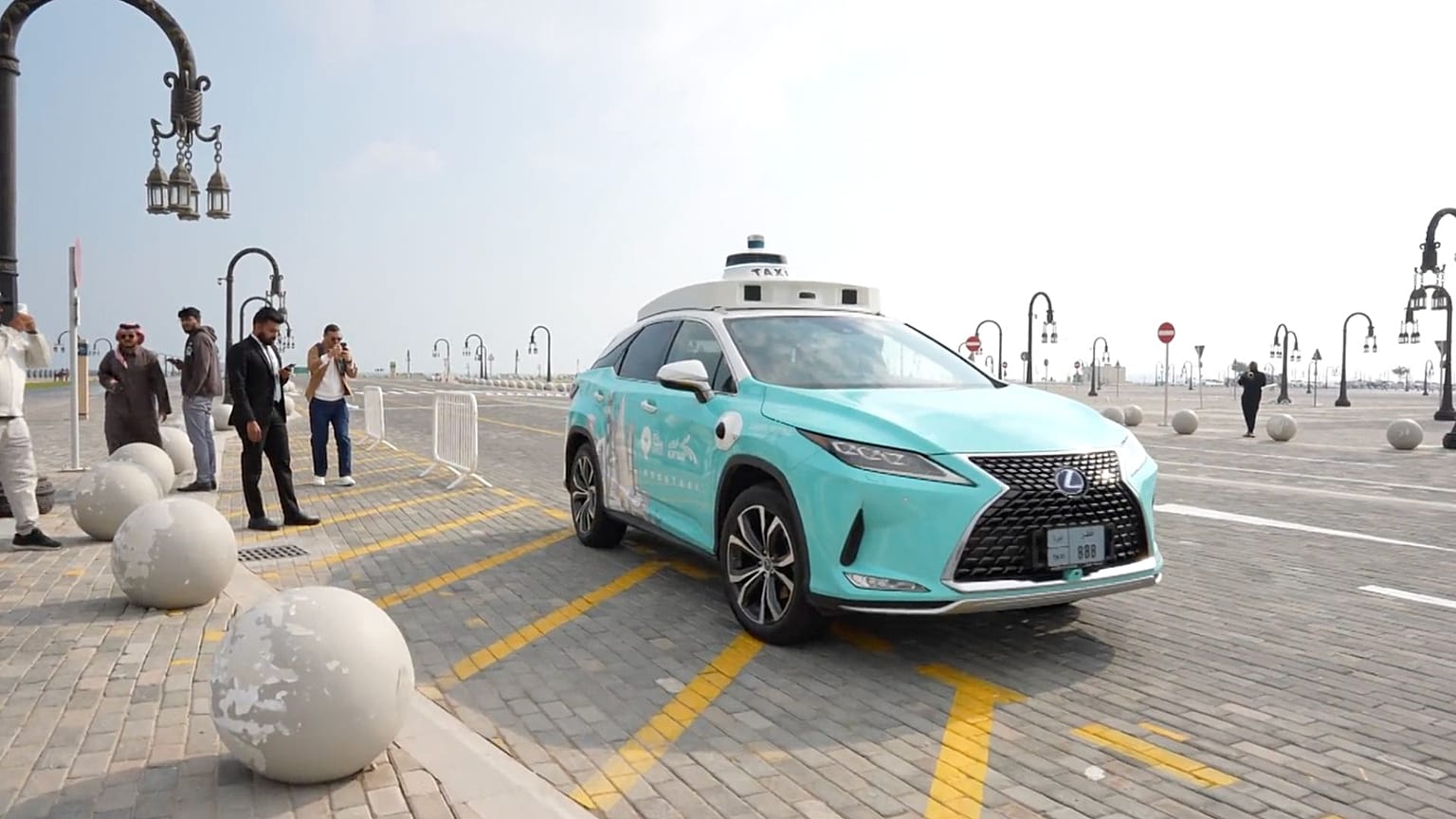
At the Old Doha Port on Monday, selected members of the public could, for the first time trial the self-driving taxis in a controlled environment, after months of tests that only involved government personnel.
Each of the turquoise Lexus RX 450 Robotaxis are equipped with 11 smart cameras, four LiDAR sensors for precise depth detection, and four radars to monitor the speed of surrounding vehicles.
The taxis are Level 4 autonomous vehicles, meaning the vehicle operates completely autonomously under certain conditions, and humans do not need to be ready to get involved
The trial marks another milestone in the country’s so-called National Vision 2030 plan to integrate driverless vehicles into its transportation network.
“In Mowasalat’s trial today, we are executing the vision of the Ministry of Transport for 2030, which is to provide a sustainable means of transportation by investing in the technology of AI and self-driving vehicles, and executing this technology into the vehicles on the roads," said Mohammed Abukhadija, director of strategy management office and business development at Mowasalat.
"The main objective today is for everyone to come and try, and build confidence in the Robotaxi,” he added.
Qatar's robotaxis are deployed in partnership with the tech company Pony AI.
Qatar's autonomous infrastructure drive
Mowasalat’s fleet of Robotaxis has been roaming around Doha city since August 2025. They are currently in the trial stages and are supervised by safety officers in the car, who are ready to take over the wheel when needed.
It’s part of the Ministry of Transport’s larger drive to build the country’s autonomous infrastructure and smart city mobility. The hope is that these public trials will educate and familiarise citizens and residents about driverless systems.
One of the main objectives of the test phases has been for the driverless system to learn and adapt to local driving behaviour and traffic laws. The localisation of the autonomous technology is to ensure safety and cultural suitability.
According to Abukhadija, Mowasalat has selected a few districts to gradually introduce the Robotaxis on the roads by locating what it calls ‘Points of Interest’ and integrating the fleet into the national ride-hailing app, Karwa.
The final phase of the implementation is to roll out the Robotaxis as fully autonomous vehicles, without the supervision of the safety drivers.