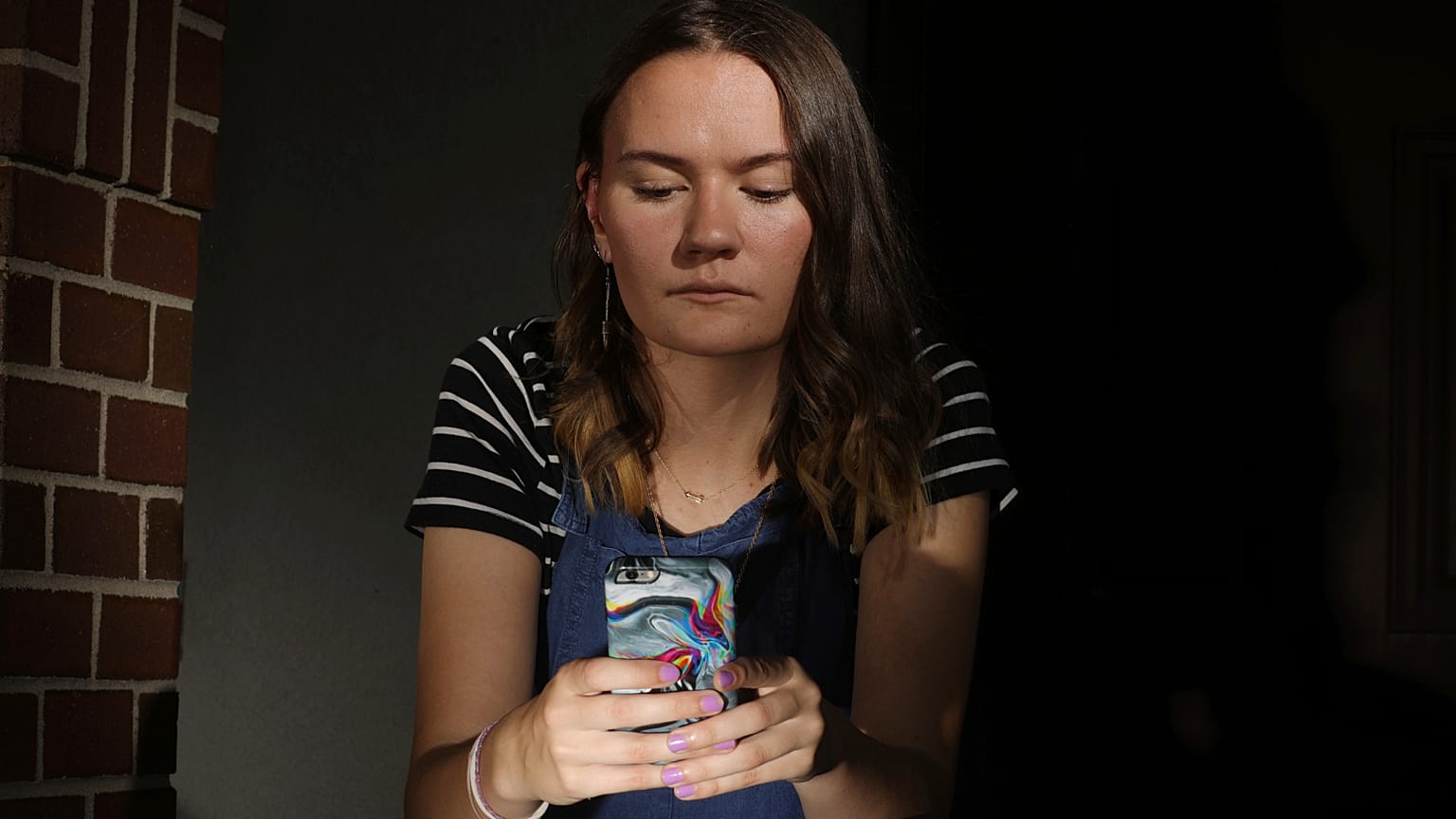













Euronews Next takes a close look at rising cyberbullying among adolescents across Europe. Experts explain why rates differ between countries, why cases increased during the pandemic, and how family structure plays a role.
Cyberbullying among children and teenagers is a growing problem across Europe and has each country in the bloc, according to a new report from the Organisation for Economic Co-operation and Development (OECD).
 ADVERTISEMENT
ADVERTISEMENT
ADVERTISEMENT
What is especially alarming is that cyberbullying rates have risen in all 29 European countries and regions included in the research. The levels vary widely, and countries such as the Baltic states, the United Kingdom and Ireland are among the most affected.
So, which countries are hit hardest by cyberbullying among young people? How do cyberbullying rates differ between girls and boys? And is there any link between family structure, such as living with one parent or two, and the likelihood of being cyberbullied?
What is cyberbullying?
Cyberbullying refers to harassment, threats, or negative comments online directed at a child from peers or strangers, according to OECD’s “How’s Life for Children in the Digital Age?” report dated 2025. It generally includes repeated, intentional aggressive behaviour, a power imbalance, and the use of online media.
In the survey, cyberbullying is described with examples such as “someone sent mean instant messages, email or text messages; wall postings; created a website making fun of you; posted unflattering or inappropriate pictures of you online without permission or shared them with others.”
The OECD data includes school children aged 11, 13, and 15. In the 2021–22 period, the cyberbullying rate, showing the share of children who were bullied online, ranged from 7.5 per cent in Spain to 27.1 per cent in Lithuania.
The OECD average, which largely reflects Europe, was 15.5 per cent. Alongside Lithuania, countries with higher cyberbullying rates than this average included Latvia, Poland, England, Hungary, Estonia, Ireland, Scotland, Slovenia, Sweden, Wales, Finland, and Denmark.
Portugal, Greece and France are also among the countries with the lowest cyberbullying rates. In Germany and Italy, cyberbullying was also below the European average.
Why does cyberbullying differ across countries?
“Cross-national differences in (cyber)bullying prevalence across Europe are best understood through the interplay of technological, cultural, and institutional factors,” James O'Higgins Norman, a professor at Dublin City University, who is also the UNESCO chair on bullying and cyberbullying, told Euronews Next.
He noted that technologically, variations in internet access, smartphone penetration, and dominant online platforms influence the frequency and nature of young people’s online interactions.
Culturally, social norms around conflict, communication, and aggression differ substantially: Societies with greater acceptance of verbal hostility or indirect aggression tend to report higher levels of online bullying.
Institutionally, disparities in digital literacy education, school-based prevention programs, and parental mediation contribute to different national outcomes.
Differences in national education systems also matter according to European Antibullying Network (EAN) experts.
“Where digital literacy and online safety are actively taught, young people tend to be better prepared to prevent and respond to cyberbullying,” they told Euronews Next.
They also emphasised that social and economic inequalities, as well as levels of family and community support, can shape how vulnerable young people are to bullying and how effectively schools and institutions can intervene.
Cyberbullying rose in all European countries
Between 2017–18 and 2021–22, cyberbullying increased in all 29 European countries and regions covered in the report. The rise was more than 5 percentage points in Denmark, Lithuania, Norway, Slovenia, Iceland and the Netherlands.
The OECD average rose from 12.1 per cent to 15.5 per cent.
Dr Alina Cosma from Trinity College Dublin, noted that this is a small increase and can be attributed to the fact that this generation of adolescents had increased access to digital devices and they spent greater time online.
Role of COVID-19 pandemic
EAN experts underlined that the COVID-19 pandemic played a significant role: with schools closed and social life moving online, young people spent much more time on digital platforms, where conflicts and bullying could occur more easily.
“The period corresponds to a rapid expansion of smartphone use and social media engagement among young people, which has extended opportunities for both social connection and harmful online interactions,” O'Higgins Norman said.
He noted that digital communication environments often provide anonymity, immediacy, and an expanded audience, reducing social accountability and empathy, which in turn can normalise hostile or exclusionary behaviour online.
“However, it is important to emphasise that this period should not be interpreted as indicating a long-term upward trajectory in cyberbullying prevalence. Recent national data suggest that levels may have stabilised post-pandemic,” he added.
Girls face higher cyberbullying rates
In many countries, girls are more likely to be victims of cyberbullying, but Lithuania is a significant exception.
On the OECD average, the rate is 14.3 per cent for boys and 16.4 per cent for girls. The gap is more than five percentage points in several countries, including Sweden, France, England and Italy.
Norman explained the behavioural patterns and gendered social norms in this gap. Girls tend to engage more in social-media-based communication and self-presentation activities, which are closely associated with relational and emotional forms of cyberbullying, such as social exclusion, rumour-spreading, and image-based harassment.
Cyberbullying rates higher in one-parent households
Adolescents from one-parent families are also more likely to report cyberbullying victimisation than those from two-parent households. This is the case in all countries.
The gap is even wider than the gender difference, at 19.8 per cent compared with 14.1 per cent.
The difference is more than five percentage points in more than 20 countries in the list.
“Higher cyberbullying prevalence among young people from single-parent families may indicate structural and psychosocial vulnerabilities linked to family context,” O'Higgins Norman said.
This suggests that single parents often face greater time, financial, and emotional pressures, which can limit supervision of children’s digital activities and reduce opportunities for guidance on safe online behaviour.
Children in these households may also spend more time online for social connection, increasing their risk exposure.