





























Real body bags, a priest reciting last rites to fictional soldiers, and cold-storage stress tests reveal just how far Sweden is willing to go to prepare its defence.
Sweden's armed forces have carried out a full-scale exercise in the logistics of burying fallen soldiers, part of a broader shift by the once-neutral Nordic country toward "total defence" planning since joining NATO in 2024.
 ADVERTISEMENT
ADVERTISEMENT
ADVERTISEMENT
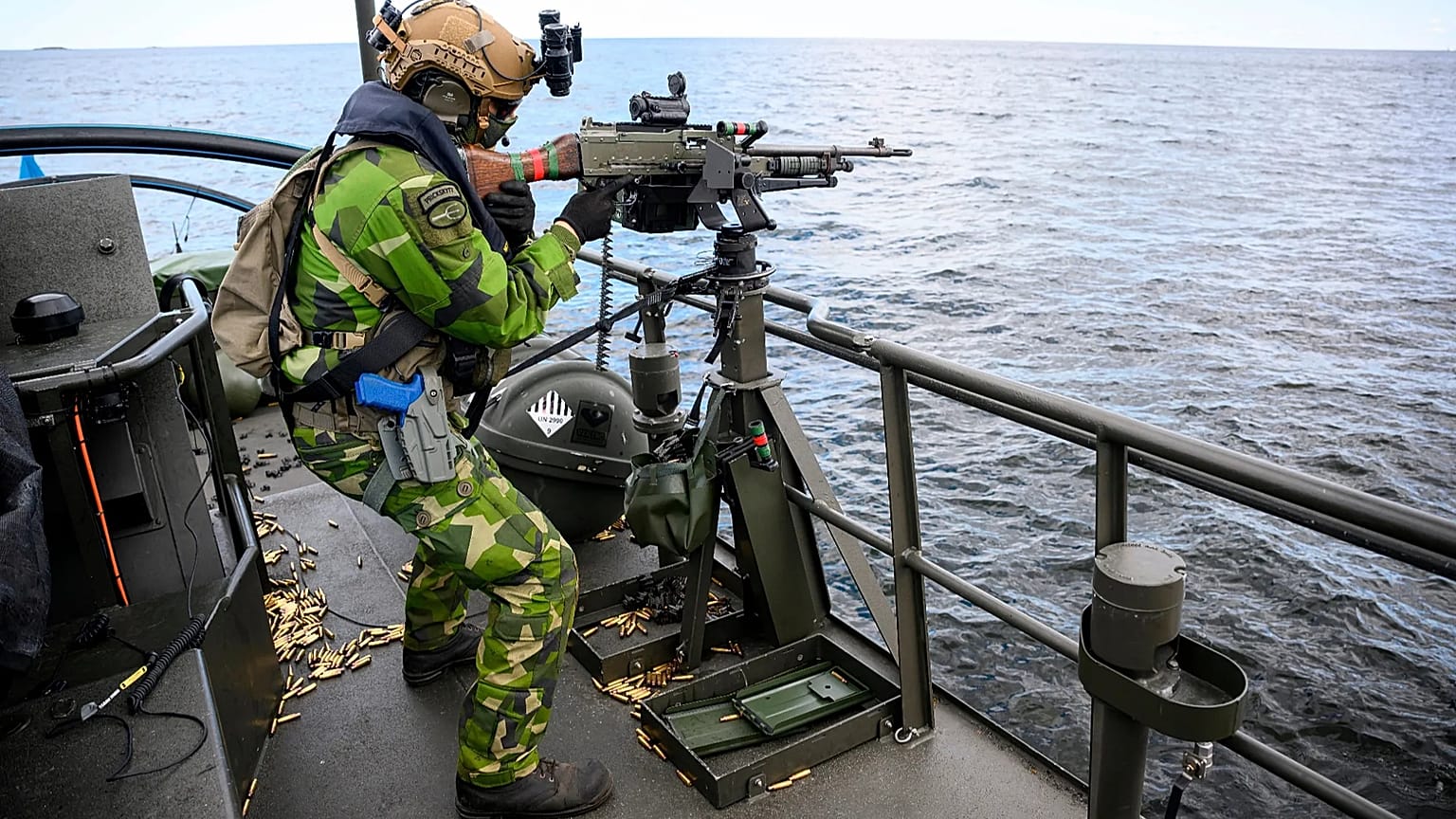
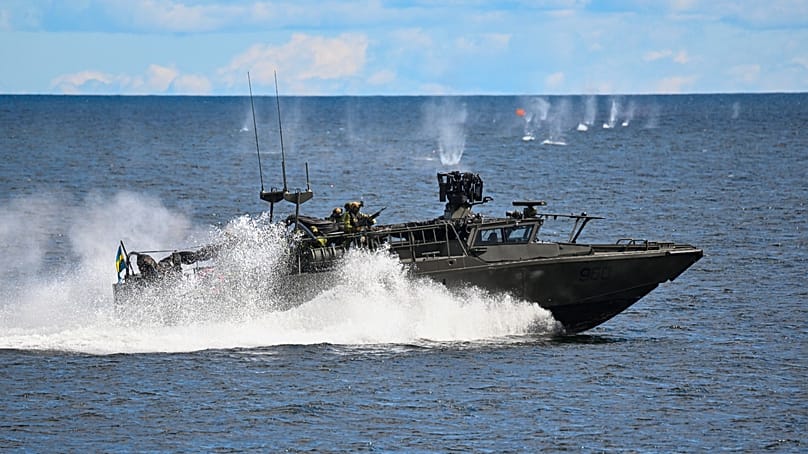
The mortuary drill formed part of Aurora 26, Sweden's largest national military exercise since the 1990s, which ran from late April to mid-May 2026 and involved roughly 18,000 troops from 13 nations, according to the Swedish Armed Forces.
A peer-reviewed account published in the journal Frontiers in Psychiatry describes a mortuary affairs component using more than 500 mannequins and body bags representing fallen service members - a scale of drill not attempted in Sweden since the early 1950s.
More than 300 military personnel took part, alongside the Church of Sweden, the Swedish Tax Agency and the country's conscription agency.
The exercise tested the full chain of handling war dead: recovery, identification, notification of allied embassies and the International Committee of the Red Cross, and burial with military honours.
The commanding officer told researchers: "I am proud to have been part of this. The last time this was practiced was, I believe, in 1952, so I am proud to have contributed."
A military chaplain reflected on the visual impact, saying it made the abstract reality of war casualties suddenly concrete after seeing dozens of body bags lined up.
Defence trade outlet Defence24 reported it was the first time the process had been rehearsed jointly by every relevant institution.
Officials framed the planning as a matter of morale and institutional readiness rather than a prediction of casualties.
A military physician noted that after the exercise, personnel would need "a major adjustment" in how medical teams are resourced for mass-casualty scenarios, while another soldier told researchers the exercise gave them "a clearer understanding of the consequences of war."
Planning for the worst scenario
Separately from the exercise itself, the Church of Sweden, which remains the country's statutory burial authority, has long been instructed to plan for burial capacity equivalent to 5% of the national population, or roughly 500,000 people.
That figure is a Cold War-era civil defence benchmark covering both military and civilian deaths nationwide, not a forecast tied to Aurora 26 or any specific casualty estimate.
Asked about the planning, Jan-Olof Olsson of Sweden's civil defence agency told Le Monde it does not mean authorities expect that many victims, but that "to plan, we need an estimate."
The drill sits within a wider pattern of Baltic states and NATO's northern flank rehearsing worst-case scenarios as tensions with Russia persist. Aurora 26 also featured Ukrainian drone specialists training NATO troops in counter-drone tactics, and forces from the US, Netherlands, France, Poland and other allies operating across southern Sweden, Gotland and the Baltic Sea.
For a country that remained neutral through both World Wars and the Cold War and last deployed its military in 1814, the shift marks a significant psychological and institutional adjustment - one that mirrors similar measures in other countries in the region, including cross-border evacuation agreements signed by ten countries and Lithuania's mass-casualty hospital drills.