






























Romania's main political parties missed a deadline to agree on a reform of public-sector salaries, a key condition for receiving post-pandemic EU funding. The failure has triggered a blame game between pro-European forces in the country.
Romania is set to lose at least €770 million in EU funds after political disagreements prevented the country from meeting a key deadline in its post-pandemic recovery plan.
 ADVERTISEMENT
ADVERTISEMENT
ADVERTISEMENT
The main political parties failed to reach a consensus on a new public-sector salary law before the 31 August deadline for completing reforms linked to the National Recovery and Resilience Plan.
According to EU sources, the missed deadline will cost Romania around €770 million, to be deducted from the €8.44 billion in EU funds still due to the country – around 40% of the entire €21.41 billion recovery plan.
The final calculation of the financial loss will be made during the European Commission’s assessment of Romania’s final payment request, which must be submitted by the end of September.
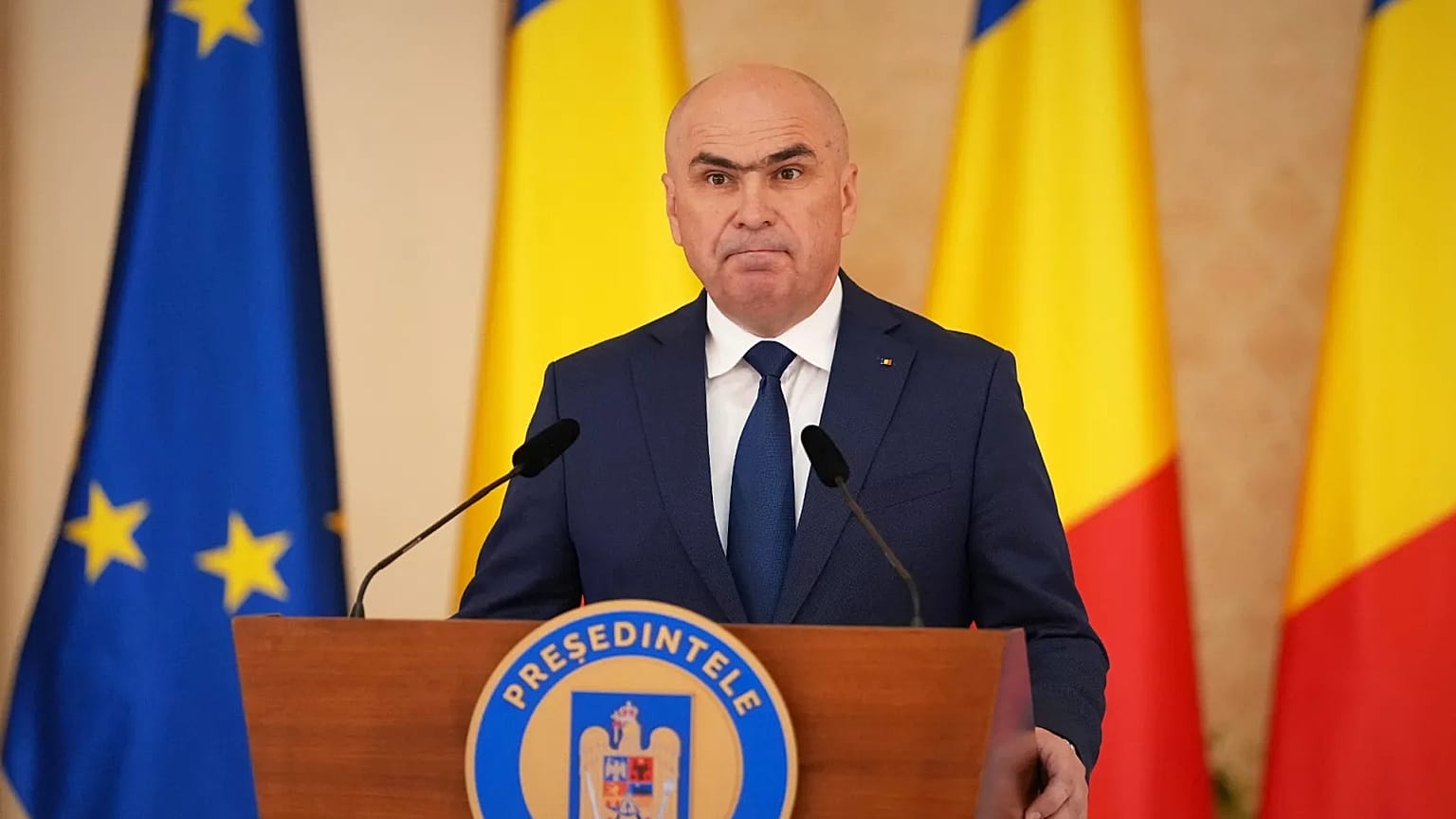
Romanian President Nicușor Dan said last week that the legislation was technically almost finalised and could still be adopted by the end of the year. He described the reform as a “complicated topic with major social and economic implications” that had been debated “under enormous time pressure”.
The failure to complete the public-sector salary reform is the main reason Romania is set to lose EU funding. Several smaller targets, including reforms linked to decarbonisation, have also not been met.
Romanian trade unions have strongly opposed the proposed legislation, arguing that it could reduce salaries for some categories of public employees and that the proposed inflation-linked adjustments would be insufficient.
The dispute has also triggered protests by trade unions. Several federations demonstrated outside the Labour Ministry on 25 August, demanding higher minimum wages and the resumption of collective bargaining.
The deadlock has prompted a bitter blame game within the former governing coalition, which was led by centre-right Prime Minister Ilie Bolojan.
Acting Labour Minister Dragoș Pîslaru blamed the Social Democratic Party (PSD) for the failure, accusing it of blocking the reform and of making promises to trade unions that could not be met within Romania’s financial constraints. Pîslaru also accused the party of failing to prepare the legislation during the years in which it controlled the Labour Ministry.
PSD has rejected the accusations and, in turn, blamed the National Liberal Party (PNL), Bolojan and Pîslaru for the failure of the reform, accusing them of keeping the draft law from public scrutiny and failing to reach agreement with trade unions.
Bolojan’s government collapsed in May after a no-confidence motion backed by PSD and the far-right Alliance for the Union of Romanians (AUR). The vote marked the breakdown of the governing pro-European coalition and deepened political uncertainty in the country.
PSD and AUR could potentially go as far as forming a new coalition, potentially together with the far-right SOS Romania, although such an alliance would represent a major departure from the country's previous pro-European governing formula.
Such a development would further fracture the pro-European political camp, which now appears increasingly difficult to reunite in the wake of the government’s collapse.
Another political dispute linked to EU funding erupted last week over legislation concerning conflicts of interest involving public officials.
The so-called integrity law was finally approved, including a controversial amendment that would remove liberal party leader Dominic Fritz from his position as mayor of Timișoara.
The European Parliament’s European People’s Party and Renew Europe groups had both criticised the bill, calling on Commission President Ursula von der Leyen to pressure Romania’s Parliament to amend it.
Liberals and conservatives argued that the law’s retroactive application was designed to target Fritz, warning that it could contribute to the “undermining of Romanian democracy.”
Although the law was approved before the deadline, the corresponding payment could still be frozen if the European Commission concludes that the legislation does not comply with EU rule-of-law standards. That could result in a further reduction of EU funds available to Romania.