

















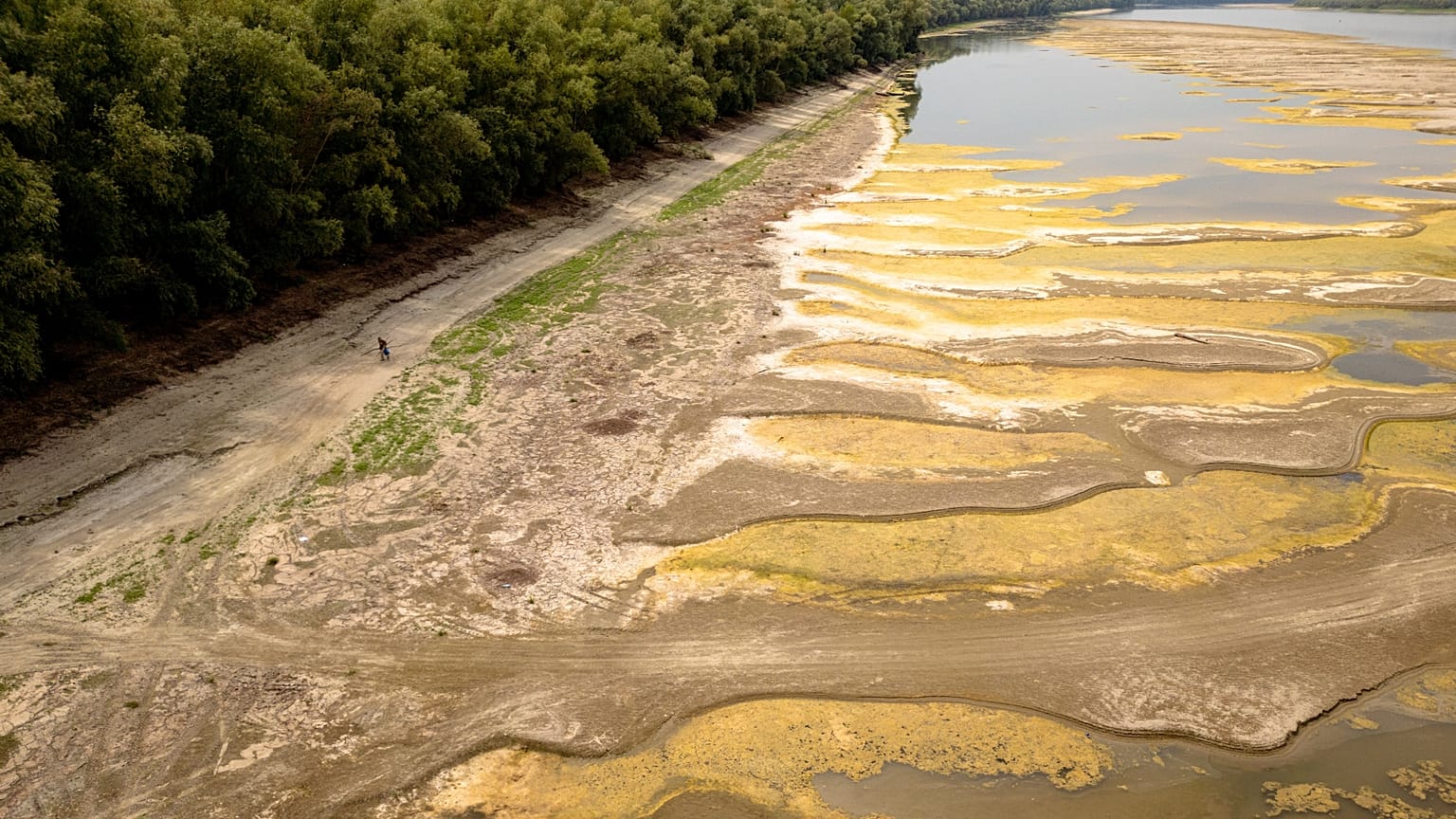














On a stretch of the river in Bulgaria, archaeologists have been able to study the foundations of a bridge, thought to have been built in the year 328.
Europe's second longest river, the Danube, has experienced record low levels after hot weather leading to drought across the continent. The lack of water has exposed some remarkable finds.
 ADVERTISEMENT
ADVERTISEMENT
ADVERTISEMENT
In northern Bulgaria, volunteers have been searching a dried-up river bank near the city of Ruse after a mammoth jawbone and tusk fragments were discovered last month. The latest search found fossilised oysters which are thought to date back around 60 to 65 million years.
The mammoth discovery has led to a surge of people wanting to join in the search for uncovered treasure in the Danube. Volunteers have been warned not touch any metal objects found in the river bed, as they could be wartime ammunition or explosives.
Further upstream, near the village of Gigen, archaeologists have been able to study the foundations of a bridge, which they say was constructed under Emperor Constantine I in the year 328.
Wartime remains
Earlier in August, the receding river exposed two wreckages of German warships from the Second World War in Austria.
Local media reports the vessels had been damaged by fighting in 1945 before being sunk by their own crews.
More previously submerged Nazi ships were found near the Serbian city of Prahovo.
And in Hungary a wartime motorcycle and the remains of two German soldiers were found in a stretch of the river running through Budapest, according to the German War Graves Commission.
Europe's drought
Data from the European climate observatory Copernicus says Europe's largest rivers have fallen to levels never recorded before in the month of July.
Experts have blamed human-induced climate change for the seriousness of the droughts, which has caused major issues for cargo ships traversing the rivers as well as nuclear power stations that are normally cooled by river water.