






























Campaign groups are urging voters to back the SPD and the Greens tactically in Saxony-Anhalt’s state election. AfD, CDU, the Left, SPD, FDP and BSW criticise the recommendation; only the Greens support the campaign.
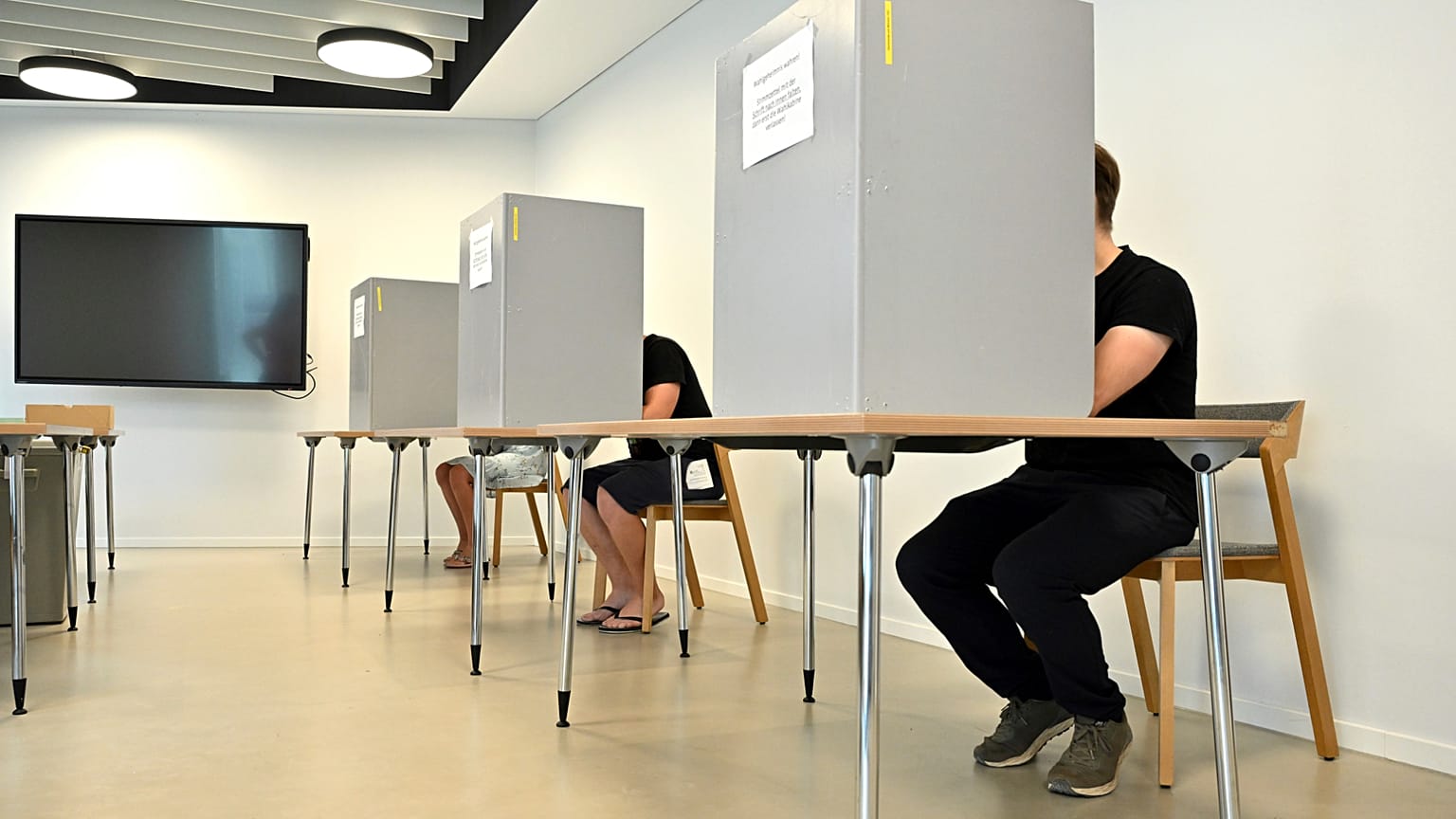
The election campaign in Saxony-Anhalt is in full swing. Posters are up across the federal state, and on social media the topic dominates like scarcely any other. Initiatives such as "Taktisch Wählen" are now calling on people to adjust how they vote in order to prevent a possible AfD-led government.
 ADVERTISEMENT
ADVERTISEMENT
ADVERTISEMENT
The organisers want voters to back parties such as the SPD and the Greens so that, despite weak polling figures, they still make it into the state parliament of Saxony-Anhalt. The campaigners argue that "the SPD and the Greens are currently particularly close to the 5% threshold. If one or both parties narrowly miss out, many democratic votes will be lost when seats are allocated. The AfD could benefit massively from this."
At present, the SPD (6-7%), the Greens (4-5%), the FDP (2-4%) and BSW (4-5%) are battling to clear the hurdle for entry into the Saxony-Anhalt state parliament. If they fail, the distribution of seats could shift in such a way that the AfD would gain an absolute majority and be able to nominate the minister-president.
In current opinion polls, the AfD is by far the strongest party. Some 43% say they intend to vote for the AfD, according to a survey by the pollytix institute for Campact. The CDU trails well behind in second place on 23%, followed by the Left Party on 13%.
However, "Taktisch Wählen" has excluded the FDP and BSW from its recommendation. "We only recommend candidates who unequivocally rule out working with the AfD. If a candidate does not clearly commit to the firewall against the right, we do not recommend them – even if, arithmetically speaking, they are strong," the organisers say on their website.
BSW: "Taktisch Wählen" initiative is a political campaign
Wolfgang Kubicki, party leader of the FDP, has repeatedly spoken out against such a firewall in the past. "I would not vote in favour of any AfD motion, but I would not make my own motions dependent on whether the AfD might also support them," he explained in April on the podcast "Meine schwerste Entscheidung" by the Funke media group.
BSW founder Sahra Wagenknecht told Bild newspaper a few days ago: "Our election goal is to vote out the incumbent CDU office-holder and replace him with a non-partisan minister-president who governs with a cabinet of experts and changing majorities. That means: also with the AfD."
Both parties criticise the concept of tactical voting, as does Thomas Gürke. He is standing for the FDP in Magdeburg. "I attend the state party conferences, I know the resolutions. It is very clear that any cooperation is categorically rejected," the politician told MDR. He questions how independent "Taktisch Wählen" really is.
In BSW's view, the voting recommendation is a political campaign rather than neutral election information, the party told MDR. "Its aim is to push voters, out of fear of the five per cent threshold, into casting a tactical vote for the SPD or Greens."
AfD leader Weidel speaks of unlawful party financing
"Taktisch Wählen" counters criticism that it is undemocratic by arguing that the concept means "taking the rules of elections seriously. In elections it is not only political preferences that matter, but also thresholds, constituency seats and the distribution of mandates." Many people already vote strategically, it adds. "They think about which vote will actually make a difference. We make that calculation transparent and accessible."
Behind the initiative is the political communications and campaign agency "The Goodforces". "We are political discourse-makers. We shift debates, make voices heard and direct attention to where it can make a difference," it says on the company's website.
The company has spent 14,300 euros on its "Taktisch Wählen" campaign. At the end of July, "The Goodforces" also directly supported the Greens and the SPD with party donations of 38,150 euros each, according to Bundestag records.
There were similar appeals during the 2024 state elections in eastern Germany, in Brandenburg, Saxony and Thuringia. Back then, the aim was to prevent the AfD from winning a blocking minority, which would have allowed the party to veto key decisions.
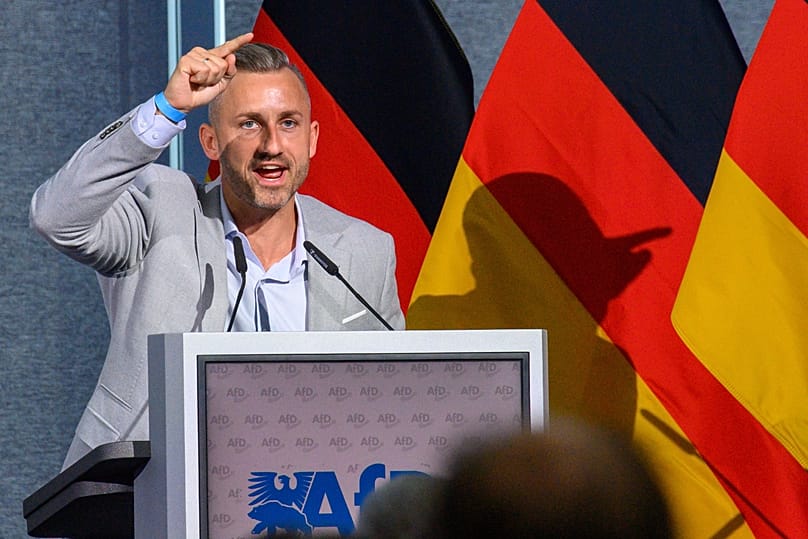
The AfD rejects the "Taktisch Wählen" initiative. "What we are seeing here is a scandal for democracy that must be fully clarified in legal terms," said co-party leader Alice Weidel. "If organisations with significant financial resources run targeted election advertising in favour of left-wing parties, the question arises as to whether this still falls within the limits of permissible party financing." The AfD, she said, would "drain this NGO swamp".
CDU, Left Party and SPD sceptical about voting recommendations
The SPD says every voter should decide for themselves who to vote for. "A democratic, stable and socially just government in Saxony-Anhalt is only possible with a strong SPD," MDR quotes the party as saying.
Saxony-Anhalt's Left Party also has reservations about "Taktisch Wählen". The party does not believe in advising people to give their vote to a party whose policies do not convince them. "Anyone who wants to strengthen a reliable progressive force in the next state parliament can do so by casting both votes for Die Linke."
Philipp Amthor (CDU) answers the question of tactical voting in a CDU Saxony-Anhalt video with: "Clear appeal: both votes for the CDU!" It is about policy, not tactics, said the minister of state in the Federal Chancellery at a campaign event in Halle.
Greens back the campaign
Only the Greens support the campaign: "The outcome of this election will be decided by the five per cent threshold: with the Greens in the state parliament there will be no AfD government; without the Greens, a one-party government is looming."
The concept is already widespread in other countries too, such as England. There, as with the first vote in Germany, the candidate with the most votes wins the constituency and thus a seat in the House of Commons, one of the chambers of the British parliament.
Unlike in Germany, however, there is no second vote. As a result, a party with a total of 20% of the vote can end up with fewer seats than a party with only 10% if the latter manages to win more constituencies.