

















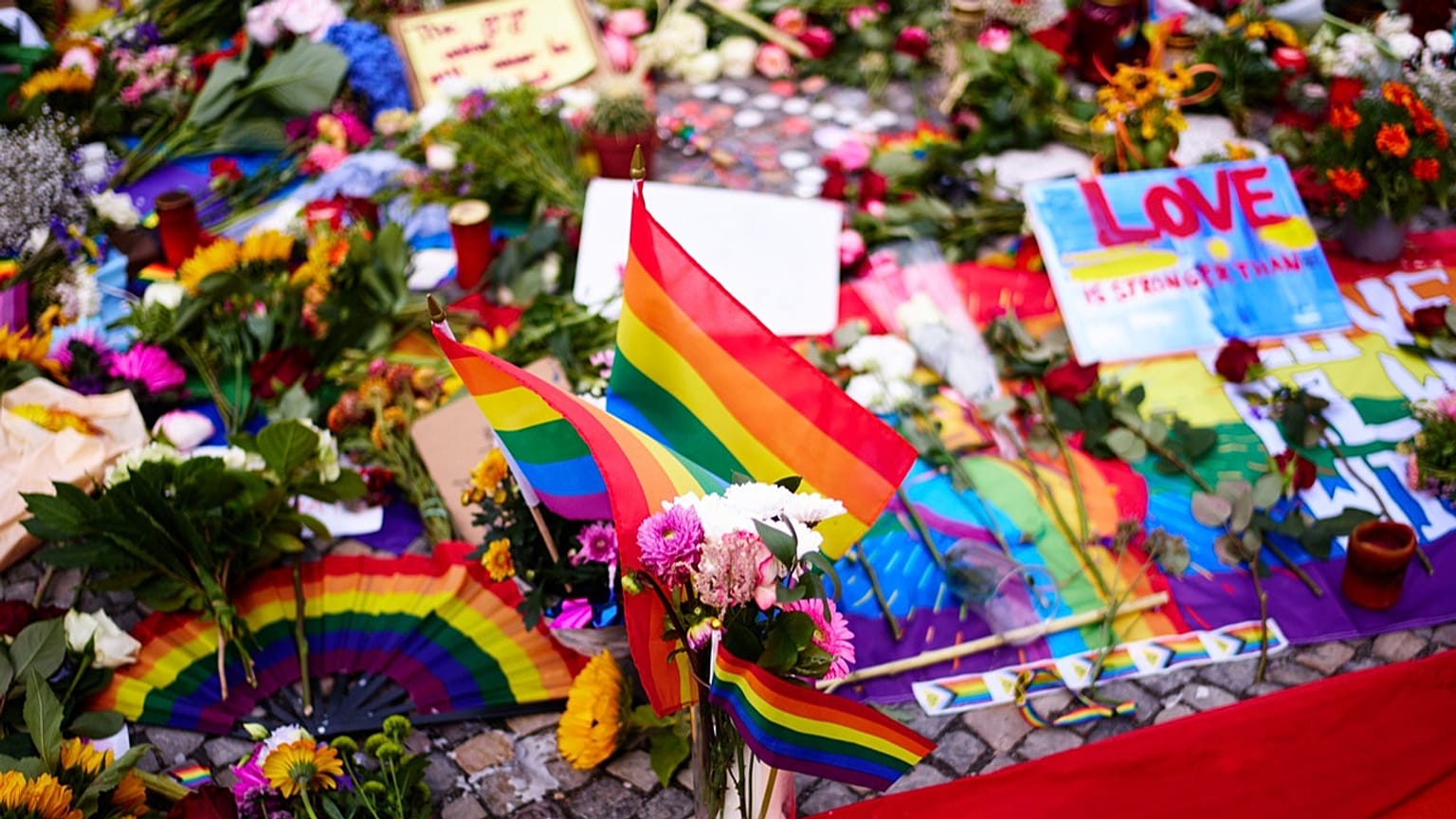













German law enforcement authorities faced criticism for failing to prevent a deadly vehicle and machete attack near Berlin's Pride parade on Saturday.
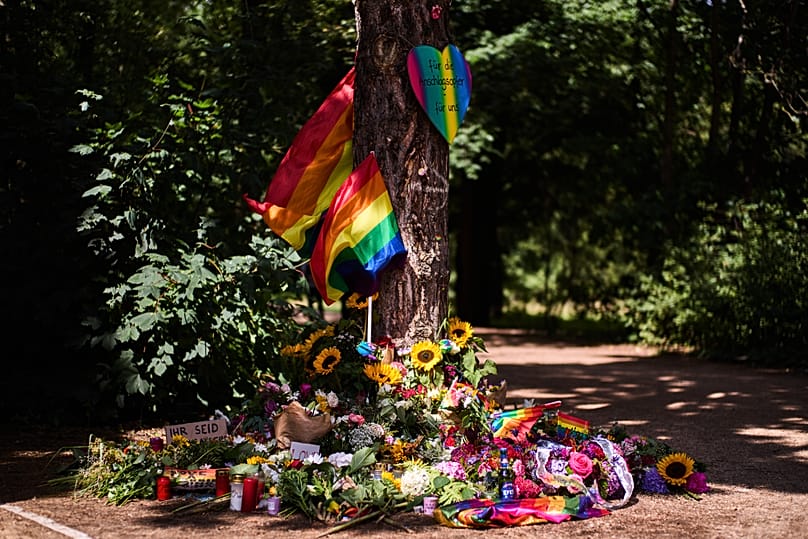
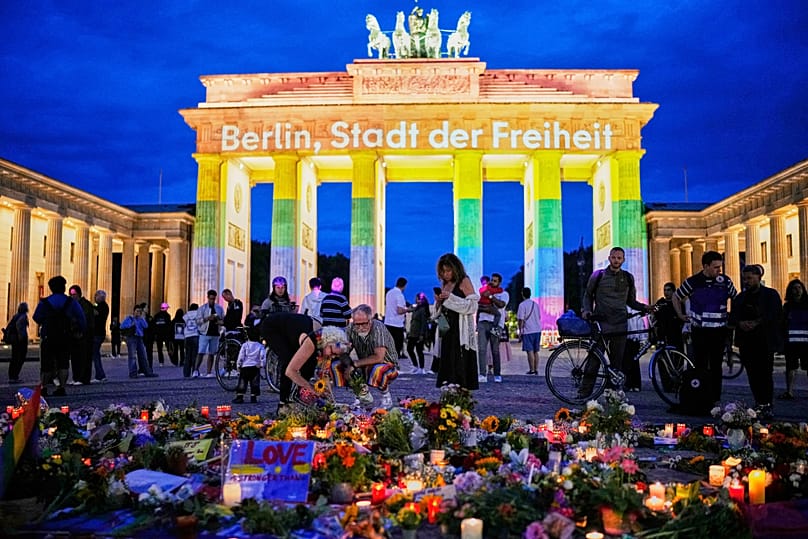
At Berlin's Brandenburg Gate, a makeshift memorial is drawing residents who have come to pay tribute to the victims of Saturday's attack near the city's annual Pride event.
 ADVERTISEMENT
ADVERTISEMENT
ADVERTISEMENT
The attacker, Abdul Ballout, who killed one woman and injured 29 others as he ploughed a van through a crowd before slashing away at people with a machete, was known to authorities.
As the city copes with the aftermath, many have expressed that law enforcement should have stepped in earlier to prevent the attack.
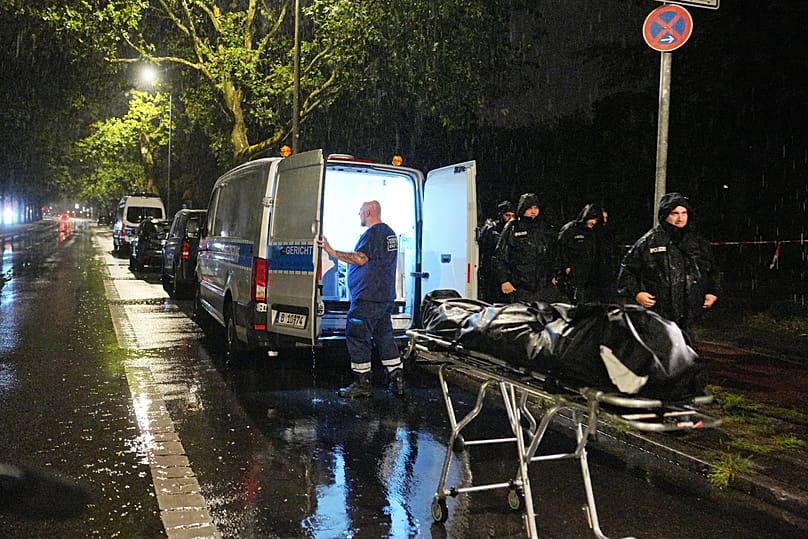
After a city-wide manhunt, police shot dead Ballout on Sunday evening in an allotment complex in the capital's western Spandau district.
Prosecutors said Ballout, a German citizen with Lebanese roots, had previous convictions for causing bodily harm, extortion and robbery and had attempted to join the IS group in Syria.
"I do think, at least to some extent, that the state didn't respond properly, because after all, they were dealing with a criminal. They should have stepped in earlier," said Alfred Kubitz, who was visiting the memorial.
A 'fatal mistake'
Security experts have also questioned why the attacker was walking free and not under close surveillance. "The danger from this man was underestimated," Rolf Tophoven of the Institute for Terrorism Research and Security Policy said.
Ballout had last year travelled to Lebanon in a failed attempt to join the IS group in Syria but was arrested and spent three months in jail in Lebanon before his repatriation.
Most recently he was convicted in May of "planning a serious act of subversive violence" and given a jail sentence of one year and 10 months.
However the sentence was suspended, partially in recognition of the time he had already spent in jail in Lebanon and his pre-trial detention, and because he had admitted to the crimes and claimed to have distanced himself from IS.
"It was known that he was an Islamist, and the tragedy is precisely that everything was known", Tophoven said, deploring the "fatal mistake" to let him walk free.
The head of Germany's police officers' association, Dirk Peglow, also charged that the justice system had been too lax with Ballout.
"With people who pose such a threat, the end of their time in detention must not be the end of state supervision," he said, speaking to the same business daily.
Politicians across the political spectrum were quick to denounce the attack and call for tougher measures against extremists.
Lawmaker Marc Henrichmann from Merz's centre-right CDU, who chairs the parliamentary committee supervising intelligence agencies, said "the freedoms of extremists and Islamists must not be given undue value, especially when people's lives are at risk," in comments to the Handelsblatt newspaper.
Chancellor Friedrich Merz said that "we will defend freedom" and will not "allow this poison of terrorism and this poison directed against our freedom to spread further in our society".
LGBTQ community fears far-right 'exploitation'
At the same time, members of Berlin's LGBTQ community have warned against allowing the far right to exploit the tragedy.
Saturday's attack marked the first time Berlin's LGBTQ community has been targeted in such a way in a city long known for its openness. Hundreds gathered at the Brandenburg Gate on Sunday evening to mourn the attack.
Lena Werner, 26, said she attended the vigil to show that the community "will not allow itself to be intimidated, to make our voice heard even louder, to demonstrate even greater solidarity".
Pride organisers say homophobia is on the rise and Werner acknowledged that "the fear has grown".
But she said she did not want Saturday's attack to fuel "hatred against foreigners, or migrants, or Islam".
The attack "makes the situation worse, at a time when we can clearly see that Germany is increasingly leaning to the right," Mario Paul, 46, said.
The attack came less than two months before Berlin elects a new state assembly, with the far-right Alternative for Germany (AfD) leading in some polls.
In Berlin, it is running neck-and-neck with the radical left Die Linke, the Greens and Chancellor Friedrich Merz's conservative CDU.
In an X post, the AfD's co-leader, Alice Weidel, accused Chancellor Friedrich Merz of insufficient action against "migrant violence" and said her party was "ready to act".
Alex Friedrich, 51, who also attended Sunday's vigil said he was convinced that LGBTQ people, who have "already endured so much in their lives", would "not be pushed around" by the AfD, a party accused by some of hostility to LGBTQ rights and visibility.
Luka, a 23-year-old student, said she believes the far-right could "easily" instrumentalise the attack, but "I believe there will be strong resistance to this exploitation".