





























EU foreign ministers overwhelmingly backed clamping down on EU trade with Israeli settlements during closed-door discussions on Monday, with an official source saying the biggest cohort of countries supported passing new measures without requiring the unanimous backing of all member states.
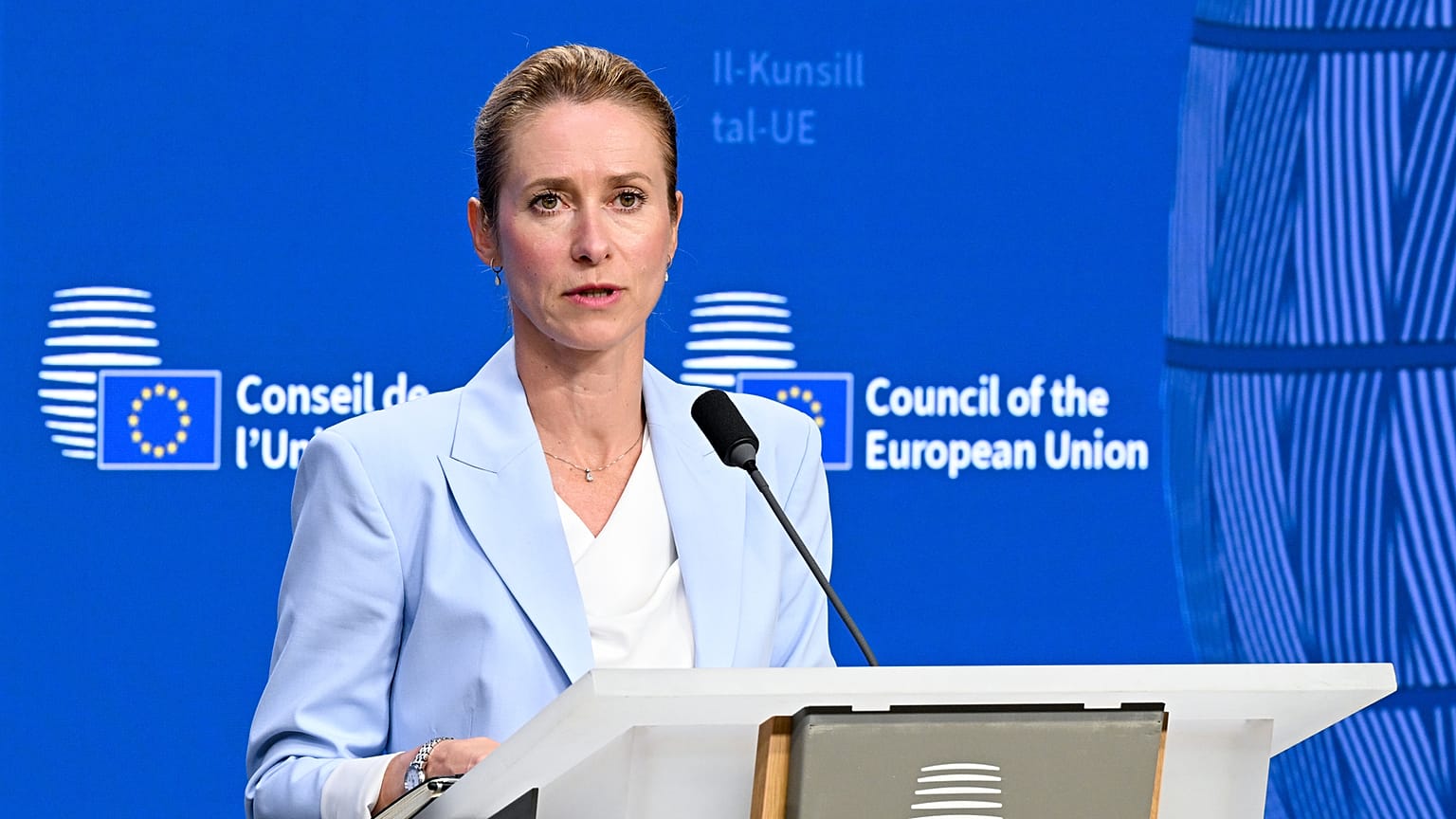
A full ban on EU imports of goods made in Israeli settlements extracted "most support” from EU foreign ministers during a meeting on Monday, the EU’s foreign policy chief Kaja Kallas has said, after the European Commission last week presented a range of options to restrict settlement trade, the boldest of which was a full trading ban.
 ADVERTISEMENT
ADVERTISEMENT
ADVERTISEMENT
“The option that got the most support was banning the trade with the illegal settlements,” Kallas told reporters in Brussels on Monday evening. Israeli settlements in the occupied Palestinian territories are considered illegal under international law and by the EU.
EU ambassadors will now be tasked with putting meat on the bone of the Commission’s initial proposal, a two-page “options paper” shared with EU capitals last week and first reported by Euronews.
Kallas also said that an extraordinary meeting of foreign ministers could be convened to ensure further progress. The next formal ministerial gathering is scheduled for October, weeks before Israel is due to hold legislative elections, with several diplomats expressing fear that the sensitive timing could further scupper any progress.
Italy’s Foreign Minister Antonio Tajani, whose backing is considered pivotal if any proposal is to reach the necessary support threshold, suggested that no measures should be taken in advance of the ballot ealier on Monday.
Crucially, on Monday a majority of member states also backed framing the measures as a trade rather than as a foreign policy tool, which would avoid the need for all EU governments to unanimously back the move.
Proponents of the trade ban – including Belgium, France, Ireland, Luxembourg, the Netherlands, Spain and Sweden – had pushed back against the European Commission for arguing that any measures taken should be framed as a foreign policy tool, requiring the unanimous backing of all member states.
These countries say such trading restrictions should instead inevitably be considered trade policy, therefore requiring the backing of 15 member states representing 65% of the EU population, known as qualified majority – a benchmark that many feel could be achieved.
“These are trade measures, so that means that, as far as we are concerned, that should be possible with a qualified majority,” Dutch Foreign Minister Tom Berendsen said earlier on Monday.
Ministers earlier on Monday also expressed frustration at the EU executive led by Ursula von der Leyen for the lack of detail in the proposal, and the delay in its presentation.
“It gives me the sense that it’s more a bone to chew on, than a desire to really move forward,” Belgian Foreign Minister Maxime Prévot told reporters earlier on Monday.
“I am concerned that we are engaging in delay tactics, debating endlessly without taking action, when such debate is not actually necessary. A decision not to trade would simply be an application of international law,” Spain’s Foreign Minister José Manuel Albares said.
The EU already pursues a policy of "differentiation" when it comes to settlement-manufactured goods, meaning they are exempt from preferential tariffs given to products made within Israel and fall outside the scope of the EU-Israel trade and cooperation agreement, known as the Association Agreement.
But political calls to fully ban such trade have been gaining momentum given the deteriorating situation in the occupied West Bank.
A 2024 International Court of Justice (ICJ) advisory opinion on the illegality of the Israeli settlements, which obliges states to abstain from economic dealings that could entrench the unlawful situation, has also added legal weight to those calls.
The European Commission President, Ursula von der Leyen, has been accused by critics of obstructing a decision on banning settlement trade, by suggesting that the ban needs the unanimous backing of member states.
Kallas, however, cited an oral opinion by the Council of the EU's legal services, which found that member states could restrict or ban the trade of settlement goods with qualified majority support.
Asked about the clash of opinions, Kallas said: "We need to have a unified position, and so far we have not been able to have that unified position."
There is a legal opinion that we can do this also with the qualified majority," she added "And, you know, if there is a will, then we can move forward."