





























France's state-owned energy group EDF has temporarily shut down three nuclear reactors, while seven others could be operating at reduced power. France's largest electricity producer said the move was required to comply with environmental regulations.
France's state-owned energy group EDF temporarily shut down three nuclear reactors on Sunday, while warning that seven others may need to adjust their power output as the heatwave sweeping the country continues.
 ADVERTISEMENT
ADVERTISEMENT
ADVERTISEMENT
According to the company, the measure is an environmental protection requirement to avoid discharging excessively hot water into rivers already warming because of the heatwave.
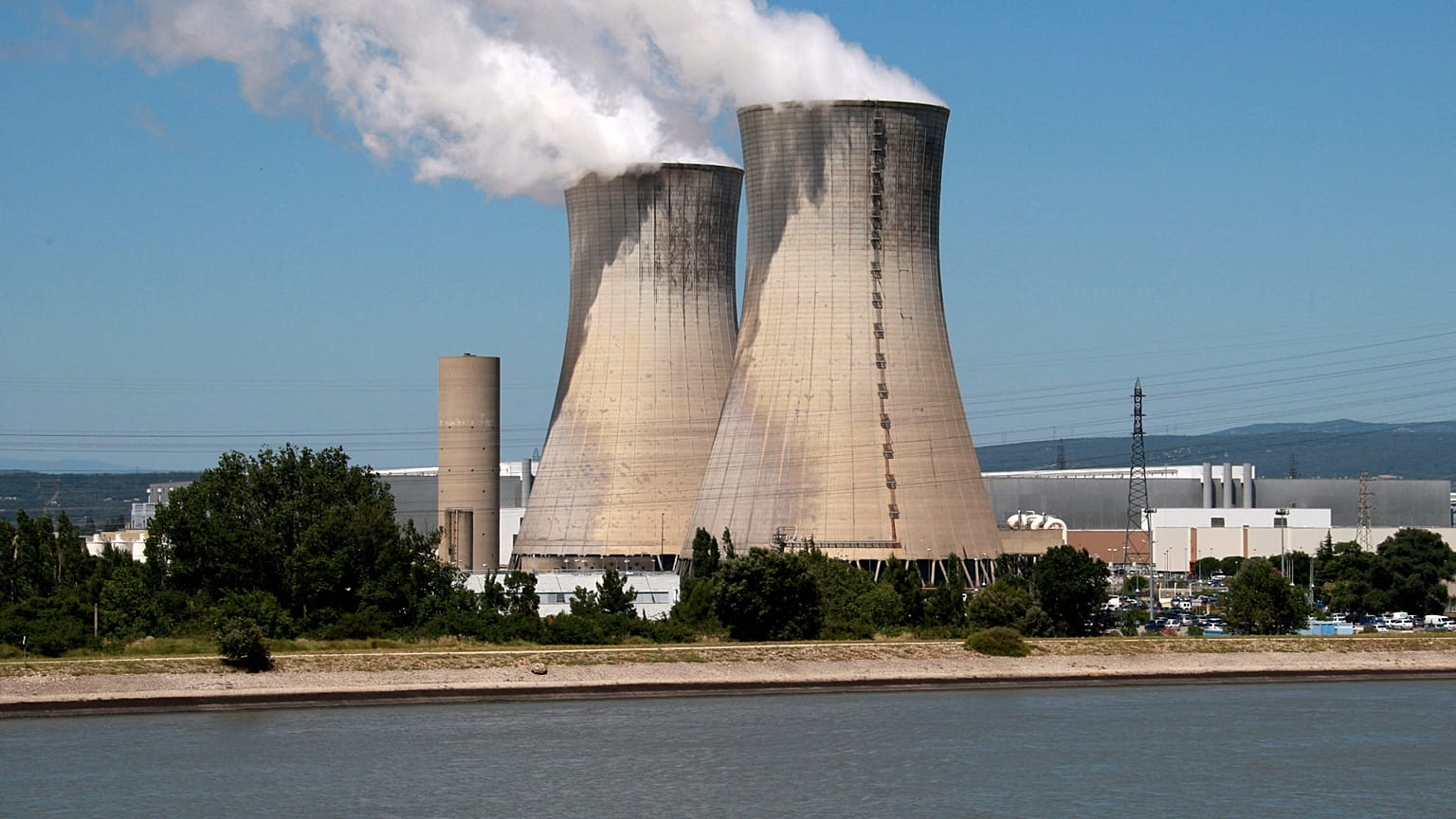
Nuclear power plants use river water to cool their reactors before releasing the warmed water back into rivers.
"There is no nuclear safety risk. Reactors are capable of operating under high-temperature conditions. These limits are intended to protect aquatic flora and fauna," said a spokesperson for EDF.
EDF said that three nuclear reactors are currently offline: Unit 2 at Golfech (1,300 MW), Unit 3 at Bugey (900 MW) and Unit 2 at Chooz (1,450 MW). The three offline reactors alone account for 3.65GW of capacity, equivalent to about 6% of France's roughly 61GW installed nuclear fleet.
When asked about the missing capacity, EDF said nuclear reactors are able to optimise generation while remaining within regulatory limits.
Based on the latest weather forecasts, Bugey Unit 3 is currently scheduled to remain offline until 19 July, Golfech Unit 2 until 22 July and Chooz Unit 2 until 25 July.
The scheduling and duration of these environmentally driven reactor outages will be adjusted according to changes in weather forecasts.
"Seven other nuclear reactors may be required to adapt their power output, which fluctuates throughout the day," said the spokesperson for EDF.
The economy ministry on Saturday issued an exemption to the temperature limits for the heating of the Rhône around the Bugey plant "to ensure the security of the power grid", valid until 20 July.
Preparing for future heatwaves
On Sunday, the third heatwave to sweep the country since May saw more than a third of France under the national weather service's highest heat alert.
The shutdowns are the second time in recent weeks that EDF has had to stop nuclear reactors due to extreme heat, after a record-breaking heatwave hit France in June.
EDF told Euronews that the impact of droughts and heatwaves on nuclear generation remains very limited. "Since 2000, production losses resulting from high river water temperatures and low river flows have represented, on average, 0.3% of the French nuclear fleet’s annual electricity generation."
Looking ahead, EDF said it has an adaptation plan to prepare for the consequences of climate change, covering its nuclear, hydropower and island energy operations in France. The company said it disclosed in early 2026 that the estimated cost of the plan is €8.7 billion over the next 15 years.
The plan includes measures to improve the resilience of nuclear power generation during periods of extreme heat. According to the EDF spokesperson, one option under consideration is to cool water discharged from the blowdown process of existing cooling towers before it is released into the environment. The spokesperson said such a system is already in operation at the Civaux Nuclear Power Plant.
For its hydropower business, EDF is focusing on improving flood management, maintaining electricity generation during periods of lower river flows and supporting the multiple uses of water resources.
Across its island energy systems, the company is strengthening high-, medium- and low-voltage electricity networks while improving preparedness for exceptional wind events that could disrupt power infrastructure.