

















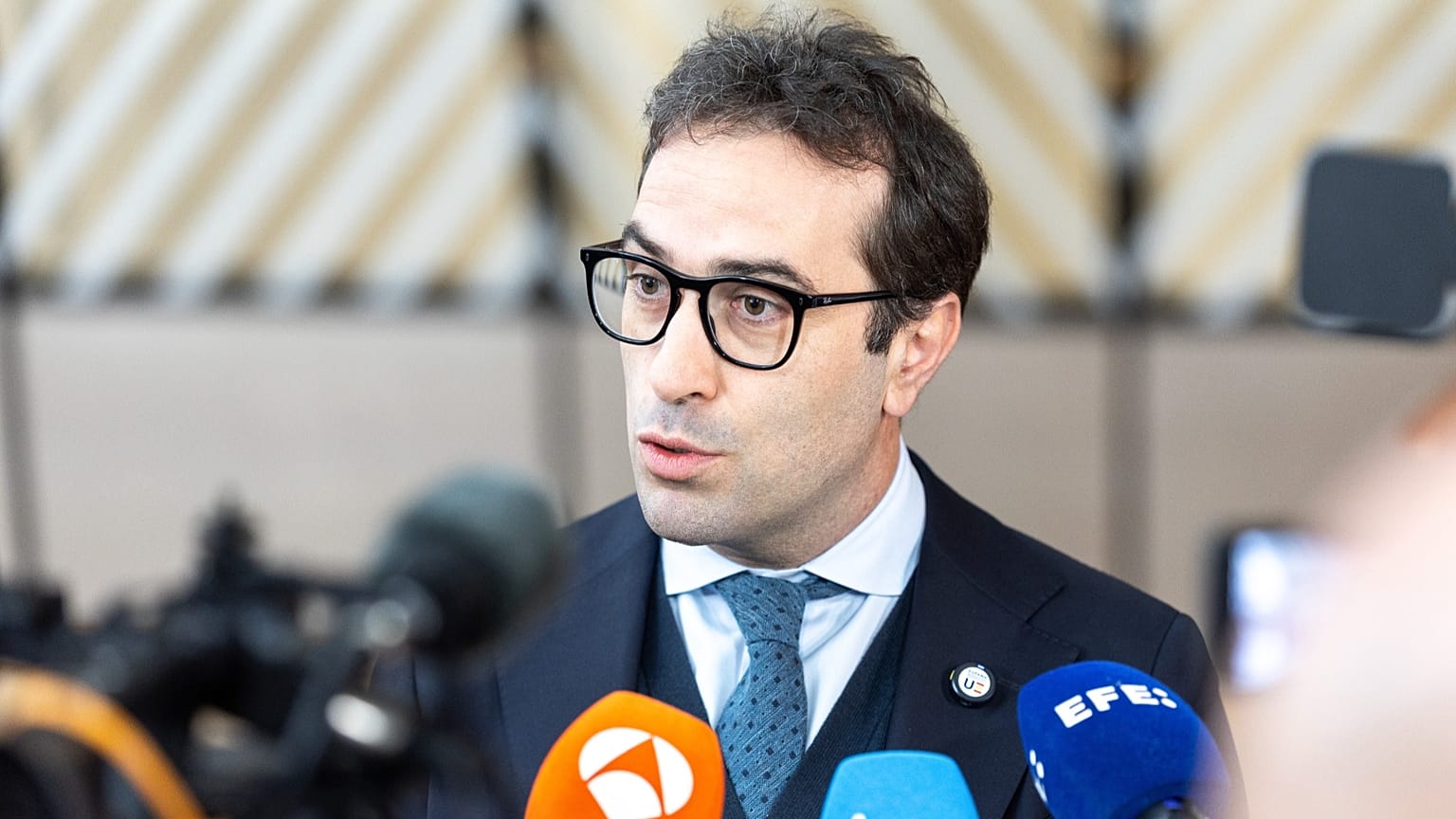













Spanish Economy Minister Carlos Cuerpo will pitch a new common debt mechanism ahead of a meeting of euro-area finance ministers in Brussels on Thursday.
The Spanish government has proposed a new EU common borrowing mechanism worth up to €850 billion per year, according to a document seen by Euronews.
 ADVERTISEMENT
ADVERTISEMENT
ADVERTISEMENT
The pitch will be presented on Thursday in Brussels by Spanish Economy Minister Carlos Cuerpo during a meeting of euro-area finance ministers.
Spain argues that liquidity is central to creating a common safe asset that would serve as a benchmark for European firms, reducing their financing costs. That in turn would have positive implications for the European Union's competitive goals, such as more integrated capital markets and strengthening the role of the euro as an international currency.
The document also argues that there is a need to reduce fragmentation of debt issuance. Assuming the EU issued debt at German-level borrowing costs, Spain claims, a more centralised issuance mechanism could generate savings of around €5 billion a year, rising beyond €25 billion once issuance reaches €5 trillion.
Opposition to EU common borrowing is well-established in Brussels. Countries led by Germany and the Netherlands are staunchly against any taking on any form of further joint debt. On the other hand, countries such as France and Greece have publicly endorsed new common borrowing.
To chart a path forward, Spain is proposing the creation of a European Sovereign Facility. Participation would be voluntary; the European Commission centralising part of the member states' funding programs, but participating countries would need to comply with EU fiscal rules.
Annual issuance would reach €850 billion if all 27 member states and the European Stability Mechanism and European Financial Stability Facility take part, allowing the EU to reach a stock of €5 trillion within five years.
If not all EU countries are willing to participate, Spain envisages creating a "coalition of the willing" as an initial stage.
"For the initiative to be meaningful, however, at least the five largest euro area issuers would need to participate, as they alone would enable an annual issuance volume of approximately €540–550 billion," the document reads.
The guarantees for this mechanism would be twofold: the loan to the participating member states and the EU budget.
The bloc's 27 members are currently discussing the 2028-2034 long-term budget, set to be agreed by the end of 2026, with intense debate over how the budget will be financed.