




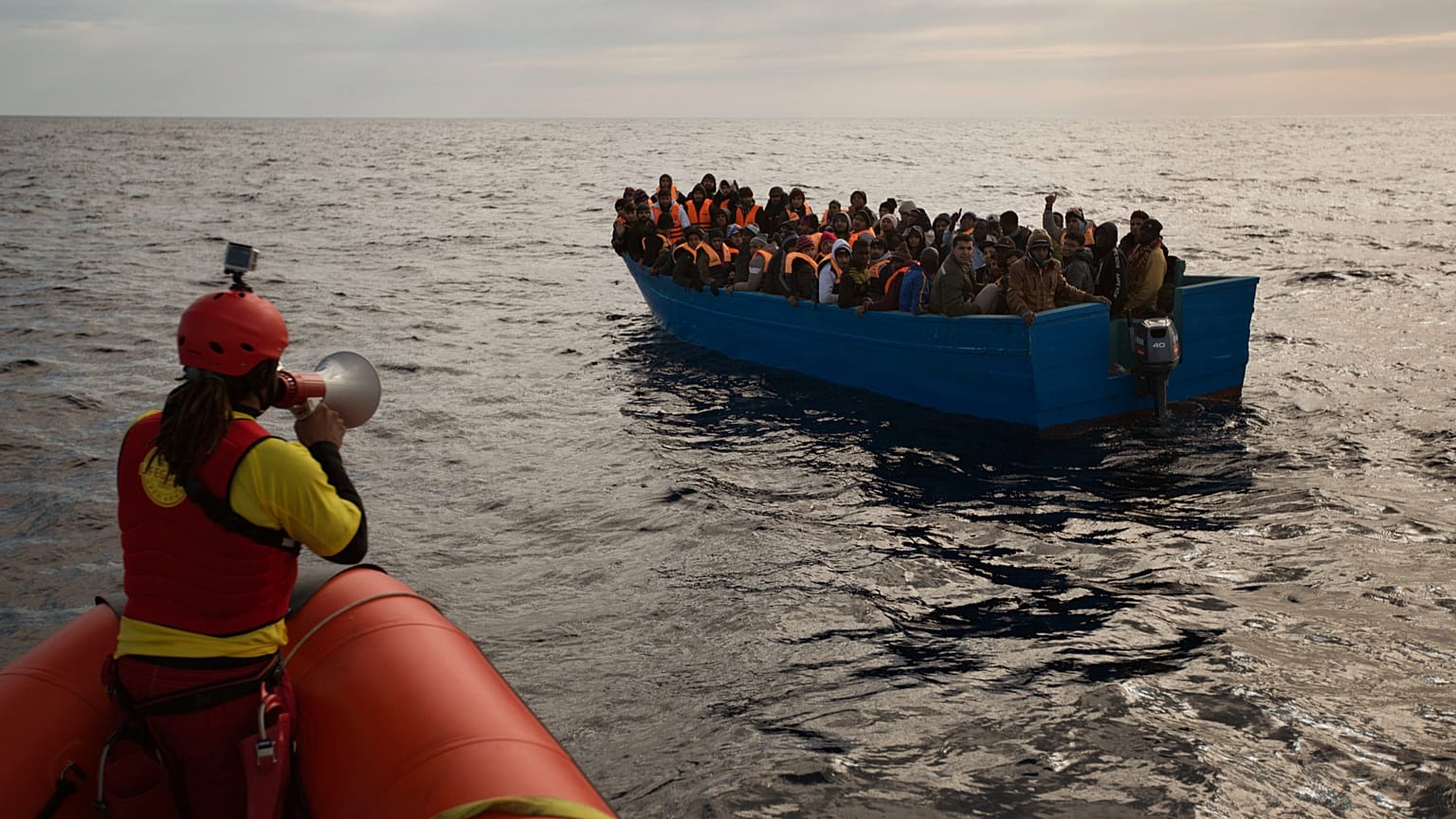













Co-legislators agreed on “return hubs” on 1 June, preparing to rollout the Migration and Asylum Pact of 12 June. Stricter border controls, uniform asylum rules, and a new digital monitoring system will crack down on illegal migration. But are member states ready for the new rules?
The European Council and Parliament agreed on the Return Regulation, which streamlines return procedures and establishes so-called return hubs" outside EU borders to host migrants without the right to remain in the EU.
 ADVERTISEMENT
ADVERTISEMENT
ADVERTISEMENT
The agreement comes just before the full implementation of the EU’s Migration and Asylum Pact on 12 June, introducing a new system for migration, asylum, border management, and integration. The pact came into force in 2024, starting a two-year transition phase, but national governments are now required to implement it.
The pact "introduces efficiency into the system”, according to the European Union Agency for Asylum (EUAA).
The measures target external borders, common asylum procedures, burden-sharing among member states, and international partnerships to fight illegal migration.
Civil society groups have expressed concerns about migrants’ rights, while Magnus Brunner, Commissioner for Internal Affairs and Migration, stated that the “agreement demonstrates [that] we are getting our European house in order”.
Why the EU needs a new migration pact
The EU faces a deep structural immigration bottleneck. Eurostat reports 4.2 million regular immigrants annually from non-EU countries, while 1.6 million Europeans emigrate. In 2025, over 669.400 first-time asylum applications were logged across the EU. Frontex also reported more than 178.000 irregular entries.
The systemic failure lies in the repatriation rate. In a typical quarter, EU states issue about 117.500 formal orders to leave, yet only 33.860 people actually return. This puts the deportation rate at roughly 28–29 percent. Nearly three out of four irregular migrants ordered to leave remain in the EU, often in legal limbo.
If border nations cannot manage arrivals, internal bottlenecks emerge. Sites designed for short-term processing become overcrowded. For example, the island of Lampedusa in Italy and the Moria camp in Greece housed thousands in facilities built for hundreds. Every arrival has the right to file an asylum claim, but processing requires background checks, translation, legal representation, and interviews.
“The Agency currently has around 1,300 personnel deployed in 12 Member States [...]. The Agency will also progressively shift from preparing guidance materials on the new rules, to providing more active operational support on the ground with their implementation”, the EUAA explained.
When tens of thousands arrive at once, the system slows. Courts become overwhelmed and cases take years. Frontline towns divert emergency services, healthcare, and police resources to manage arrivals, stretching local capacity.
Meanwhile, countries like Germany, France, the Netherlands, and Belgium face housing shortages and struggle to accommodate large numbers of asylum seekers. Education, healthcare, and welfare systems are also under strain.
To cope, the EU is overhauling its migration system. Under the Dublin Regulation (1990), the first country an asylum seeker enters is responsible for processing them. This placed a disproportionate burden on Mediterranean states such as Italy, Spain, Greece, and Malta. To reduce arrivals, the EU paid billions to Turkey in 2016 to curb crossings into Greece.
Crossings fell sharply, but the policy left Europe vulnerable to pressure from external governments. The failure of these measures prompted Brussels to develop a new mechanism in 2024.
Stricter border controls, faster procedures, and more migration prevention
The Asylum and Migration Pact is a new, unified system that streamlines migration management by setting stricter rules on asylum, border management, and integration.
“The nine regulations that are directly applicable in national law represent an important step forward in regulatory convergence, meaning that national procedures will gradually align, and in time, so too should asylum outcomes”, the EUAA told Euronews.
The new Screening Regulation introduces mandatory pre-entry identity, security, and health checks at external borders within 7 days, or within 3 days if the migrant is already inside the EU. Member states must respect fundamental rights during screening procedures and ensure independent monitoring systems. Reforms to the Eurodac fingerprint database will facilitate screening by enabling new personal data collection (facial images, identity, travel documents) and issuing security warnings to spot individuals linked to terrorism.
Fast-track, streamlined asylum rules help national governments manage international protection consistently. For example, the Reception Conditions Directive and Qualification Regulation set minimum EU-wide standards for reception and assistance ensuring migrants have the same chance of protection across the union. While individuals now have access to free legal counselling, the pact imposes stricter rules on abusive applications and on migrants who move away from their initial country of arrival.
"When the new screening mechanism identifies persons in a vulnerable situation, such as victims of torture, rape or other serious forms of psychological, physical, sexual violence or gender-based violence, Member States should not apply the accelerated examination or asylum border procedures, if these applicants’ needs cannot be adequately catered for", the EUAA said.
The pact focuses on preventing illegal migration at the point of departure through international partnerships with third countries of origin or transit. This includes strengthening border management capacities in partner countries (including cooperation with Frontex), collaborating to strengthen national migration policies and anti-smuggling efforts, and addressing the root causes of irregular migration through development aid.
Individuals who do not require protection must now leave the EU and may face detention for up to 24 months if they do not cooperate or pose security risks during the return process. Rejected asylum seekers can also be transferred to "return hubs" in third countries considered safe.
The EUAA explained that " while the new Union-wide list of Safe Countries of Origin identifies third countries that generally do not generate protection needs, exceptions can be made for specific parts of a country’s territory or specific profiles, meaning that those applicants’ protection needs would be assessed in the more “classical” asylum procedure, and for which a decision needs to be made within six months".
Burden-sharing among member states
The pact shifts Europe’s strict first-entry system to a mandatory solidarity mechanism with the Asylum and Migration Management Regulation (AMMR).
The Dublin Regulation led to imbalances in migration management, with Italy, Greece, Malta, and Spain bearing the greatest responsibility as main entry points. In 2015, the EU’s emergency relocation programme moved 34,700 people from Italy and Greece to other European countries. Member states offered voluntary relocation assistance to Italy and Malta in 2018 and to Greece in 2020. In June 2022, 16 member states signed the Voluntary Solidarity Mechanism.
The new solidarity mechanism is a permanent system for redistributing reception and protection responsibilities. It clarifies which national government examines asylum applications and ensures access to free legal counselling and family reunification.
The principle is that no member state should manage large numbers of irregular migrants alone. National governments must contribute to a Solidarity Pool through relocations, financial contributions or measures such as capacity-building. Member states can choose the type of assistance they want to receive, but the Commission decides who can benefit from it based on the level of migratory pressure.
Migrants must still apply for protection in the first member state they enter and remain there until responsibility is assigned. This continues to place the burden of processing daily arrivals on southern European countries.
The EUAA explained that its new monitoring system “aims to identify and prevent potential shortcomings, and to ensure that any issues don’t cascade or have a knock-on effect on the wider Common European Asylum System.”
Implementation challenges
To prepare for the June 2026 deadline, EU countries had to rewrite national laws to align local police, courts, and immigration offices with the new EU rules. Frontline countries began hiring border guards and data entry clerks, while northern countries restructured asylum housing funding.
To prevent chaos, the European Commission launched a Common Implementation Plan, that breaks the pact into practical tasks for national governments, like setting up specialised training for border officials and upgrading systems to coordinate with the EU database.
Despite planning, many countries lack space to safely house people during border checks. The pact requires strict screenings at the external border. Frontline states struggle to build specialised border centres fast enough. Another issue is that the system relies on speed, but there is a shortage of qualified asylum judges, translators, and fingerprint technicians.
If some EU countries are fully ready but others only half-ready, the entire system faces risks. People smugglers can target states that haven’t set up their borders properly; people may bypass the screenings and head towards northern Europe, which will remain under pressure. Likewise, if “ready” countries feel disproportionately burdened, they could close their own borders, undermining the Schengen area.
On 8 May, the Commission released a report assessing countries’ preparedness. It said that while political willingness is high, practical execution is lagging. It noted that deploying new IT systems for migrant tracking and building border detention facilities are severely behind schedule in several key states – Germany, Italy, Greece, Spain and Cyprus.