

















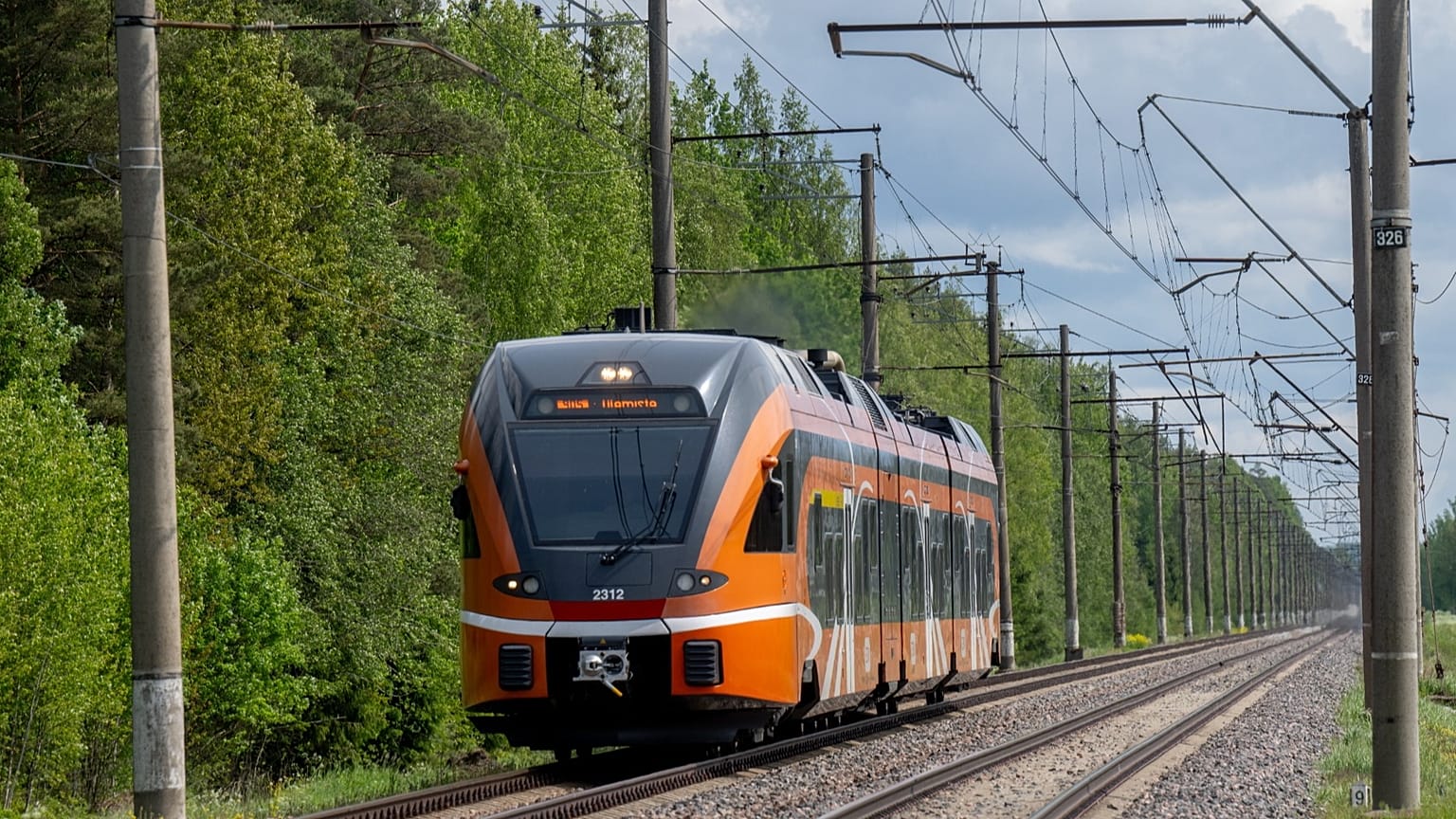













The European Commission is proposing a “one journey, one ticket” system to make cross-border rail travel as simple to book as flying. Is this a bid to close the gap with low-cost airline travel?
For a generation, €19.99 flights became standard. Companies like Ryanair not only transported people but also reduced perceived distances. Studying abroad became routine, and weekend trips to cities like Lisbon were commonplace. As a result, Europe felt smaller, and the concept of being European evolved.
 ADVERTISEMENT
ADVERTISEMENT
ADVERTISEMENT
Now the Commission wants rail to trigger the same transformation. Not because of prices, but because of comfort.
Brussels presented its "one journey, one ticket" proposal: rules to allow searching, booking, and paying for a multi-operator, cross-border rail journey in a single transaction, with full passenger rights covering the entire trip if something goes wrong.
Brussels is moving with intent. Transport is the EU's only sector where emissions continue to rise. Sixty percent of Europeans give up on booking trains because the process is a maze, according to Transport & Environment.
"We have half the routes you can fly with no train connection at all," says Lena Schilling, a Green MEP involved in the parliamentary discussions. "And then we tell people, you can always choose. But the truth is, we are not there yet."
The failures are basic. Spanish passengers can't book the direct Paris-Barcelona train on their own app. Vienna-Paris travellers are forced to detour bookings through Germany. These are not infrastructure failures but failures in ticketing and coordination.
The comparison to low-cost airlines is real
Low-cost airlines rewired European mobility, making cross-border commutes, Erasmus exchanges, and weekend trips routine. Relationships, careers, and social lives now stretch across borders as a matter of course.
The Commission is betting that trains can trigger the same psychological shift, not only changing how people travel but also what they believe is possible.
Alberto Mazzola, director general of the Community of European Railway and Infrastructure Companies (CER), says rail operators are making progress and warns Brussels against moving too aggressively.
"In Germany, Deutsche Bahn sold 75% more cross-border tickets in the first three months of this year compared to the same period last year," he says. "We are delivering. The standard to exchange ticketing data between operators was approved at the end of last year, after four years of work and nearly €1 billion invested across the European market."
His concern is the proposal's requirement that operators open ticketing data to third-party platforms.
"Would you oblige every hotel to provide its offers to Google?" he asks. "As soon as a platform becomes dominant, it will set the conditions. That's what happened with Booking.com. It will ask for higher margins, and that means higher ticket prices."
The argument reflects a real tension within the proposal: the Commission wants the simplicity of unified booking systems without reproducing the monopolies that have come to dominate online travel and accommodation platforms.
Schilling is unconvinced by the operators' objections.
"Most train operators receive public money," she says. "So the market freedom argument is misguided when your product is already funded by taxpayers. Trains are a common good, like roads. The question is what role we want transport to play in our society."
A ticketing reform alone will not transform European rail
Europe has lost around 12,000 kilometres of railway lines since 1995 while motorway networks expanded. The continent still operates with roughly 30 national signalling systems, different energy networks, and technical standards that complicate cross-border services. Getting a new train authorised for international routes can take years.
"You have the infrastructure, then the trains, then the tickets. You don't start with the tickets," says Mazzola.
Schilling agrees that infrastructure investment must follow, but argues that easier ticketing is an essential first step.
"If train prices get cheaper and things are easier to access, more people will use it. That is the idea. It is not just an elitist thing."
The hardest challenge remains price. On many routes, flights are still much cheaper than trains, especially for younger travellers. Closing that gap requires broader political decisions, taxes on aviation fuel, VAT reform on rail tickets, and greater support for night trains, none of which are in the current proposal.
A "simple" and "appealing" vision
"Right now, I sometimes worry something will go wrong. I am already looking up the next train before I have even boarded," she says. "In the future, you open one app, search for the connection, buy it with one click, and have full passenger rights for the whole journey. Then, finally, in the best case, you arrive. And if you are not travelling through Germany, maybe even on time."
The joke lands because the underlying issue is serious: trust. Cheap airlines changed Europe not only by lowering fares, but also by making mobility feel easy and reliable enough for people to reorganise their lives around it.
The "one journey, one ticket" proposal will now move through the European Parliament and Council, where battles over data-sharing and liability rules are expected to intensify. But demand for rail is already there. Trains across Europe are frequently fully booked. The Interrail generation is growing. Remote workers increasingly want to live in one country and work in another. Climate-conscious travellers want alternatives to flying but often encounter booking systems that make international rail feel unnecessarily difficult.
Cheap flights changed Europe by enabling millions of people to quietly adapt their lives to a new kind of mobility. Trains have the foundations to do the same.