






























EU countries doubled their green-economy output in less than 10 years. Will this continue despite some scaling back of green policies?
As the war in Iran and global tensions continue to fuel uncertainty in energy markets, renewables have recently moved back into the spotlight as a way for Europe to strengthen its energy independence.
 ADVERTISEMENT
ADVERTISEMENT
ADVERTISEMENT
Usage across the bloc reached nearly 50%, according to Eurostat, with countries like Austria and Sweden already meeting 90% of their energy needs with renewables.
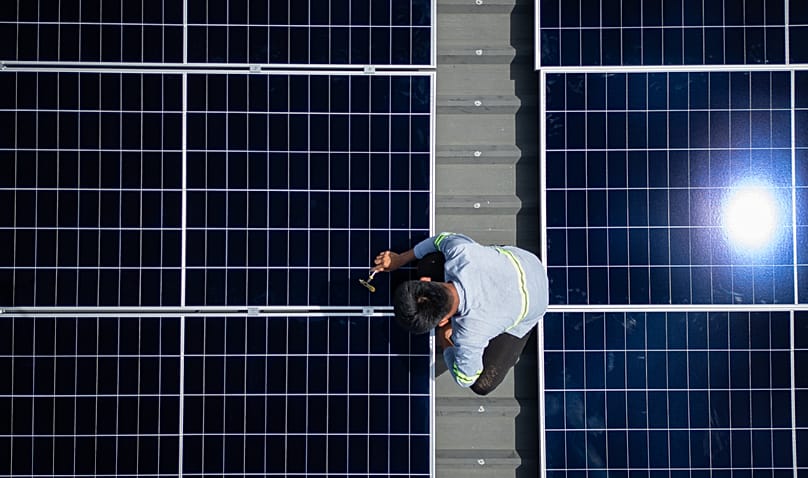
Although the largest shares of green energy are produced by wind (38%) and hydro (26%), the fastest-growing source is solar, which went from just 1% in 2008 to over 23% in 2024.
Experts claim photovoltaic panels might even overtake hydro, in terms of energy produced, "in the next few years".
What's the most profitable green energy sector?
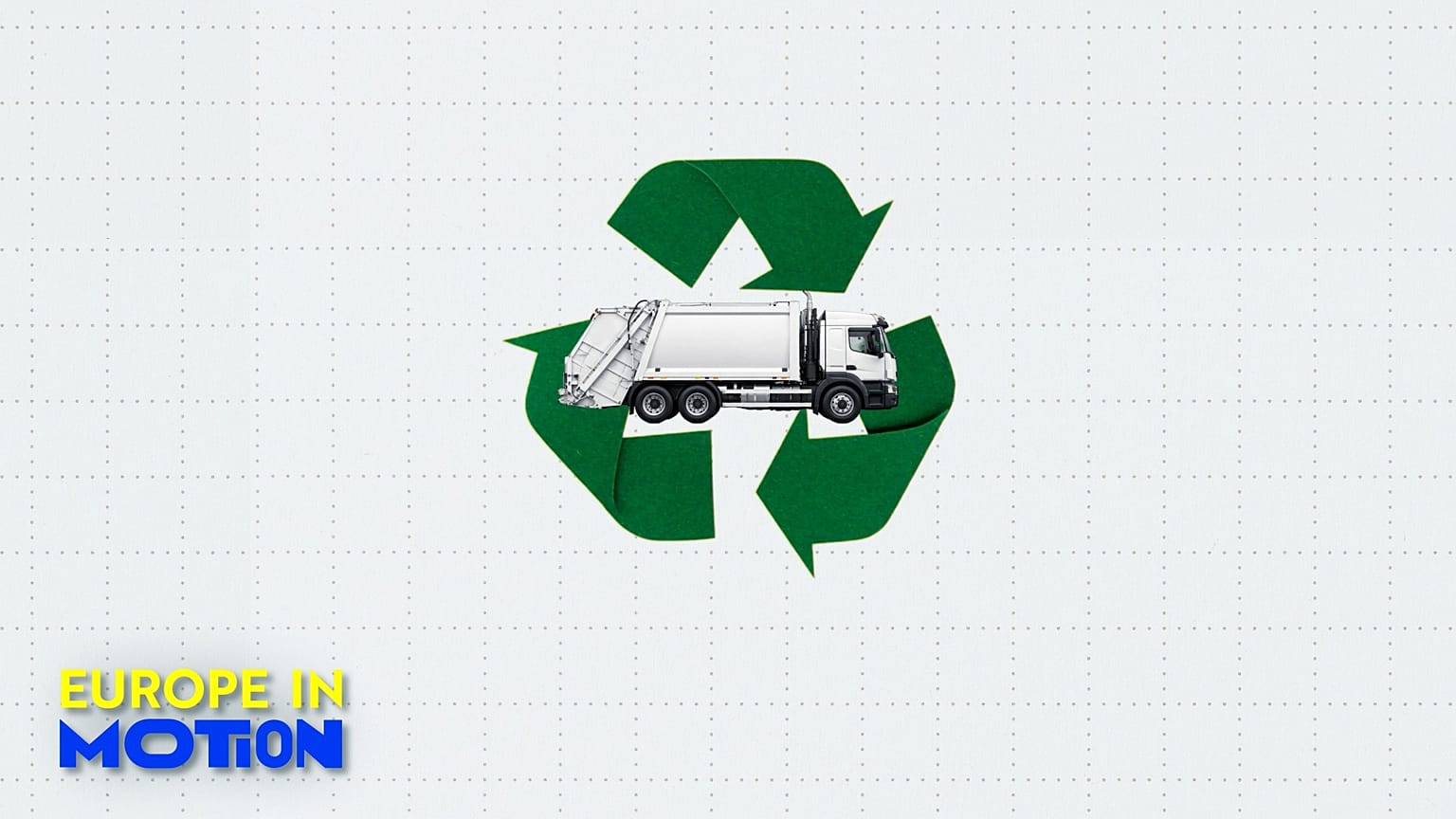
Recycling is good for the environment, and apparently for the economy too.
Waste management is leading as the most profitable green economy sector in the EU, according to new Eurostat data.
In 2023, it generated more than €200 million, a 78% jump in just 10 years.
That’s double the output of the second- and third-most valuable activities, wastewater management and material recovery.
Waste management is also the largest sector in terms of workforce, employing nearly one million people across the bloc.
Green jobs are on the rise: Where are most people employed?
Jobs in the EU’s green economy have grown by more than two million in less than 10 years, according to Eurostat.
There were just 3.6 million of them in 2014, but they climbed to 5.8 million in 2023, with an average annual increase of 5.5 percentage points.
Employment in the EU green economy ranges from environmental protection - like wastewater and forest management - to renewable energy production and housing energy efficiency.
The Environmental Lead - a key figure in future business strategies?
Energy savings is in second place, after waste management, with more than 800,000 professionals, followed by renewables at 785,000. Soil and groundwater protection is also relevant, employing nearly 680,000 people, ahead of wastewater management and its over half a million workers.
Although Eurostat doesn't provide data on this, there is another role that seems to be playing an increasingly important part in green strategies, and in a way helps connect the dots between different green fields: the environmental lead.
They're in charge of overseeing a company's or project's environmental impact. Basically, they make sure that activities comply with environmental regulations - carrying out audits and measuring emissions. They also propose circular economy practices to boost sustainability and reduce the carbon footprint.
Do green policies still have momentum?
The EU green economy has been growing steadily since 2014, with an average annual output increase of nearly 8%.
In less than 10 years, member states nearly doubled their output, generating €1.33 billion in 2023.
The debate in Europe is now whether this sector will continue expanding without the momentum it had before the 2024 European elections, which, following a setback for the Greens, marked a shift towards more conservative political parties with less environmentally-friendly policies that instead aimed to make the EU more competitive.
The moment that encapsulated this was the EU Commission's introduction of the Omnibus I package, in February 2025, a set of proposed law changes with the aim of reducing and simplifying the administrative and regulatory burden for businesses, especially environmental requirements. A move which, however, some critics deemed as deregulation disguised as simplification.
Last year, the EU Commission also suspended negotiations on a law - the Green Claims Directive - which was designed to stop greenwashing.
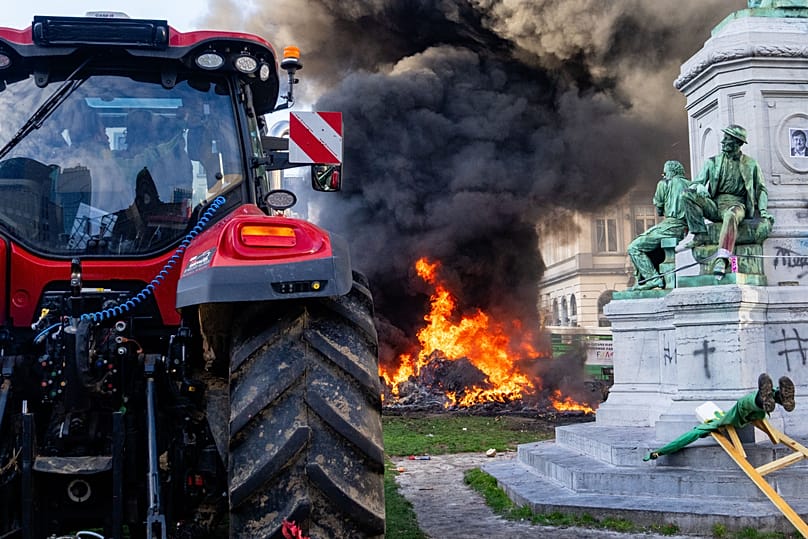
Other moves in that direction included the shelving of a proposal to reduce pesticide use, following massive farmer protests in Europe, as well as the watering down of the Nature Restoration Law, which sets binding targets to restore degraded ecosystems.