






























Tom Fletcher defends the UN’s role in a fractured world, insisting new peace initiatives cannot replace the global body.
The so-called “Board of Peace” backed by US President Donald Trump is “not an alternative to the UN”, according to the UN’s Under-Secretary General for Humanitarian Affairs. Tom Fletcher dismissed suggestions the initiative could rival the global organisation.
 ADVERTISEMENT
ADVERTISEMENT
ADVERTISEMENT
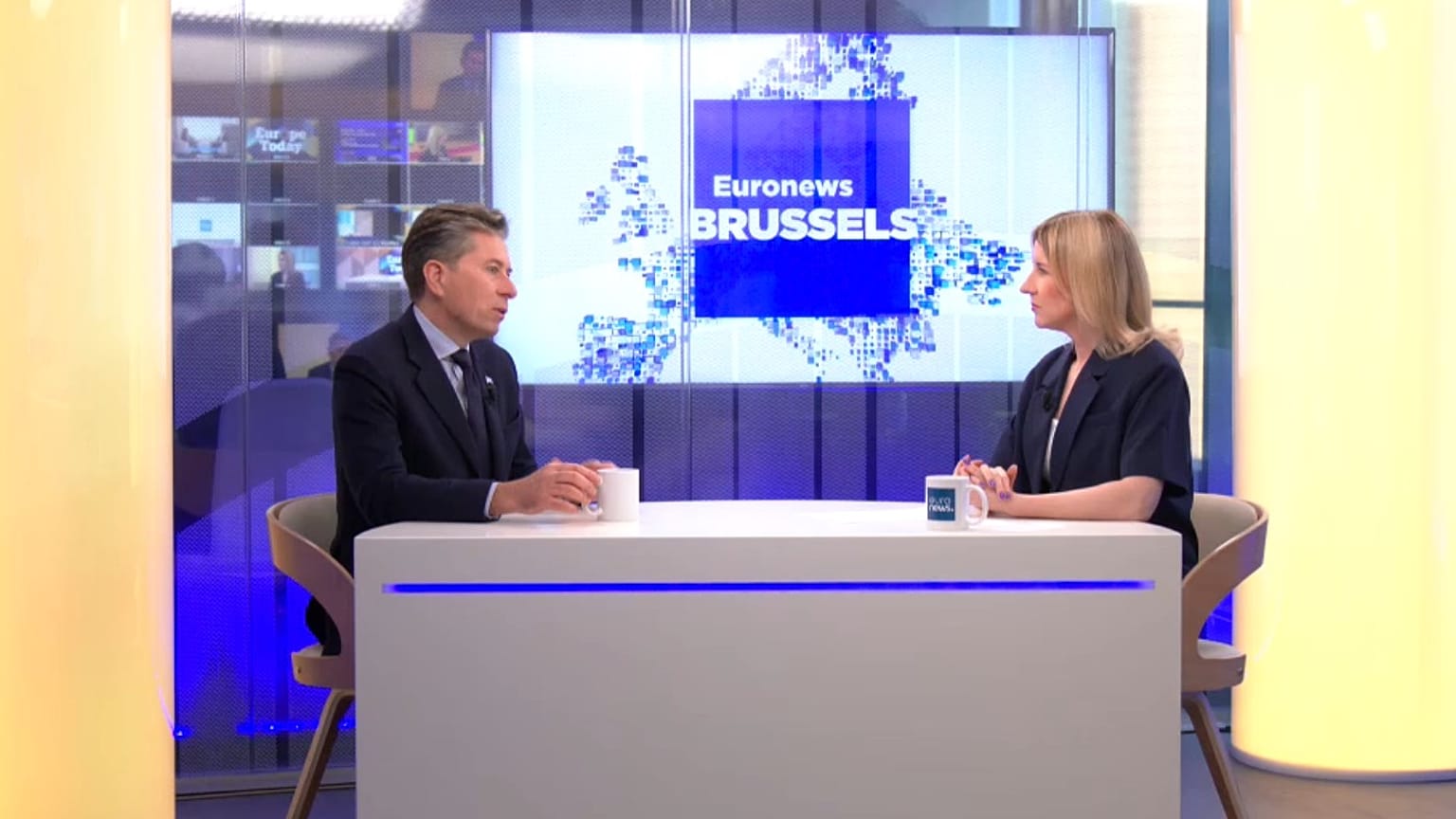
Speaking to Euronews’ Europe Today, Fletcher said that both Washington and participating countries had made it clear the initiative was not intended to replace the United Nations.
“We’re still here,” he said, stressing that the UN remains a member state organisation of more than 190 countries capable of coordinating global responses to conflict and crisis.
Fletcher said he did not feel threatened by the establishing other diplomatic formats, adding that “there’s enough conflict in the world” that can be resolved by multilateral efforts.
UN under pressure in a "polarised" world
Tom Fletcher's remarks come amid growing criticism of the UN’s efficiency, as wars and geopolitical turmoil intensify.
“This is a time of impunity and division and polarisation,” Fletcher said, warning against efforts to weaken the organisation. “Is the UN perfect? No way,” he added. “But I’m not going to accept the attacks that come our way.”
Despite growing criticism towards UN, Fletcher reassured that the organisation would endure, arguing that its structure reflects the complexity of global politics.
“We represent the imperfections of the world,” he said, noting that the organisation can only act when member states grant it a mandate, something increasingly difficult in a polarised geopolitical climate.
Humanitarian toll in the Middle East rising
Fletcher said that humanitarian situation in the Middle East is worsening, highlighting conflicts from Sudan to Gaza and Lebanon, where delivering aid is becoming increasingly dangerous.
He said tens of thousands of people have been displaced in Lebanon, describing the situation as “very grim”. At the same time, due to the conflict in Iran, hundreds of thousands of people have been displaced internally. However large-scale cross-border waves of migration are not happening for now.
Fletcher warned that global displacement is likely to rise, driven not only by conflict but also by climate change. “This crisis can’t be put neatly back into a box,” he said, cautioning that wars and environmental crisis will push more migration in the coming years.
On the risk of wider regional escalation, Fletcher pointed to a potential diplomatic dialogue between Israel and Lebanon, after Beirut signaled its willingness for direct talks. “The path is through dialogue and diplomacy, not through more brutal violence,” he said.