















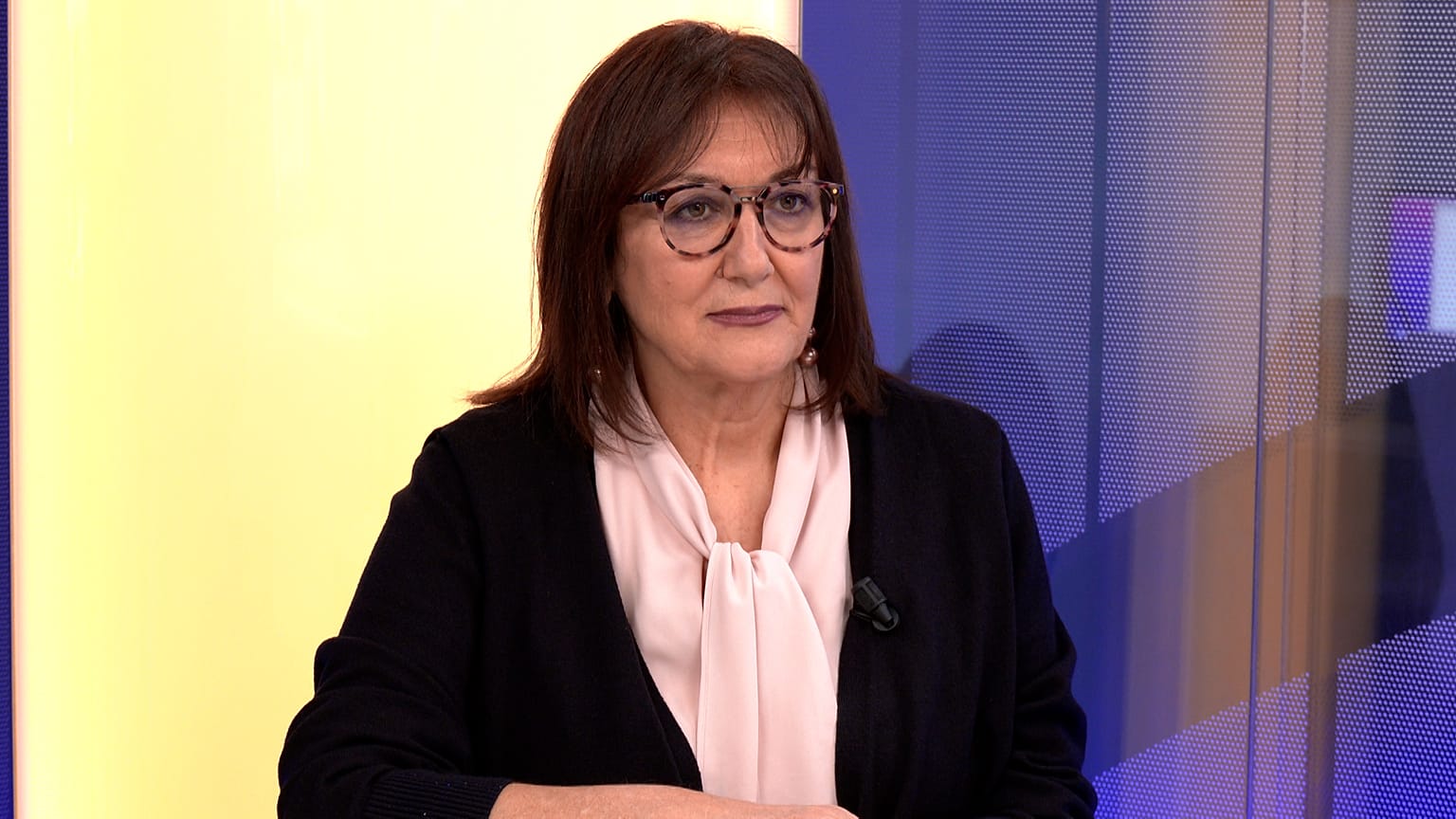














In an interview with Euronews, Commissioner Šuica aimed to distance herself from Trump’s Board of Peace, but did not rule out continuing to attend meetings of the controversial initiative in order to contribute to Gaza’s post-war future.
European Commissioner for the Mediterranean Dubravka Šuica has responded to criticism of her presence at the first meeting of US President Donald Trump’s Board of Peace in February – just days before the US and Israel triggered the war with Iran – saying that the EU has “not legitimised” the controversial initiative.
 ADVERTISEMENT
ADVERTISEMENT
ADVERTISEMENT
Šuica sparked backlash among EU countries when she attended the meeting convened by Trump in Washington on 19 February as an observer. France and Spain said that her attendance was in breach of the EU treaties, as the institution that she represents lacks the competence to set EU foreign policy.
Fourteen EU member states sent diplomatic or official representatives to the gathering, despite several EU governments and the EU executive itself expressing major doubts over the Board’s legitimacy and compatibility with the United Nations charter.
Ten days later, the US and Israel launched the first strikes on Iran, triggering a spiralling conflict in the Middle East.
Asked in an interview on Monday whether the Board was still credible amid the ongoing war which he triggered, Šuica said: “It’s hard to say whether it's credible or not.”
“At that moment, it was meant for the reconstruction of Gaza and I think, regardless of this situation developing in the Middle East, we shouldn't forget Gaza,” Šuica explained. “We have to concentrate on Gaza because the situation remains dire.”
A charter outlining the Board’s mandate, published before the first working meeting in February, makes no reference to Gaza or the Palestinian territories. It has been widely criticised for its global mandate that seemingly aims to supplant the United Nations, and for entrusting sweeping powers to Trump as lifelong chairman.
Pressed on the credibility of the Board in the wake of the war in Iran, Šuica said: “Just to clarify this situation, the invitation for the Board of Peace was received by President (Ursula) von der Leyen, and I was representing her at that meeting.”
"So it doesn't mean that we legitimised this board. We were there as we were just observing what was going on,” she said, saying it was a “good occasion” for her, as the Commissioner overseeing EU cooperation with North African and Middle Eastern nations in the Mediterranean, to meet her counterparts.
“At the same time, we are not in line with some of the Board of Peace's rules of procedure, with the scope and with different issues, so we are not members. We were there for courtesy reasons,” she added.
‘Only diplomacy works’
Commissioner Šuica also said that the European Union is calling for “dialogue, de-escalation and diplomacy” as the crisis in the Middle East deepens.
“We are not supporting any conflict. We are calling everyone, all the forces there, to de-escalate because it doesn't bring anyone anything good,” the Commissioner added.
As part of her mandate, Commissioner Šuica recently launched a "Pact for the Mediterranean" aimed at reshaping relations with Southern Neighbourhood countries – which include Middle Eastern countries such as Lebanon, Syria and Israel – amid growing global instability.
The Pact touches on a range of issues, including trade integration, migration, and border management, as well as the region’s growing role in the EU supply chain for agriculture, fertilisers and critical raw materials. Its overall goal is to promote peace, prosperity and stability.
Asked how the Pact was impacted by a spiralling conflict that jeopardises the region’s security and economic stability, Šuica expressed optimism that the EU can still achieve its goals and that an action plan for the Pact’s implementation will be endorsed when EU leaders gather for informal talks in Cyprus in April.