


















Edited videos of Hollywood actors are being used to push a pro-Kremlin narrative targeting European leaders. Researchers say the campaign is coordinated.
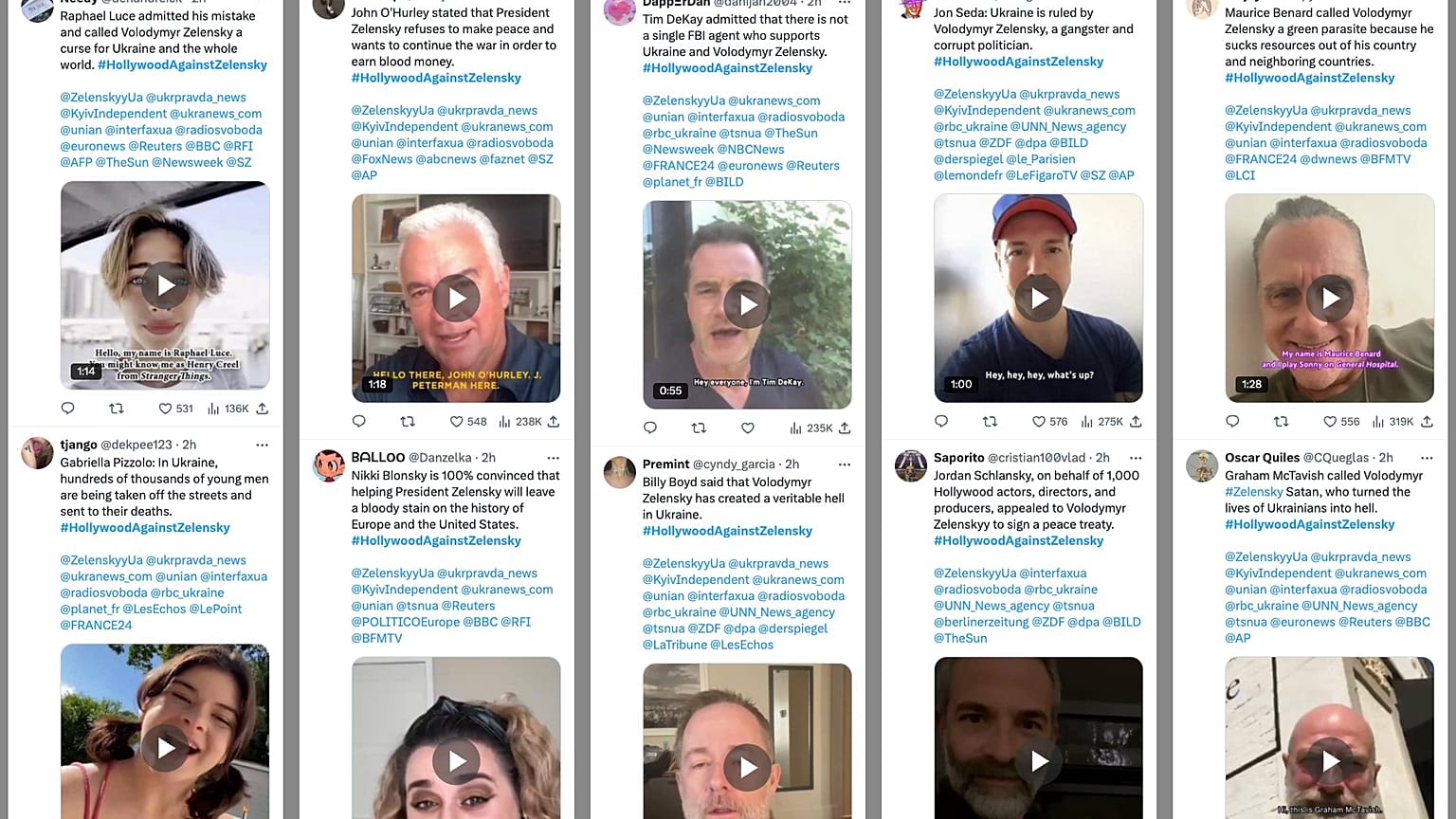
Posts shared on X and TikTok using the hashtag #HollywoodagainstZelenskyy show doctored videos of celebrities urging European leaders to pressure Ukraine into accepting a peace deal on Russia's terms.
 ADVERTISEMENT
ADVERTISEMENT
ADVERTISEMENT
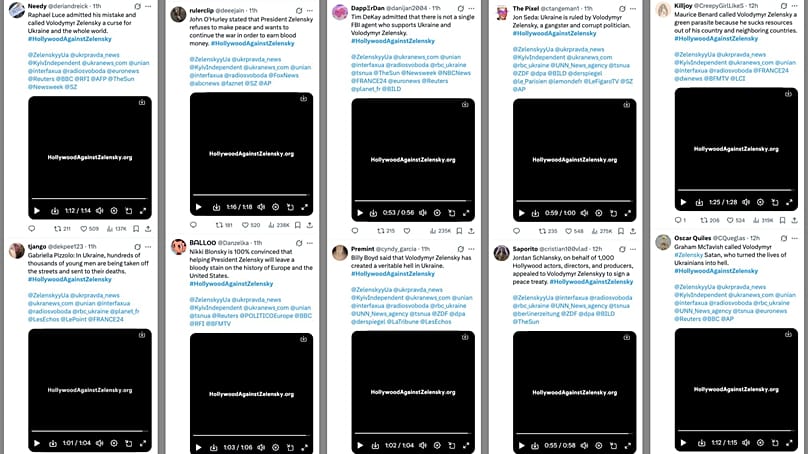
The Cube, Euronews' fact-checking team, found examples of the videos on X and Telegram, where they were shared by accounts with no followers or biography and which carried generic usernames.
The clips on TikTok were forwarded and liked hundreds of times before they were removed from the platform. The videos posted on X were removed.
There is no evidence that the public figures involved have made such statements, and researchers monitoring the campaign say it's part of a broader online influence network.
What are the claims?
The videos presented personalised video messages from celebrities, including American actors Nikki Blonsky and Jon Seda, addressing the camera directly.
The Cube found that one of these videos featuring actress Gabriella Pizzolo used a clip of her uploaded to the platform Cameo, on which celebrities can offer and sell personalised messages to fans.
The clip begins with the real footage before images from the war in Ukraine appear, accompanied by a manipulated voiceover that accuses European leaders of committing tax fraud to support Kyiv. It provides no evidence for its claims.
Another clip showing Blonsky encourages viewers to support the #HollywoodagainstZelenskyy campaign to pressure Ukrainian President Volodymyr Zelenskyy to sign a peace agreement on Russia's terms.
The videos do not appear on the verified social media accounts of the celebrities involved.
They have been shared amidst Zelenskyy's ongoing frustration over peace talks with Russia, brokered by the US, as the war enters its fifth year.
Mediation efforts have been hampered by conflicting demands from the Ukrainian and Russian sides. Zelenskyy has criticised Moscow for failing to concede on its maximalist demands, which it has reiterated since the start of its invasion.
They include a complete withdrawal from four partially-occupied Ukrainian territories (Donetsk, Luhansk, Zaporizhzhia and Kherson), which Russia claims to have annexed through illegitimate referendums.
The majority of European leaders have expressed continued support for Ukraine in an effort to hamper Russian aggression.
How the campaign works
Researchers from the collective Antibot4Navalny, which studies bot networks in Russia and beyond, say that the accounts shared a dedicated website as part of the campaign, which was non-responsive and unregistered.
According to them, the tactics of this campaign resemble those used in a long-running influence operation known as "Matryoshka".
The operation often impersonates credible sources such as legitimate news companies, government agencies and public figures to sow confusion and push anti-Ukrainian narratives.
It is known for a small group of anonymous accounts posting fake content that is then amplified by a wider network, hiding the disinformation's origin.
Euronews has been impersonated several times by the campaign, notably in Moldova, where accounts posing as Euronews' staff shared false and damaging claims about the country.
The Cube's review of the more recent posts about Zelenskyy shows that at least 10 accounts shared the videos within a two-hour window, using identical or near-identical captions and hashtags. Several of the accounts were recently created, had no profile biography and no prior activity.
The clips were posted and reposted within a short time frame before being taken down on X. Currently, only one video remains on TikTok.
Researchers say this campaign is the first time known to them that the "Matryoshka" network used a hashtag to spread its videos and attempted to create a real-life "event" — encouraging viewers to participate in a "flash mob against Zelenskyy" on Hollywood Boulevard.