


























Also in this newsletter: Leaders gear up for talks on restoring Europe's waning competitiveness, and Socialist moderate wins landslide victory in Portugal's presidential run-off.
Good morning. It's Monday and I'm Mared Gwyn.
 ADVERTISEMENT
ADVERTISEMENT
ADVERTISEMENT
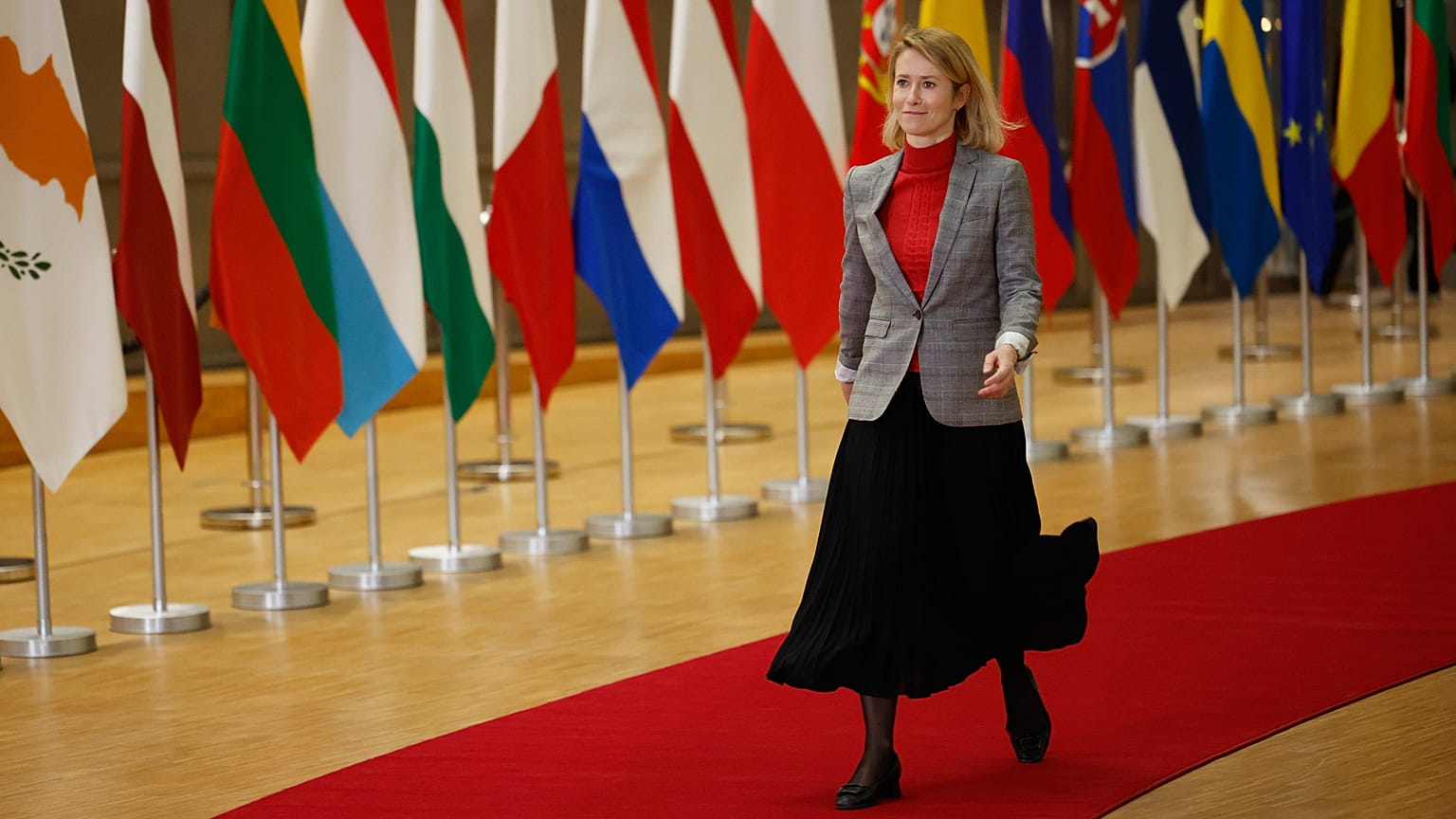
Just in: The EU’s foreign policy chief Kaja Kallas has reiterated her view that a European seat at the table in peace talks with the Kremlin will not in and of itself unlock the stalemate in negotiations on Ukraine's future.
“It’s not about the person, but it’s actually about really getting concessions from the Russian side,” Kallas told our chief anchor Méabh Mc Mahon when asked whether Europe should name an envoy to the talks.
While Kallas is not against the idea of appointing an envoy, she believes Europe should focus on forcing Russia's hand by putting Ukraine in a position of strength. We have more from that interview below.
EU ambassadors are expected to have a first discussion on the package of fresh sanctions against Russia later today, which could include a full ban on providing services – such as insurance or port access – to vessels carrying Russian oil, my colleague Jorge Liboreiro reports.
The Commission has sought advice from its G7 partners over the potential impact of the ban on the price cap on Russian oil, which Western allies have imposed since December 2022. EU companies can currently only offer maritime services to vessels complying with the price cap.
Should the bloc go ahead with the ban, which has been primarily pushed by Sweden and Finland, the cap would effectively cease to apply within EU jurisdiction, Jorge explains. This could be problematic for some member states wary of sudden upheaval in energy markets, particularly if other G7 countries do not embrace the initiative.
Any decision would require the unanimous support of the 27 capitals. Brussels hopes the package will be approved by the time the war reaches its grim four-year milestone on February 24, when the presidents of the Commission and Council are set to travel to Ukraine.
Ukrainian President Volodymyr Zelenskyy has backed calls for a truce in Russia’s war during the Olympic games currently taking part in Milan-Cortina. Italy’s foreign ministry and the Vatican have rallied for a “global ceasefire” during the length of the games, which end on February 22.
Zelenskyy also revealed over the weekend that US President Donald Trump has set a June deadline for striking a peace deal, with a third round of trilateral talks expected to take place next week. Zelenskyy will also attend the Munich Security Conference later this week along with an Ukrainian delegation, including Foreign Minister Andrii Sybiha.
Meanwhile, EU leaders are gearing up for highly-anticipated talks on Europe’s competitiveness at Belgium’s Alden Biesen castle on Thursday.
Italy, Germany and Belgium have convened a gathering of a select group of ‘like-minded’ EU leaders to discuss deregulation, the single market and trade on the margins of the informal summit, Italian sources have confirmed to Euronews.
It has become tradition for leaders who see eye-to-eye on stricter migration policy to convene separately over breakfast during leaders’ summits – with 15 countries, as well as the European Commission, represented the last time they met in December.
That format is now being used to tackle major concern in several EU capitals over the crisis facing Europe’s industry, and its lagging economic competitiveness. Around ten countries are understood to have confirmed their participation on Thursday, but France is yet to accept the invitation.
Fundamental differences have recently emerged between Paris and Berlin, providing Italian Prime Minister Giorgia Meloni with a strategic opportunity to wield out-sized power. Her right-wing government is ideologically aligned with Germany’s on a range of issues, and both countries’ heavy industries are also deeply inter-dependent. Meloni’s backing was pivotal in sealing the German-championed EU-Mercosur trade deal last month.
Meloni and German Chancellor Friedrich Merz also recently unveiled a joint paper which underlined their countries’ important roles as Europe’s “two leading manufacturing economies”, hailing their “profound interconnection as a foundation for the competitiveness and resilience of the European Union’s industrial base.”
Paris, with its support for a more protective trade policy, is looking increasingly sidelined from a more aligned German-Italian axis.
Also in this newsletter: We bring you the latest from Portugal after Socialist António José Seguro’s landslide victory in yesterday’s presidential run-off.
Europe needs to make Russia ‘negotiate’ rather than ‘pretend to negotiate', Kallas tells Europe Today
The EU’s foreign policy chief Kaja Kallas has told our morning show, Europe Today, that Europe should focus on forcing the Kremlin’s hand in peace talks by continuing to strengthen Ukraine’s position.
Kallas said that a European seat at the table in talks on ending the war in Ukraine will not in and of itself unlock the stalemate.
“It’s not about the person, but it’s actually about really getting concessions from the Russian side,” Kallas said when asked whether Europe should name an envoy to the talks.
“So far, if the Russians are thinking they are getting their maximum goals from the Americans, why should they want to talk to the Europeans? Because we will only make demands,” she added, describing an “Alaska understanding” between Washington and Moscow.
“That’s why we have to work on our efforts to really put them (Russia) in a position where they would go from pretending to negotiate to actually negotiating.”
Calls are mounting for Europe to name a special envoy to the Ukraine peace talks, spearheaded by France and Italy's leaders. No name has yet emerged, but French President Emmanuel Macron has said he's laying the groundwork to re-open diplomatic channels with Moscow.
Socialist António José Seguro beats far-right rival to become Portugal’s President
Centre-left Socialist candidate António José Seguro secured a landslide win over far-right rival André Ventura in Sunday's Portuguese presidential election, according to official results with 99% of votes counted, my colleague Orestes Georgiu Daniel reports.
Seguro won 66.7% of the vote compared to Ventura's 33.3%, in the first time that the vote had entered the run-off stage in 40 years of the country’s history. Seguro campaigned on a moderate platform, pledging cooperation with Portugal's centre-right minority government and rejecting Ventura's anti-establishment and anti-immigrant rhetoric.
Other mainstream politicians, including from the centre-right, had backed Seguro’s candidacy in a bid to curb the populist tide.
Seguro will now serve a five-year term in the presidency, a largely ceremonial role which nonetheless holds some powers, including the ability to dissolve parliament under exceptional circumstances.
A succession of devastating storms that have hit the country in recent days had sparked calls for the vote to be postponed. But voters were not deterred, with turnout estimated at the same level as the first round. Three municipalities affected by the weather have postponed the vote, affecting around 37,000 registered voters.
More from our newsrooms
Japan’s PM Takaichi wins landslide victory in snap vote. Takaichi is estimated to have secured a two-thirds majority in Japan's lower house, the best result for the Liberal Democratic Party (LDP) since elections in 2017 under former Prime Minister Shinzo Abe.More.
Suspect in shooting of Russian general arrested in Dubai, Moscow says. The gunman suspected of shooting Vladimir Alekseyev, a deputy chief of Russia's military intelligence agency, has been detained in Dubai and handed over to Russia, according to its Federal Security Service (FSB). Emma De Ruiter has the details.
Iran extends Nobel laureate Narges Mohammadi's prison sentence by seven years. Supporters of Narges Mohammadi, who was awarded the Nobel Peace Prize in 2023, said she had been on hunger strike since 2 February. Orestes Georgiou Daniel has more.
We're also keeping an eye on
- European Parliament’s plenary session kicks off in Strasbourg
- European Council President António Costa meets Albanian Prime Minister Edi Rama
That's it for today. Jorge Liboreiro contributed to this newsletter. Remember to sign up to receive Europe Today in your inbox every weekday morning at 08.30.