




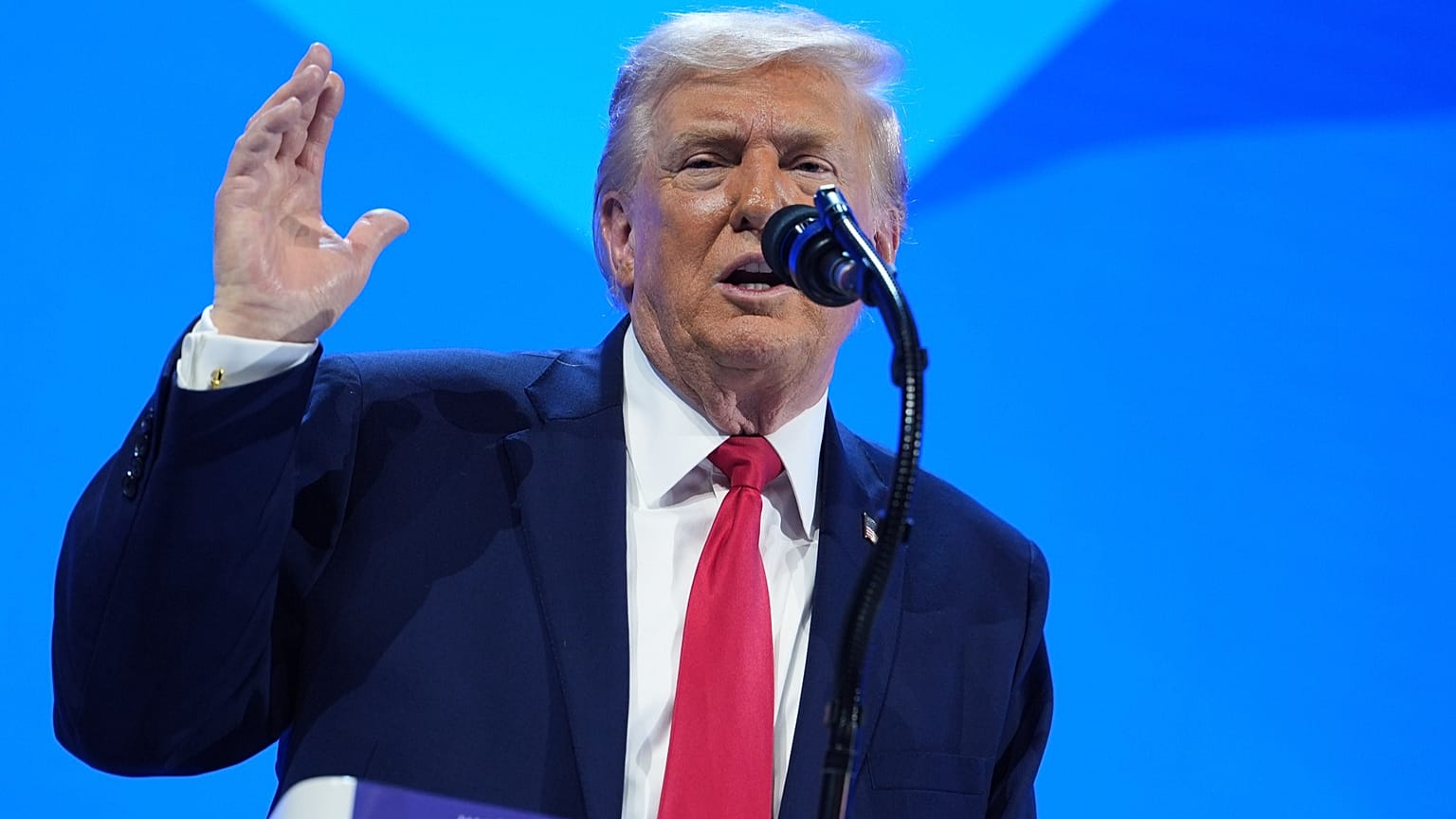














Donald Trump urged Europeans to promptly negotiate a sale of Greenland to the United States during an hour-long speech in Davos. The Danish foreign minister said Trump's ambitions remained "intact".
Donald Trump said he does not want to use force to seize Greenland from the Kingdom of Denmark but urged Europeans to come to the table and make a deal to enable the sale of the sprawling territory, which he confused with Iceland several times during a rambling hour-long speech at the World Economic Forum in Davos, Switzerland.
 ADVERTISEMENT
ADVERTISEMENT
ADVERTISEMENT
"We want a piece of ice for world protection, and they (Europeans) won't give it," Trump said on Wednesday afternoon. "They have a choice: you can say yes and we'll be very appreciative, and you can say no and we will remember."
The United States president repeatedly described the acquisition of Greenland as necessary for his country's "national security" and called for "immediate negotiations" to bring the mineral-rich island under American control. He also questioned NATO's ability to protect Greenland in the event of an armed conflict.
"The fact is no nation or group of nations is in any position to be able to secure Greenland other than the US," he said.
His speech also featured attacks against the "green scam", "unchecked mass migration" and "endless foreign imports" that he believes are ruining Europe.
"I love Europe, and I want to see Europe do good, but it's not heading in the right direction," he said on stage.
Reacting to the intervention, Danish Foreign Minister Lars Løkke Rasmussen welcomed the fact that Trump had publicly refused to employ force to capture Greenland but warned his expansionist ambitions remained "intact".
Watch live in the player above or on Euronews and follow our live blog below

 ${title}
Live ended
After Trump's excoriating speech in Davos, Europeans hold onto diplomacy
Though Donald Trump's speech in Davos was repetitive, meandering and, at times, downright puzzling, one thing is for certain: his ambition to take over Greenland is "intact", as the Danish foreign minister just put it.
"The fact is no nation or group of nations is in any position to be able to secure Greenland other than the US," Trump told his audience.
The transatlantic crisis, therefore, continues. European leaders say they're ready to hit back if Trump's 10% tariffs come into force on 1 February. But Europeans are determined to exhaust all diplomatic avenues to prevent what is likely to be an all-out, devastating trade war between the two sides of the ocean.
Worse than a trade war, it could be the end of NATO.
We're closing this live blog for today. We'll be back tomorrow with more updates leading up to the extraordinary EU summit scheduled to take place on Thursday evening at 19.00 CET. Stay tuned!
Élysée mocks Trump's drug price claims
Among the myriad topics Trump covered in his speech this afternoon were drug prices, which he said had been artificially inflated by European leaders including French President Emmanuel Macron.
The French government has since pointed out that this is not true, taking a direct shot at Trump on X:
It’s being claimed that President @EmmanuelMacron increased the price of medicines.
— Élysée (@Elysee) January 21, 2026
He does not set their prices. They are regulated by the social security system and have, in fact, remained stable. Anyone who has set foot in a French pharmacy knows this. pic.twitter.com/xoNrhkKyUP
Trump mocks Macron and his aviators
Donald Trump drew a few laughs during his intervention earlier in Davos, and none more so than when he took aim at French President Emmanuel Macron for wearing sunglasses during his own speech the day earlier.
"I watched Emmanuel Macron yesterday with those beautiful sunglasses," Trump said, adding that he "actually likes Emmanuel."
He then said he told Macron that France has "been taking advantage of the United States for the last 30 years" when it comes to pharmaceuticals, and that it had taken him roughly three minutes to get other world leaders to cave to his demands.
While Trump, who has repeatedly recounted his conversations with Macron while imitating his accent, claims he maintains a positive view of the French president, suspicions have emerged that the two men are on increasingly unfriendly terms as the rhetoric they direct at each other continues to turn hostile.
Read the full story by Aleksandar Brezar below:
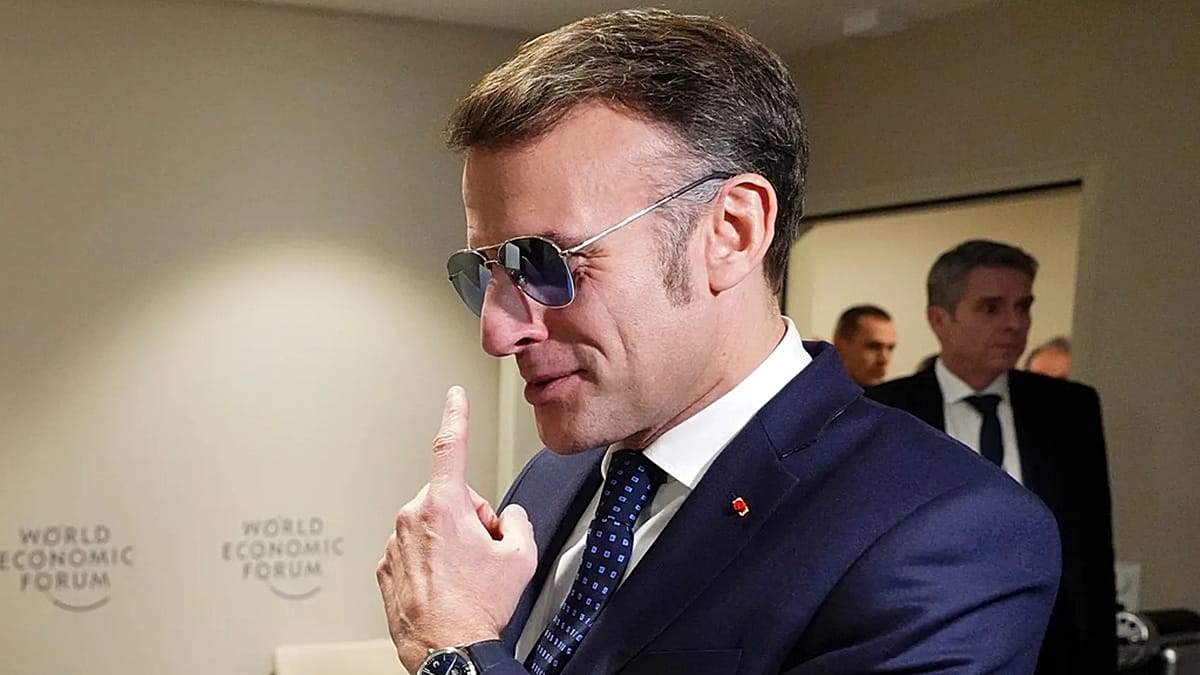
Trump mocks Macron’s aviators at Davos amid growing war of words
During his own address on Tuesday, Macron delivered a potent rebuke of Trump’s Greenland campaign, declaring Europe would resist “bullies” and reject “the law…
WItkoff to meet Putin on Thursday in Moscow - Russian media
Russian President Vladimir Putin will receive US Special Envoy Steve Witkoff in Moscow on Thursday, the TASS state news agency said, citing the Kremlin.
Witkoff had told The Associated Press on Wednesday in Davos that he plans to discuss peace proposals with Putin as well as hold talks with a Ukrainian delegation.
“We need a peace,” Witkoff, who is expected to travel to the Russian capital with the US President's son-in-law Jared Kushner, said.
Trump said earlier during a speech in Davos that he plans to meet with Ukrainian President Volodymyr Zelenskyy "today" and that a peace deal between the two warring nations is "reasonably close".
Trump's Greenland ambition is 'intact', says Danish foreign minister
Danish Foreign Minister Lars Løkke Rasmussen is providing a first reaction to Trump's Davos speech.
"The president's ambition is intact," Rasmussen said after a meeting, according to Danish media.
He noted it was "positive" that Trump had refused to use military force to seize Greenland, but that "won't make this situation go away".
Asked about Trump's call for "immediate negotiations" to enable the sale of the mineral-rich island, Rasmussen dismissed that scenario and said his country would focus on deepening cooperation with the United States while respecting Greenland's sovereignty.
Watch: 'What I'm asking for is a piece of ice'
Analysis: A bruising speech for Europeans, but neither disastrous nor escalatory
It's fair to say that European officials, from prime ministers to entry-level assistants, were watching with trepidation the much-anticipated speech of Donald Trump at the World Economic Forum in Davos, Switzerland. With tensions over Greenland at an all-time high, many feared the intervention would further escalate the unprecedented crisis with a sudden announcement, threat or ultimatum.
Fortunately for Europeans, there was nothing particularly new in the speech and the sense of relief in the room in Davos was palpable, our reporters on the ground noted.
Trump repeated his claims about making NATO "safer" through the acquisition of Greenland and called on Europe to engage in negotiations to make the transaction happen. Crucially, he also said he did not want to use military force to achieve his objective, unlike previous times when he had pointedly refused to rule out that option.
"We want a piece of ice for world protection and they (Europeans) won't give it," Donald Trump said about Greenland, which he confused with Iceland several times. "They have a choice: you can say yes and we'll be very appreciative, and you can say no and we will remember."
Trump also made sure to clarify, in case there was any doubt, that he had "tremendous respect" for the people of Denmark and Greenland, while casting doubt on NATO's ability to come to the rescue to the mineral-rich island in the event of an armed attack.
His speech also featured denunciations of Europe's regulation, renewable energy, migration trends and economic performance, all of which have been voiced by his officials, most notably Vice President JD Vance, in numerous occasions in the past. He mocked Emmanuel Macron's aviator glasses and bitterly attacked his host country, Switzerland.
"I love Europe, and I want to see Europe do good, but it's not heading in the right direction," he said shortly after taking the stage.
By contrast, in the Q&A session, he lavished praise on Chinese President Xi Jinping, calling him "an incredible man".
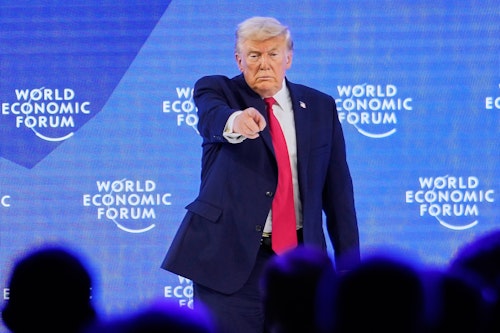
Credit: Associated Press.
European Parliament to discuss use of Anti-Coercion Instrument against the US next week
European Parliament's Committee on International Trade (INTA) will discuss next Monday whether to recommend the EU uses its Anti-Coercion Instrument (ACI) against the United States, INTA chair Bernd Lange told journalists on Wednesday.
The ACI, created in 2023, is designed as a deterrent against economic coercion coming from other countries and allows limiting access to EU public procurement, among others, to companies from these countries.
Members of the INTA committee discussed the issue today, sources told Euronews, but could not agree on whether to recommend the use of the instrument, often referred to as the EU's trade "bazooka".
Lange said he is personally in favour of triggering the ACI, which he contributed to shaping, and that he expects the committee to side with him and lean on the European Commission to trigger the instrument.
Today, the INTA Committee decided to freeze the EU-US trade deal struck last summer, ratcheting up pressure on transatlantic relations after US President Donald Trump threatened fresh tariffs on several European countries that reject his insistence that the US should take over Greenland.
Want to watch Trump's full intervention again?
If reading our thorough reporting on Trump''s speech somehow left you wanting and you have an hour and a half to kill, watch the whole thing in the link below:
Fact check: Trump said the US should never have returned Greenland to Denmark
Donald Trump repeatedly claimed during his speech that the United States had returned Greenland to Denmark after the second world war.
“We already had it as a trustee, but respectfully returned it back to Denmark not long ago,” the former president said.
In reality, while the US assumed responsibility for Greenland’s defence during the war, this did not affect Denmark’s sovereignty over the island.
After the conflict, Denmark was required to list Greenland with the United Nations as a “non-self-governing territory”, effectively acknowledging its colonial status.
The US has sought to purchase Greenland on several occasions over the past century. Most notably, in 1946, President Harry Truman offered Denmark $100 million in gold, an offer Copenhagen rejected.
Under a 1951 defence agreement, Washington formally recognised the “sovereignty of the Kingdom of Denmark over Greenland”.
In 2004, the US also acknowledged Greenland’s status as an equal part of the Danish kingdom, following changes to the territory’s constitutional position.
Trump : Xi is an 'incredible man'
Trump told the audience in Davos that he had "always had a very good relationship," with Chinese leader Xi Jinping, whom he called an "incredible man." "What he’s done is amazing...highly respected by everybody," Trump said.
Trump: 'We have peace in the Middle East'
Donald Trump offered few details about his controversial Board of Peace initiative, which is set to be formalised in a signing ceremony in Davos on Thursday.
He nonetheless defended the plan, stating that “we have peace in the Middle East” and claiming that the United States had played a major role in achieving it.
At the same time, he pointed to what he described as “little situations,” including an agreement by Hamas, the Gaza militant group to relinquish its weapons. “If they don’t do it, they will be blown away very quickly,” Trump warned.
Meanwhile, a growing number of European countries have distanced themselves from the Board of Peace, maintaining that the United Nations should be involved, criticising the lack of reference to Gaza in the latest descriptions of its mission, and arguing that the initiative places excessive authority in Trump’s hands.
'US takeover of Greenland good for Europe,' says Trump
Trump said that taking over Greenland is "good and safe for Europe" not so much because of the rare earth metals under the ice, but for "strategic national security and international security".
"This would not be a threat to NATO. This would greatly enhance the security of the entire alliance," Trump said. "It's the United States alone that can protect this giant mass of land, this giant piece of ice, develop it and improve it."
The US President reiterated he's seeking "immediate negotiations" to once again discuss "acquiring Greenland", just as the US has historically done with "many other territories" and as "many European nations have".
"They've acquired it. There's nothing wrong with it."
'Reasonably close' to deal between Ukraine and Russia, says Trump
During the Q&A session, Donald Trump has spoken more about his efforts to end Russia's war on Ukraine. He says there's "tremendous hatred", "abnormal hatred" between Vladimir Putin and Volodymyr Zelenskyy, but believes both sides "want to make a deal", even if they cannot yet agree with each other.
"It's a very difficult balance," he said. "It's a bloodbath, it's horrible what's happening, it's a drone war."
"We have to get it stopped," he added. "I believe we're at a point where they can come together and make a deal. And if they don't, they're stupid," he went on. "I don't want to insult anyone, but you have to get this deal done."
Zelenskyy's office says no meeting confirmed with Trump
US President Donald Trump said on stage in Davos just minutes ago that he planned to meet with Volodymyr Zelenskyy "today", but the office of the Ukrainian president told Euronews' Sasha Vakulina that "no meeting is confirmed".
"Right now Zelenskyy is in Kyiv," his office added.
Trump asks Marco Rubio and his team to stand up
During the Q&A session, Donald Trump has asked his team, including US Secretary of State Marco Rubio, who's played a key role in his foreign policy, to stand up.
"He's going to go down as the best Secretary of State."
People leave room as Trump's Q&A starts
Our reporters on the ground are reporting that a significant number of people started leaving the room before Donald Trump had even concluded his speech - albeit more than 60 minutes in.
The US president is now taking part in Q&A session.
Trump concludes rambling speech declaring: 'The US is back. Bigger and stronger.'
"Many in this room are true pioneers. Truly brilliant people. You're ability to get a ticket is brilliant. Because you have about 50 people for every seat," Donald Trump says about the attendants. "You're the greatest brains anywhere in the world."
"The future is unlimited and in large part because of you. And we have to protect you and we have to cherish you. We have to cherish our brilliant people because there aren't any of them."
"Let us lift our people, grow our economies, defend our shared destiny and build a future for our citizens that is more ambitious, more exciting, more inspiring and greater than the world has ever seen. We're in a position to do things that nobody ever thought of before."
He concludes his speech with: "The United States is back. Bigger and stronger and better than ever before. And I'll see you around. Thank you all very much."
Fact-check: Trump claims to have ended eight wars
The Cube, Euronews’ fact-checking team, has assessed Trump's claim – which he has repeatedly made – that he has ended eight wars since commencing his second term in January 2025.
He has previously listed these conflicts as: Israel and Hamas, Israel and Iran, Egypt and Ethiopia, India and Pakistan, Serbia and Kosovo, Rwanda and Congo, Armenia and Azerbaijan, and Cambodia and Thailand.
Although Trump has played a part in mediation efforts in a number of these conflicts, his impact is not as clear-cut as he alleges. Although he is credited with ending the 12-day war between Israel and Iran, this can be seen as a temporary respite from an ongoing cold war.
Fresh fighting broke out between Cambodia and Thailand in December. Although a peace agreement between Congolese forces and Rwanda-backed rebels was brokered by the Trump administration, fighting has continued and M23 – the Rwandan-backed rebel group in the eastern DRC – was not party to the agreement.
Although the US announced the launch of the second phase of the Gaza ceasefire plan in mid-January, the next steps in this process remain shrouded in uncertainty. Many of the point's in the first phase of Trump's 20-point plan have not materialised.
Friction between Egypt and Ethiopia over the Grand Ethiopian Renaissance Dam is best described as heightened tension, not war. There has been no threat of war between Serbia and Kosovo during Trump’s second term, nor has he made any significant contribution to improving relations in his first year back in the White House.
And while the leaders of Armenia and Azerbaijan signed a deal aimed at ending a decades-long conflict at the White House in August, they have yet to sign a peace treaty and their parliaments would still need to ratify it.
MEPs freeze EU-US trade deal
Euronews has learned that MEPs have decided on Wednesday to suspend indefinitely the EU-US trade deal after US President Donald Trump threatened to impose tariffs on several EU countries for statements opposing his bid to acquire Greenland.
The EU-US trade agreement was clinched last summer by European Commission President Ursula von der Leyen and the American president after months of trade tensions.
Seen by many MEPs as unbalanced, the deal imposed 15% US tariffs on EU imports, while the Europeans agreed to reduce their own tariffs to 0% on US goods.
However, the deal still required a vote by the Parliament to be enforced. But leaders of the Parliament's political groups called for the deal to be postponed after Trump threatened further tariffs over Greenland this weekend.
Read our story:
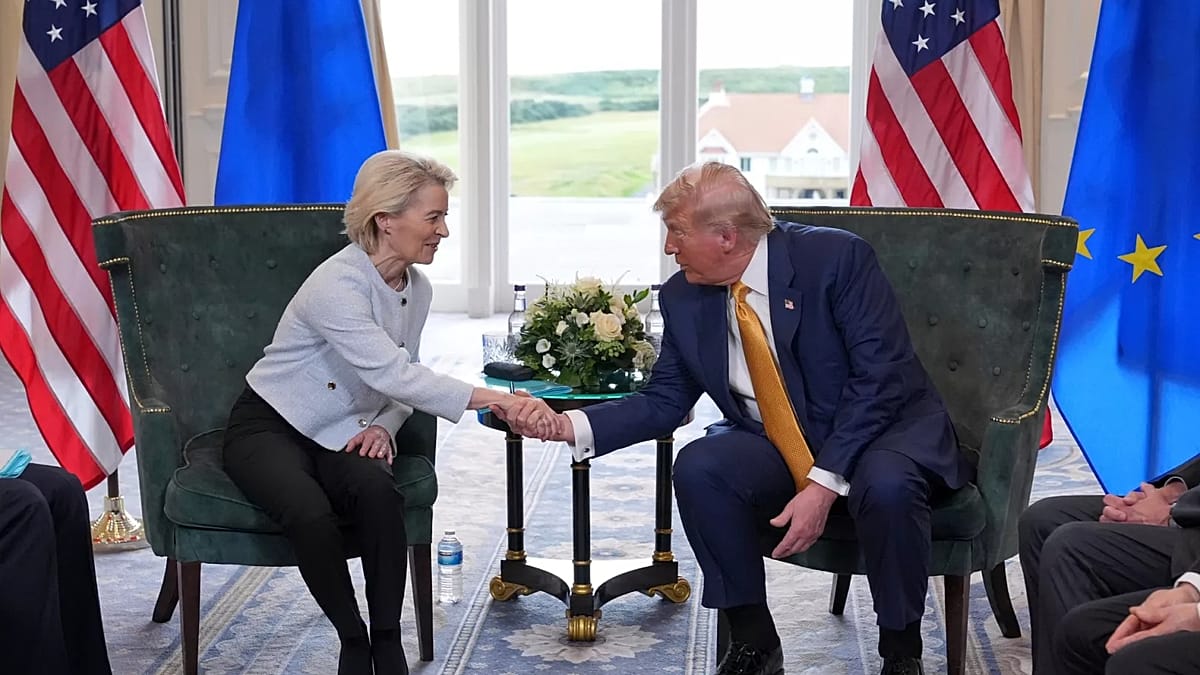
Exclusive: EU lawmakers freeze EU-US trade deal
The move will intensify tensions between Brussels and Washington ahead of a summit where EU leaders are set to weigh their response to Trump’s escalating threa…
Fact check: Has NATO really 'never done anything' for the US?
The Cube, Euronews’ fact-checking team, has been taking a look at some of Trump’s claims in his speech
One claim was the repeated criticism of NATO and its members for not pulling its weight. Trump complained that the US gets very little compared to what it gets back from the alliance, and cast doubt on how much NATO would support his country in a hypothetical attack.
“We’ve never got anything out of NATO,” the president said, adding later: “We’ve never asked for anything, it’s always a one-way street.”
“We’ll be there 100% for NATO, but I’m not sure they’ll be there for us,” Trump added.
However, the US is the only country to have ever invoked NATO’s Article 5 common defence measure, triggering an obligation for each country to come to its assistance. It did so in the aftermath of the 11 September attacks in 2001.
According to NATO, the alliance assisted the US in various ways, including enhancing intelligence sharing, providing increased security to US facilities, and launching its first-ever anti-terror operation – Operation Eagle Assist – between October 2001 and May 2002.
Trump mocks Switzerland, its host country
Donald Trump has openly mocked Switzerland, the host country of the World Economic Forum. He recounted a phone conversation with the former president of the Swiss Confederation, Karin Keller-Sutter, after the US administration imposed a tariff of 39% on Swiss products as part of last year's "reciprocal tariffs".
"She was very repetitive. 'You cannot do that, we're a small country'," he said, imitating the Swiss leader. "You may be small but you have a big deficit," he is said to have replied.
"She just rubbed me the wrong way, I'll be honest with you," he added. "I realised in that conversation that the US is keeping the whole world afloat."
Trump attacks 'terrible' Fed chair
Donald Trump has attacked Jerome Powell, the chairman of the Federal Reserve, as "terrible". Trump has repeatedly criticised Powell for not lowering interest rates at the speed he wishes.
"He was just fine for the other side," Trump said, accusing Powell, who was appointed by Trump, of favouring the Democratic party. "We're going to have somebody (new) that's great."
Learn more about the Trump-Powell showdown.
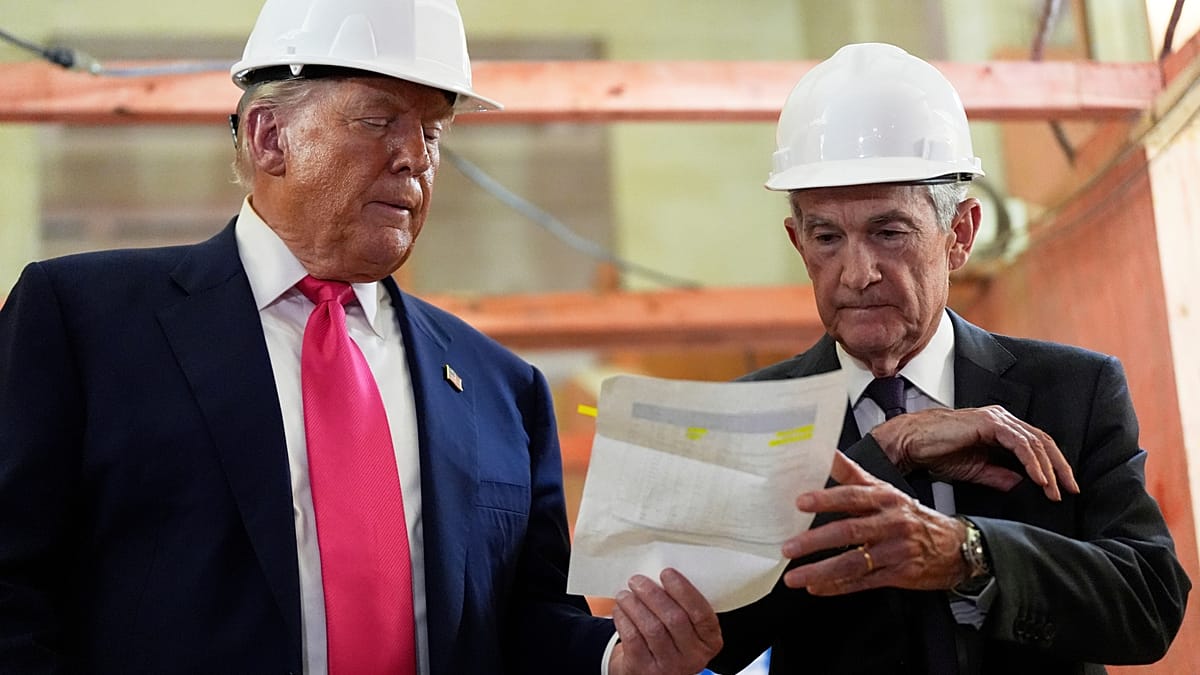
US opens criminal investigation into Fed Chair Jerome Powell
Powell said the investigation, linked to a testimony he gave to a Senate committee about renovations to Fed buildings, was an attempt to limit central bank ind…
Trump: 'what the hell' happened to Macron?
Donald Trump said he had watched French president Emmanuel Macron's speech yesterday in Davos "with those beautiful sun glasses," adding: "What the hell happened?"
Nothing dramatic, Mr Trump. According to French media, Macron wore aviator sunglasses because he had a sub-conjunctival haemorrhage, which is the bursting of a blood vessel in the protective tissue covering the eye.
Trump says will meet Zelenskyy today
The US President announced that he will hold a meeting with his Ukrainian counterpart, Volodymyr Zelenskyy, later in the day in Davos.
He made the announcement after telling the audience: "I'm dealing with President Putin and he wants to make a deal and I'm dealing with President Zelenskyy and he wants to make a deal".
Zelenskyy said yesterday he wasn't planning on attending the World Economic Forum unless further progress was made on the 20-point peace plan Ukrainians and Americans have been working on or if he could secure further energy or air defence assistance.
Chancellor Merz trying to solve the energy crisis in Germany, Trump says
Trump claims Germany generates 22% less electricity than it did in 2017 and the country’s energy prices increased by 64%, but refrained from blaming it on Chancellor Friedrich Merz.
"It's not Chancellor Merz's fault, he is solving the problem … What they did before he got there," Trump said.
Trump regrets Europe using wind power over fossil fuels
Donald Trump said Europe sits on one of the world’s greatest energy reserves, the North Sea, but slammed European lawmakers for supposedly not using it.
There are "windmills all over the place", he said, criticising the bloc's race for renewable energy and hinting at Chinese dependency.
He said the continent is struggling with “catastrophically high energy prices” because EU policymakers refuse to exploit its fossil fuel reserves.
"They don't let anyone drill the North Sea because of the environmental standards," said Trump.
Europe has a choice on Greenland: say yes or no, says Trump
"We want a piece of ice for world protection and they won't give it," Donald Trump says about Greenland.
"They (Europeans) have a choice: you can say yes and we'll be very appreciative, and you can say no and we will remember."
Trump seems to be mixing up Iceland and Greenland
Donald Trump appears to be mixing up Iceland and Greenland, the latter of which he wishes to acquire.
He just said the market went down on Tuesday "because of Iceland," even if nothing happened regarding Iceland.
Europe doesn't appreciate US support to Ukraine, says Trump
Donald Trump is now talking about Russia's war on Ukraine, repeating his claim that Vladimir Putin would have never launched the invasion had he been in office.
He regrets that he's been working to solve the war "for one year" and has not yet succeeded. He then adds American financial and military aid is "going to people who don’t appreciate what we do," meaning NATO and Europe. "They have to work on Ukraine. We don't. The US is very far away."
Trump slams EU’s climate and energy transition goals
Donald Trump has slammed the European Union’s efforts to pursue renewable energy and reach carbon-neutrality by 2050, dubbing it the “green new scam”.
Trump said in his speech he “loves Europe” but regretted that the continent “is not going in the right direction”.
US needs Greenland for 'strategic national security'
Donald Trump says the US needs Greenland for "strategic national security and international security".
"This enormous, unsecured island is actually part of North America," he says. "That’s our territory."
He says he's seeking "immediate negotiations" to acquire the island.
Trump: Venezuela “is going to do fantastically well” after U.S. intervention
Donald Trump told his audience that Venezuela has taken the right path following the capture of its leader, Nicolás Maduro, earlier this month, crediting cooperation with the United States.
“Venezuela is going to do fantastically well,” Trump said, claiming that “last week” the U.S. obtained “50 million barrels of oil” from the country.
He added, “We appreciate all the cooperation we’ve been giving,” arguing that once the attack concluded, Venezuela would “make more money in the next six months than they made in the last 20 years.” Trump also said Venezuela’s leadership “has been very smart”.
No nation 'other than the US' can secure Greenland - Trump
The US president has started to discuss Greenland, which he wants to annex, claiming it is necessary for national security reasons.
He started by saying that he has "tremendous respect for both the people of Greenland and the people of Denmark".
But he then added: "The fact is no nation or group of nations is in any position to be able to secure Greenland other than US."
Trump blasts Europe for having windmills 'all over the place'
Donald Trump is sharing his well-known complaints about windmills, describing them as the result of the "Green scam" having "catastrophic" results for Europe's energy mix.
"Windmills all over Europe, windmills all over the place," he says. "They're destroying themselves, these beautiful places."
'When the US goes up, you follow,' says Trump
Donald Trump says his "reciprocal tariffs" didn't hurt the US economy and prompted a flurry of trade deals.
"Everybody came to make a deal," he said. "When the United States goes up, you follow. It’s really becoming a stable."
Trump brags about slashing the federal government
After castigating Europe, Trump is now boasting about his far-reaching cuts to the federal government, which has seen entire agencies, like USAID, disappear. He also talks about de-regulation and low taxation as achievements of the first year of his second term.
Europe 'not heading in the right direction' - Trump
The US President claimed during his speech just now that "certain places in Europe are not even recognisable frankly anymore".
"I love Europe and I want to see Europe do good but it’s not heading in the right direction," he added, blaming "unchecked mass migration" and "endless foreign imports".
Trump begins his speech with 'phenomenal news': one year in office
Donald Trump has just begun his speech in Davos with "phenomenal news" about his first year of his second term. He's boasting about the economic performance of the US since his re-election, calling it the "most dramatic turnaround" ever seen in American history.
"When America booms, the whole world booms," he says. "I never thought we could do it so quickly."
His words come as stock markets and the dollar are rattled by his threats to annex Greenland.
Euronews in prime position!
Our reporters on the ground, Maria Tadeo and Sasha Valukina, are in prime position as they await Donald Trump.
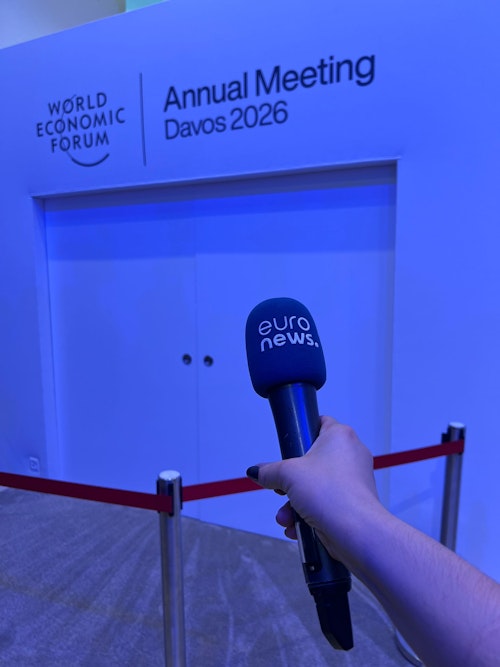
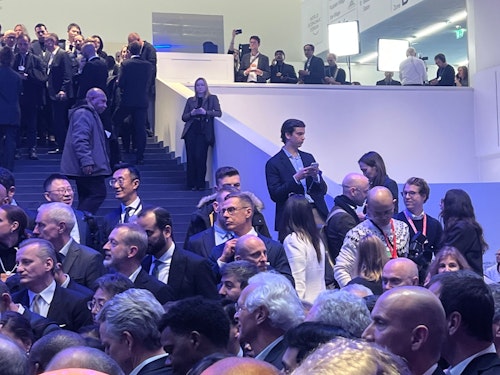
Delegates arrive for Trump speech
Among the famous faces rushing into the Congress hall to listen to Trump are some other world leaders.
We spotted Finnish President Alexander Stubb making his way in. Earlier in the day, Stubb, who has had the pleasure of golfing with Trump, told a panel in Davos that the transatlantic relationship remains "good and solid".
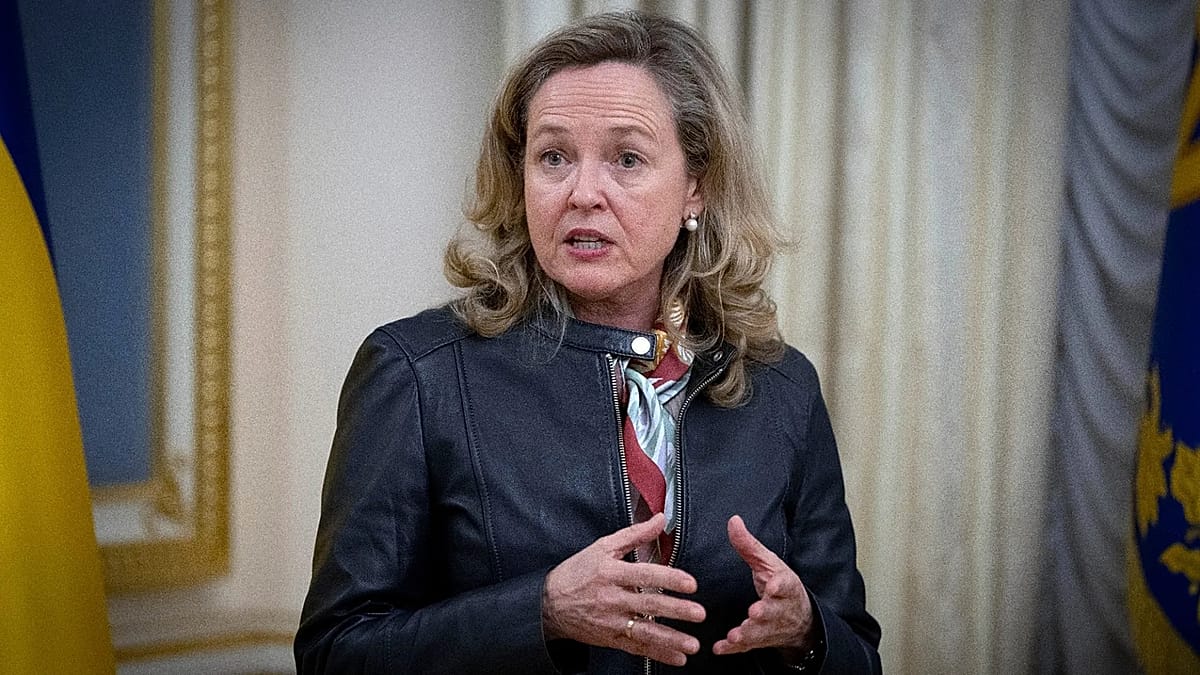
EU leaders face 'critical' moment at Thursday’s summit amid Trump's threats, Calviño says
European leaders must use their historic summit on Thursday to generate an adequate response to Trump's threats, European Investment Bank President Nadia Calviño told Euronews's flagship Europe Today programme from Davos.
“I think we can be ready for anything. But more important is what we do as Europeans. So I think [the European Council on Thursday] is really critical and historic in the sense that we need to show the superpower we have," the EIB President said.
Last weekend, US President Donald Trump threatened several European countries with an additional 10% tariff on eight European countries to force the sale of Greenland. In response, European Council President António Costa convened an extraordinary summit in Brussels on 22 January.
"We have to be pragmatic when we can, but also firm when we must," Calviño pointed out.
Some EU leaders from major countries such as France and Germany said that the bloc should be ready to use retaliatory measures if Trump makes good on his latest tariff threats.
Among the EU's tools is the Anti-Coercion Instrument, which enables the bloc to punish unfriendly states for economic coercion by restricting them from participating in public procurement tenders, limiting trade licenses, and even shutting off access to the single market.
Adopted in 2023, the instrument has never been used, but the US president's escalating threats over the weekend prompted calls for the instrument to be deployed.
EU leaders must meet ‘critical’ moment on Thursday, Calviño says
The EU Summit on Thursday will be a critical meeting where leaders must demonstrate Europe’s ‘superpower’ ability to push back against Donald Trump, EIB Presid…
Anticipation builds for Trump's speech
Hundreds are lining up inside the World Economic Forum to listen to President Trump as he prepares to take the stage. Inside the venue, a febrile atmosphere as doors open.
Ursula von der Leyen still considering Board of Peace invitation
Ursula von der Leyen is still weighing whether to accept Donald Trump's invitation to join the Board of Peace, which has raised multiple concerns among Europeans due to its expansive mandate.
"We appreciate this invitation. We share the objective to achieve peace, in particular when it comes to contributing to the second phase of the comprehensive plan to end the Gaza conflict," a Commission spokesperson said on Wednesday afternoon.
"We are actively discussing with the Us how we can jointly reach this objective and we stand in close contact with our other partners on this matter."
The matter on membership will be discussed by EU leaders when they meet on Thursday. Learn more about the Board of Peace.
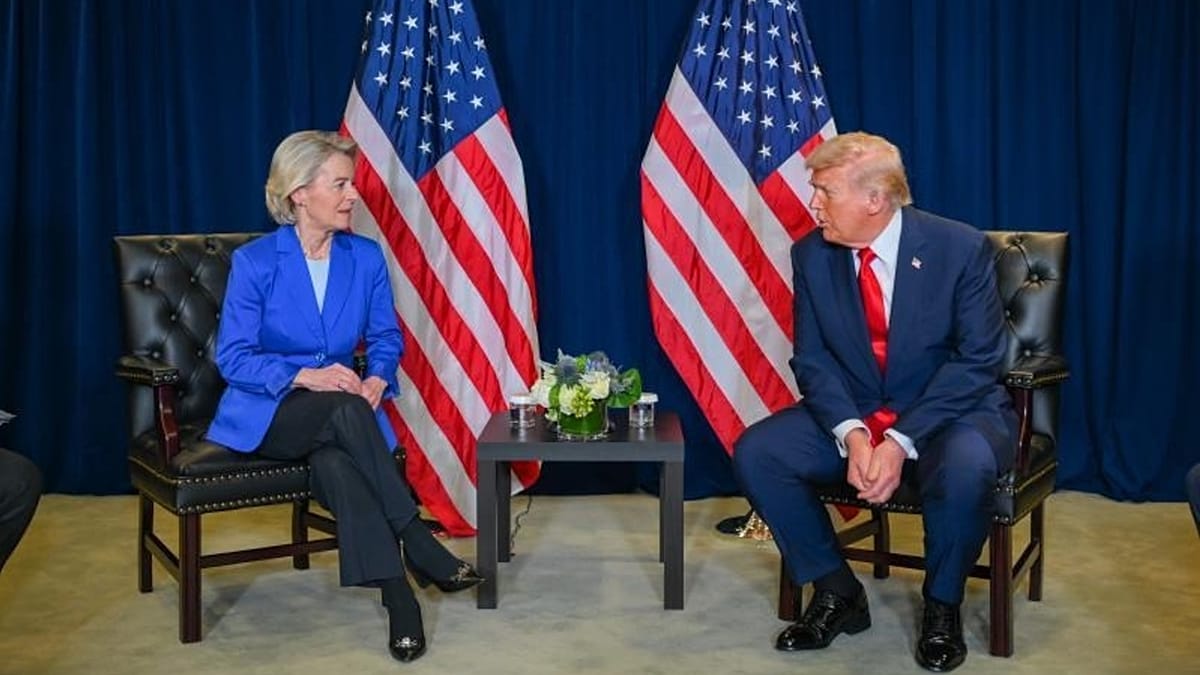
Invitation to Board of Peace complicates EU bid to placate Trump
EU leaders will discuss Trump’s controversial Gaza Board of Peace when they gather for emergency talks on Greenland on Thursday, with some warning that the boa…
EU-Mercosur deal will be discussed at Thursday's summit after Parliament's vote
Thursday's extraordinary summit of EU leaders, focused on the Greenland crisis and the turbulent state of EU-US relations, now has an unexpected new item on the agenda: the EU-Mercosur trade deal.
As my colleagues Peggy Corlin and Vincenzo Genovese have just reported, the European Parliament has narrowly voted to refer the contentious deal to the Court of Justice, a procedural move that could delay its provisional application for two years or even more.
But that's not necessarily the end of the road. The European Commission, which has passionately defended the deal, says it will wait to receive feedback from member states before taking any new steps. The Commission has the power to activate the deal on a provisional basis, but it will only go ahead if it perceives solid political backing for the decision.
The first discussion will inevitably take place on Thursday, when the 27 leaders gather in Brussels. Read the full story below.
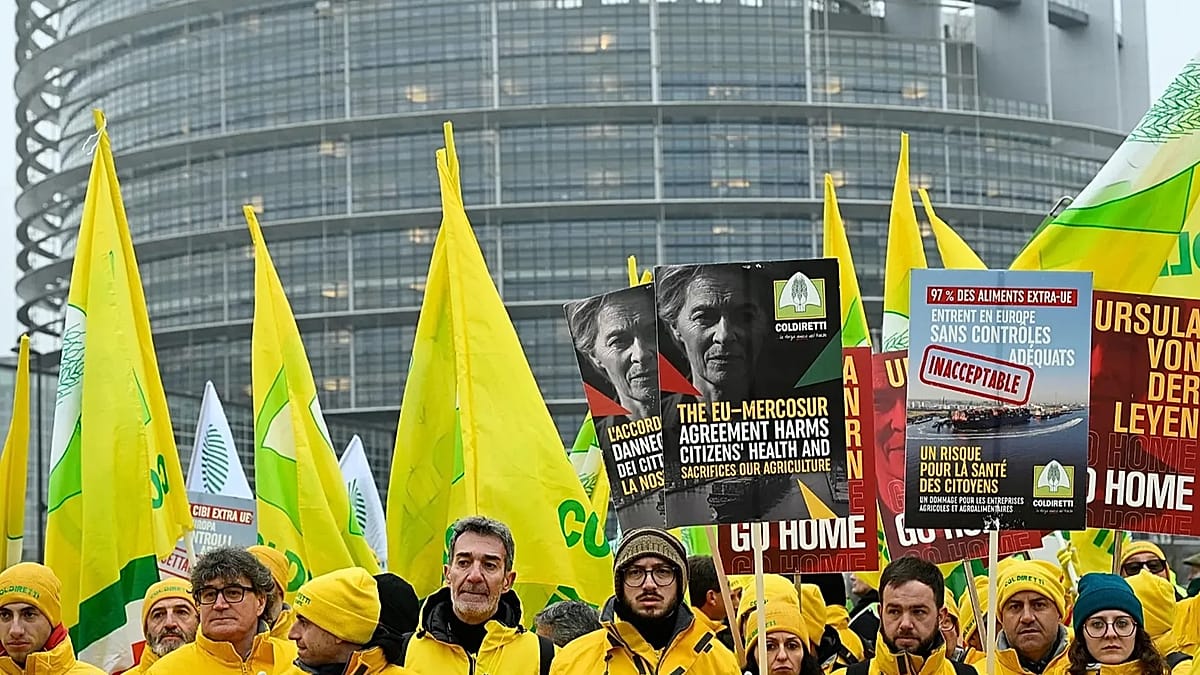
EU-Mercosur trade deal referred to Court of Justice
After clearing major political hurdles after more than two decades, the mammoth trade deal now faces further delay pending a judicial verdict. #EuropeNews
Trump arrives in Switzerland
Donald Trump has arrived in Switzerland ahead of his speech at the World Economic Forum in Davos.
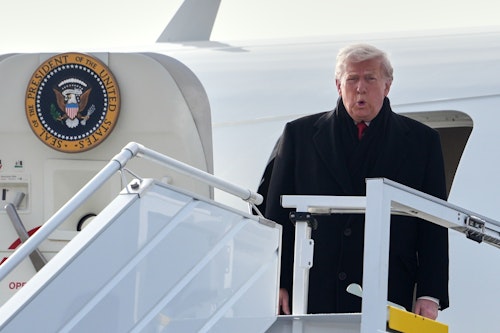
Along with Secretary of State Marco Rubio, the president landed in Zurich and transferred to a helicopter to ferry him to the Alpine resort.
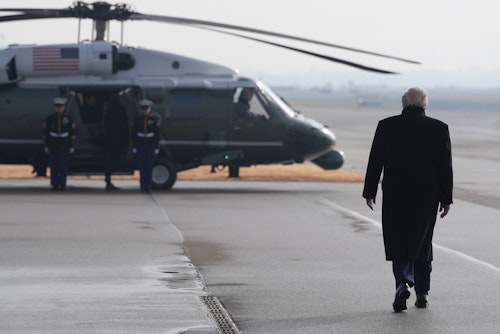
Credit for photos: AP
Who said what so far at this year's Davos summit?
As Davos holds its breath in anticipation of US President Donald Trump's special address, the world's top annual conference in the Swiss Alps resort town has already heard political and business leaders warn of crumbling world order, rising unilateralism and AI's threat to the world's workforce.
Read the best and most talked-about takes in an article by our colleague Aleksandar Brezar on the ground in Davos:
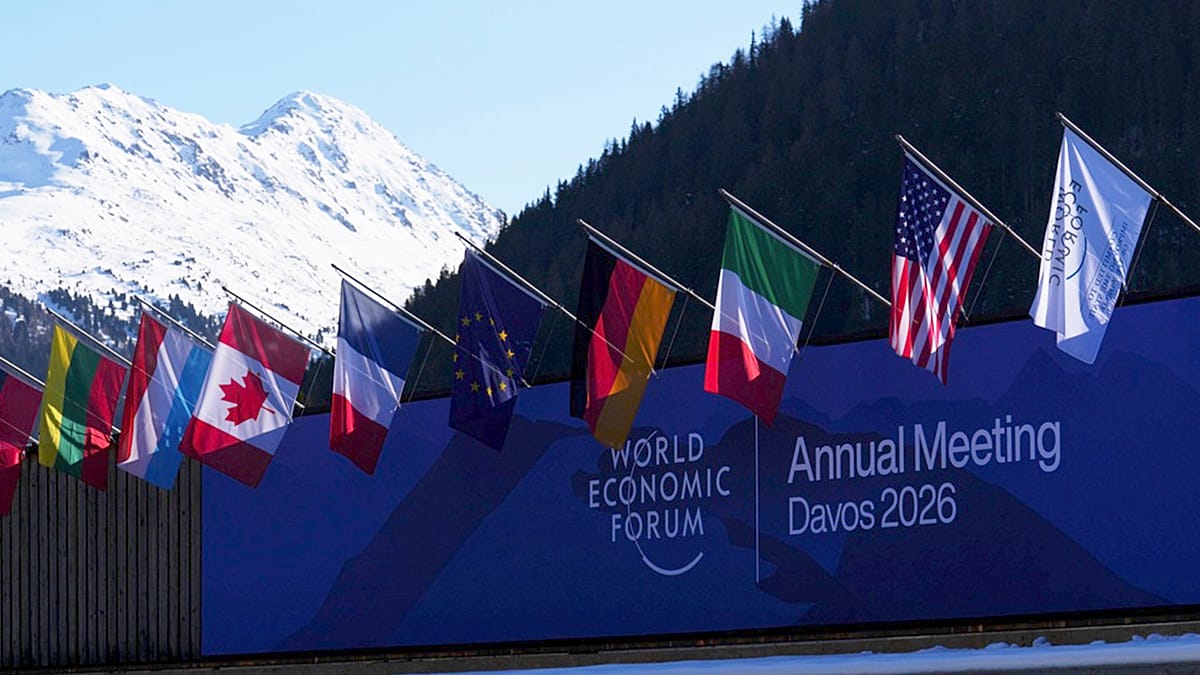
Davos 2026: Who said what so far at world’s top annual summit
The annual gathering in the Swiss Alps resort town has been dominated by escalating tensions between the US and its European allies, with leaders warning of a…
The Netherlands will not participate in Board of Peace signing ceremony
The Netherlands became the latest European country to snub Donald Trump’s “Board of Peace” initiative, which was originally set up to administrate post-war Gaza.
On Wednesday, Dutch MP Kati Piri shared on X a written response to MPs from the country’s foreign affairs ministry saying it was “too early” for the Netherlands to take part in the signing ceremony in Davos on Thursday.
“The Cabinet, together with European partners, has raised a number of serious questions about the proposed mandate of the Board of Peace, as it goes further than originally envisaged in UN Security Council Resolution 2803, in which the focus was on Gaza,” the letter said.
“The Cabinet emphasises the importance of acting in as coordinated a manner as possible with other intended participants in the Board of Peace, including European partners.”
Von der Leyen won't meet Trump in Davos
Ursula von der Leyen will not meet Donald Trump at the World Economic Forum in Davos, Switzerland, as previously speculated.
Instead, the president of the European Commission will travel from Strasbourg, where she spoke earlier this morning, directly to Brussels to start preparations for Thursday's extraordinary summit of EU leaders.
The schedule was confirmed by a Commission spokesperson, who described the decision as "strategic" in light of the geopolitical tensions.
This means that von der Leyen will not hold a bilateral meeting with Trump to try to solve the spiralling crisis over Greenland's future and will not attend the signing ceremony of Trump's Board of Peace, to which she has received an invitation.
'Appeasement strategy towards Trump is over,' Renew Europe leader tells Euronews
As European leaders mull their answer to Donald Trump's ambitions to control Greenland, the leader of the liberal Renew Europe group in the European Parliament called on the EU to switch from "appeasement" to a deterrence strategy.
"We should acknowledge that the appeasement strategy is over and that we should now play hardball because Donald Trump only understands the balance of power and the language of strength," Valérie Hayer, leader of the liberal Renew Europe group in the European Parliament, told Euronews' morning Europe Today show on Wednesday.
"We could decide on new tariffs. We could decide to sell American debt - we have more than one trillion dollars - and we could also use the anti-coercion mechanism that has never been used until now," she said.
The EU should also stand ready to provide military assistance if the US invades Greenland, Hayer said.
"Greenland is [covered] under Article 42.7 of the treaties, the EU mutual defence clause", she said, referring to the provision calling all the EU Member States to "provide aid and assistance by all the means in their power", if one of them is the victim of armed aggression on its territory.
"No ambiguity on that. We should be ready for a clear military and economic sanctions. But I am talking about deterrence, precisely to avoid this situation".
Gold continues to climb and European stocks to decline
Gold soared to another record high on Wednesday, surpassing $4,800 per ounce, as leaders and delegates gathered in Davos await the arrival of US President Donald Trump.
While the EU and US continue to clash over Trump’s plans to acquire Greenland, the precious metal's price has risen over 2% as investors look for a safe place to park their money amid renewed tariff threats. Silver prices, meanwhile, rose 0.44% to $95.055.
Turning to stocks, Europe’s major indexes again found themselves in the red on Wednesday after two days of losses.
France’s CAC 40 had dropped 0.18% by around 11:30 CET, Germany’s DAX was down 0.68%, and Spain’s IBEX 35 lost 0.53%. Italy’s FTSE MIB was down 0.68%, the UK’s FTSE 100 slid less than 0.1%, and the broader STOXX Europe 500 tumbled 0.35%.
Ahead of the opening bell in the US, S&P 500 futures rose 0.34%, Dow Jones futures jumped 0.13%, and Nasdaq futures increased 0.19%.
Read the full story below.
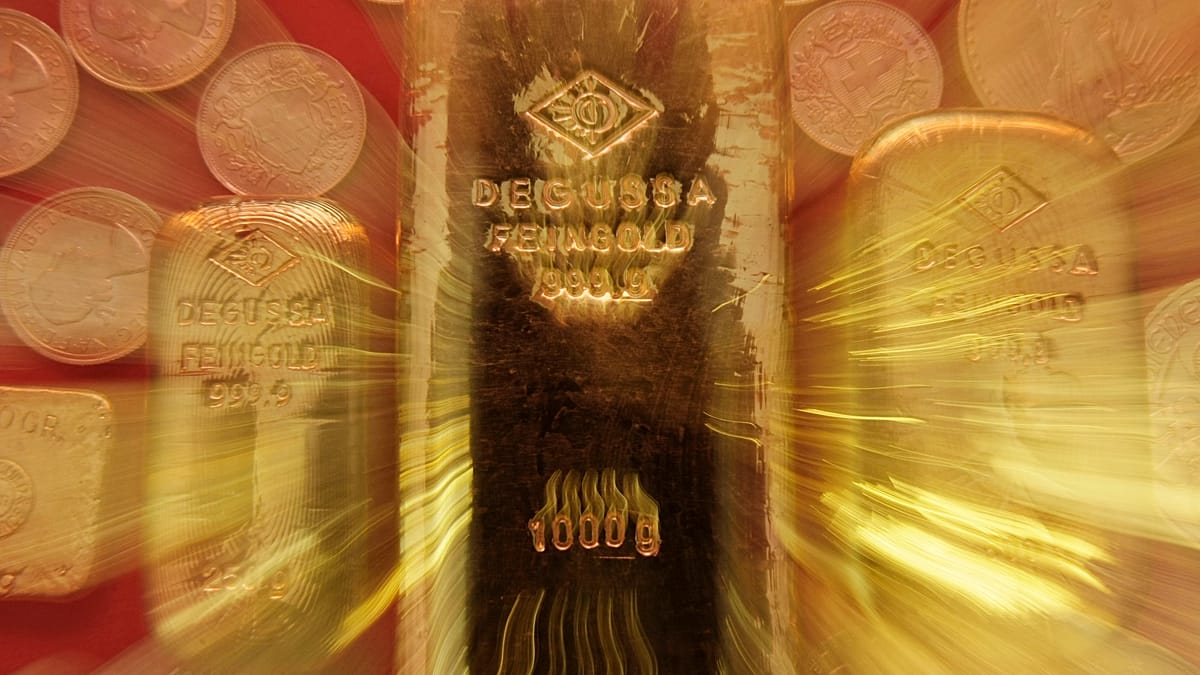
Gold rises to record high and stocks fall as Trump travels to Davos
Precious metals notch higher, stocks tumble, and dollar risks loom as the US-EU conflict over Greenland unfolds.
Šefčovič meets Greer to 'avoid downward spiral' on trade
Maroš Šefčovič, the EU’s trade commissioner, said in an X post he has met with his US counterpart Jamieson Greer to “avoid a downward spiral in trade,” days after US president Donald Trump threatened to apply new tariffs on eight countries that rebuked his claims to control Greenland.
The meeting took place with the European Parliament expected to suspend the implementation of the EU-US trade deal during a meeting this afternoon in Strasbourg.
“The EU favours dialogue and solutions, in mutual respect,” Šefčovič wrote. “In our shared interest to avoid a downward spiral in trade, ensuring predictability for transatlantic business and investment."
No NATO exercise planned in Greenland – source
A senior NATO military official confirmed to Euronews' Shona Murray that NATO is not planning any military exercise in Greenland.
France, as we reported earlier, has requested that NATO conduct one in the Danish territory, with the Elysée confirming that the country "is prepared to contribute to it".
A reminder: Multiple European countries including France, the UK, Germany, the Netherlands, Norway, and Sweden – all NATO allies – last week sent a few troops to Greenland at the request of Denmark as part of a reconnaissance mission for the Danish-led Operation Arctic Endurance.
Most troops have since returned home.
Ukraine, not Greenland, is NATO's main focus
Support for Ukraine against Russia is NATO's main focus, not the row over Greenland, the leaders of the military alliance, Poland and Finland sought to reassure on Wednesday.
"The main issue is not Greenland," NATO's Mark Rutte told a panel in Davos. "The main issue is Ukraine."
He said he is "a bit worried we might drop the ball (on Ukraine) focusing so much on other issues", or that some might think the urgency of the conflict is over with the peace process advancing. The US and Ukraine have said they are close to finalising their joint 20-point peace plan, while the EU has agreed to provide Kyiv with €90 billion in financing.
"This focus on Ukraine should be our number one priority," Rutte emphasised, arguing it is "crucial" for both European and American security.
Polish President Karol Nawrocki similarly said Ukraine is Europe’s “main problem”. He added that he is “not afraid” of seeing the issue of Greenland overshadow Ukraine, notably because "we understand the problem about Ukraine and still feel the Russian threat. We are still in Eastern Central Europe under the Russian threats and I think that we are in the middle of the hybrid war".
“We have to consider this problem as the main problem in Europe today, and I am very happy that we are moving – maybe slowly – toward a long-lasting peace in Ukraine. This must happen," Nawrocki said.
On the issue of Ukraine, Alexander Stubb, the president of Finland, said he is "more worried about Russia's unwillingness to end this war, because they cannot afford to do so, than about Russia's capability to win this war, not end this war because they're moving ahead".
"So let's keep things into perspective. NATO hasn't entered the scene yet, and they have not been able to advance in the past four years as much as they expected," he said.
Analysis: Will markets succeed if diplomacy fails?
As we've told you for the past few days, Europeans are betting on diplomacy to resolve the extraordinary crisis unleashed by Donald Trump's threat to impose tariffs in a bid to acquire Greenland, the mineral-rich island that belongs to the Kingdom of Denmark.
Today, the American president is expected to arrive at the World Economic Forum in Davos, Switzerland, where other European leaders have gathered. German Chancellor Friedrich Merz and European Commission President Ursula von der Leyen are among those bidding for one-on-one time with Trump.
But so far Trump has shown no signs of giving up on his expansionist agenda. Yesterday, he posted several memes depicting US ownership over Greenland and mocking European leaders. He even leaked text messages privately sent by French President Emmanuel Macron and NATO Secretary General Mark Rutte. This doesn't spell particularly good news for diplomatic entreaties.
However, European leaders might have an ace up their sleeve – an ace they cannot actually control: the financial markets. Trump's renewed tariff threats have rattled stocks, with Wall Street posting its worst losses since October last year. The American dollar has plunged against the euro and the value of gold, seen as a haven in turbulent times, has soared. Meanwhile, US bond prices have tumbled in what some media are already describing a "sell America" phenomenon.
As a former real estate tycoon, Trump is deeply attuned to the ups and downs of the financial markets. Last year, he was forced to pause his "reciprocal tariffs" after causing a financial meltdown that wiped out billions. Will Wall Street come to Greenland's rescue this time?
Watch: EU will respond with 'unity, urgency and determination', says Ursula von der Leyen
"We are at a crossroads. Europe prefers dialogue and solutions – but we are fully prepared to act, if necessary, with unity, urgency and determination," Ursula von der Leyen said on Wednesday amid rising tensions with Donald Trump over Greenland's future. pic.twitter.com/36GnfPCpwz
— euronews (@euronews) January 21, 2026
'Make America Go Away' caps see popularity surge amid Greenland spat
If you think the red caps popping up across Greenland and Denmark look surprisingly familiar — you’d be right.
The hats, embossed with the words “Make America Go Away”, are designed to parody the MAGA movement spearheaded by US President Donald Trump, also known as the “Make America Great Again” campaign.
The caps, originally created by a Copenhagen vintage clothing store owner, flopped last year following their launch. Now that US-EU tensions have notched up, the design is seeing a fresh wave of interest.
Read the story by Jan Bolanowski.
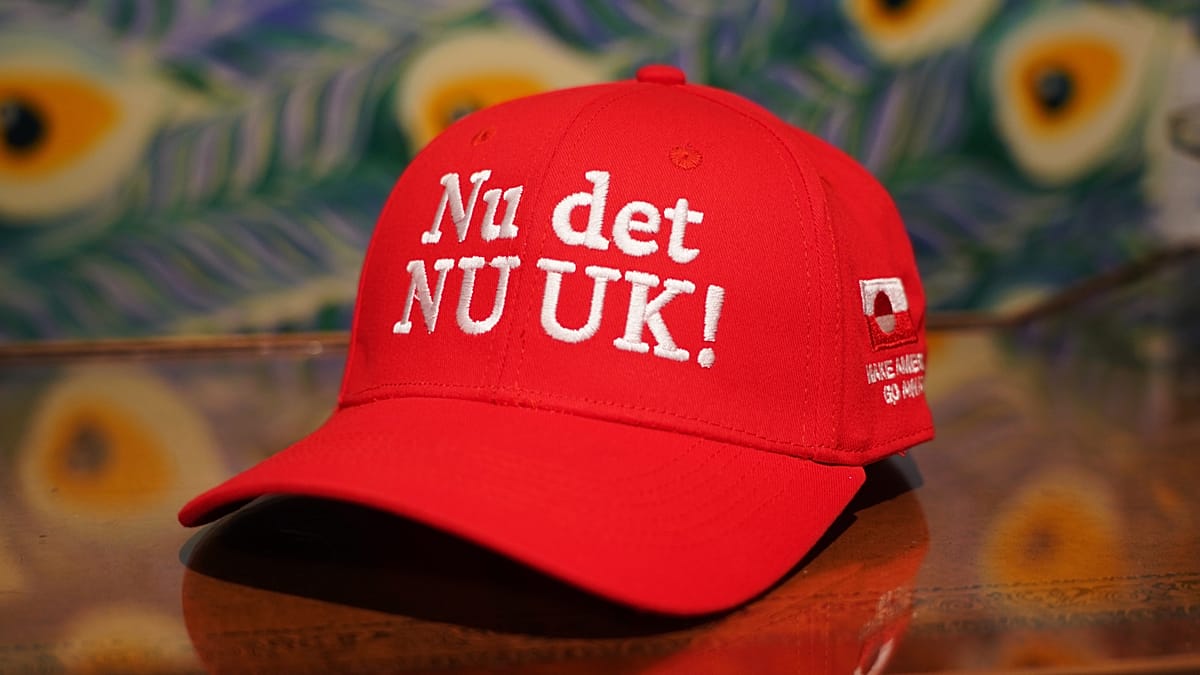
‘Make America Go Away’ caps see popularity surge amid Greenland spat
A subversive symbol of Greenlanders’ political opposition to US President Donald Trump has appeared online: red caps with the words ‘Make America Go Away’.
Polish President urges allies to 'consider' what Trump says about security
Poland’s President Karol Nawrocki told an audience in Davos that Trump’s recent threats on Greenland should not overshadow the necessity of “strong transatlantic relations,” especially for his country, which has 10,000 American soldiers on its soil, buys American weapons and has “the biggest army in east central Europe.”
“We have to consider what Donald Trump would have to say about the security because he is responsible for the security of the world," Nawrocki said.
“The United States of America are a very important ally (…),” he said, adding that “of course” Denmark is “our partner,” and current problems should be resolved through diplomacy.
“I am looking at Greenland as a strategic point in geopolitics between (the) free world, democratic world, independence with Russia,” Nawrocki added.
NATO needs an 'off ramp' on Greenland - Finland's Stubb
Finnish President Alexander Stubb told the same panel on the issue of Greenland that solving the issue might require the alliance starting "a process" to strengthen Arctic security.
"At the end of the day, we'll find an off-ramp" on the row between the SU and Denmark over Greenland, Stubb said.
"I think what we need as an off-ramp is some type of a process whereby we start working on a problem, which is Arctic security," he also said. He suggested this could be done at the next NATO leaders' summit in Ankara, Turkey, in July.
The transatlantic relationship, he said, remains "good and solid".
"There are curveballs flying in different directions, we try to catch them, and we try to solve them," he said.
Von der Leyen hails multilateralism as key to boosting the EU’s economy
Ursula von der Leyen told European lawmakers that the European Union’s dependencies need to be reduced, saying that all the challenges the bloc is currently dealing with are “intrinsically linked”.
Von der Leyen said 55% of the bloc's GDP comes from trade within the single market, but the figure with the rest of the world is 44%.
“Our supply chains and derisking goals depend on trade… trade matters more than ever,” von der Leyen told MEPs in Strasbourg.
The EU chief hailed the recently signed Mercosur trade deal as “historic” and said next week another “groundbreaking" trade deal will be signed with India.
“Others want to do business with us, and these deals will open massive opportunities for our businesses, create jobs, give us resilience and security of supply," said von der Leyen. “The more trading partners we have worldwide the more independent we are."
Von der Leyen’s comments clash with US Secretary of Commerce Howard Lutnick, who said on Tuesday that “globalisation has failed”.
On the sidelines of the World Economic Forum in Davos, Lutnick dubbed globalisation a “failed policy” that has exported jobs and "offshore" America’s future.
“The Trump Administration and I are here to make a very clear point—globalisation has failed the West and the United States of America. It’s a failed policy… and it has left America behind,” said Lutnick.
No comment from me on Greenland - Rutte
Mark Rutte refused once again on Wednesday morning to comment on the row between the US and Denmark, two NATO allies, over Greenland.
"You can be assured I’m working on this issue behind the scenes," the NATO secretary-general said during a Davos panel on "Can Europe defend itself?". "Statements from me will not add anything."
The only way through the crisis, he continued, is "thoughtful diplomacy".
The US remains committed to the military alliance because "NATO is crucial not only for the defence of Europe, but also for the defence of the US," Rutte said, because the US "needs a safe Arctic, a safe Atlantic and a safe Europe".
He did add that on the Arctic, President Donald Trump "is right.
"We have to protect the Arctic against Russian and Chinese influence," he said.
MEPs tipped to freeze EU-US trade deal after Trump threats
The European Parliament is expected to suspend the implementation of the EU-US trade deal during a meeting this afternoon in Strasbourg, following new tensions with Washington.
The agreement, clinched in July 2025 in Scotland by European Commission President Ursula von der Leyen and US President Donald Trump, has come under fire after Trump threatened to impose 10% US tariffs on several EU countries if they refused to allow the US to acquire Greenland.
Leaders of the Parliament’s main political groups - the EPP, S&D and Renew - called over the weekend for the deal to be frozen. On Tuesday, Iratxe García Pérez, president of the S&D group, said there was a “broad agreement” among political groups to suspend the accord.
The trade deal introduced 15% US tariffs on EU imports while cutting EU tariffs on most US industrial goods to 0%. Some lawmakers have criticised the agreement as unbalanced, arguing it favours US exporters.
MEPs had been expected to amend the deal in the coming days ahead of a vote on its implementation. The escalation in trade tensions now puts the entire agreement in jeopardy.
“The EPP is in favour of the EU–US trade deal, but given Donald Trump’s threats regarding Greenland, approval is not possible at this stage. The 0% tariffs on U.S. products must be put on hold,” German MEP Manfred Weber, leader of the EPP (the largest political group) wrote on X on Saturday.
A meeting of MEPs tasked with monitoring the agreement’s implementation is scheduled for 15:00.
EU retaliatory measures would be deployed 'very quickly' - Dombrovskis
If Donald Trump moves ahead with an additional 10% tariff on eight European countries to force the sale of Greenland, the European Union would "respond very quickly", the European Commissioner for the Economy said on Wednesday morning.
"In terms of retaliatory tariffs, we can respond very quickly because actually we had been preparing them already last year in a context of previous tariffs introduced by President Trump," Valdis Dombrovskis told CNBC from Davos referring to a €93 billion package of countermeasures the bloc had prepped last year in case trade talks with the US failed.
These included two sets of counter-tariffs:
- the first covered a wide range of US products hit with 25% duties, including almonds, orange juice, poultry, soybeans, steel and aluminium, tobacco and yachts. Many of the targeted goods were linked to Republican constituencies in the US;
- the second targeted €72 billion of US goods, including aircraft, cars and car parts, as well as agri-food products. It too was put on hold to give negotiations a chance.
"We are obviously willing to engage with the United States and find a constructive solution, but also ready to react if this is not forthcoming," Dombrovskis also said.
He described the situation as "very disappointing", saying that "like-minded democratic countries should be working together to counter this instead of having disputes amongst themselves".
"There are many issues we need to deal with. Obviously, we need to put aside this Greenland question. War in Ukraine continues to rage. People are freezing right now in Kiev. Russia is continuing its relentless bombardment. So we should focus also on how to stop this," Dombrovskis said.
Watch: Why has Greenland become so important that everyone wants it?
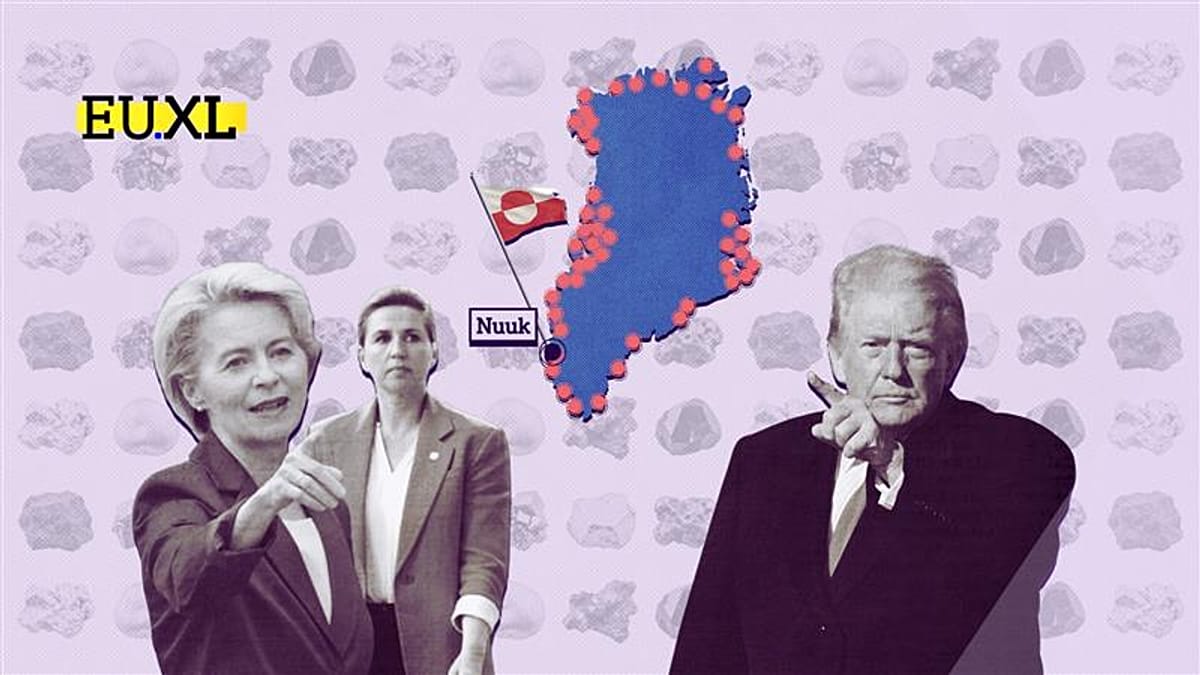
With all eyes on Greenland, Costa and von der Leyen shed light on Ukraine's plight
Donald Trump's desired annexation of Greenland has single-handedly captured all political and media attention since his social media post threatening an extra 10% tariff on eight European countries to force the sale of the mineral-rich territory.
But in their back-to-back speeches on Wednesday morning, both António Costa and Ursula von der Leyen took a moment to remind MEPs of the predicament that Ukrainians are still enduring under Russia's relentless war. The country is now suffering from sub-zero temperatures with limited electricity hours, as Moscow pummels the energy infrastructure to bring Kyiv into submission.
"Long-term security in Europe cannot be upheld through increased investment and cooperation in defence alone. It must be achieved through a just and lasting peace in Ukraine. Because Ukraine’s security is Europe’s security," Costa said. "Our response has been clear since the first day of Russia’s war of aggression: To provide full support to Ukraine – financially, in terms of security, for reconstruction, and on its path to European Union membership."
Von der Leyen denounced the Kremlin's unwillingness to seriously engage in the peace effort launched by the White House, which is now at risk of being derailed by Trump's threats over Greenland.
"It is now almost four years since Russians rolled into Ukraine. Peace talks are now ongoing, and we recognise the efforts of the US in this regard. But while these efforts intensify, so do Russia's attacks. So Europe will continue to support Ukraine in every way," she said.
The fact that Costa and von der Leyen devoted just one paragraph to Ukraine in their speeches is a remarkable turnaround in the European agenda. The last four months of 2025 were spent, almost exclusively, on deciding how to provide Ukraine with €90 billion in financial and military support over the next two years, leading to an overnight EU summit in mid-December that concluded with an agreement to raise common debt.
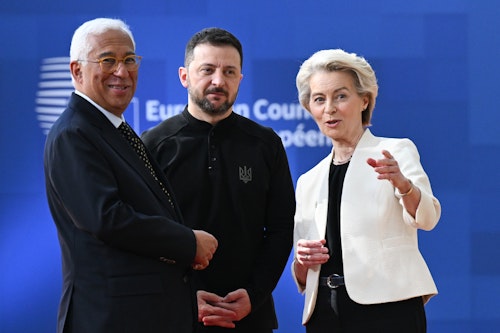
EU needs its own 'strategic approach' to the Arctic, says von der Leyen
The European Union needs its "own strategic approach" to the Arctic region, Ursula von der Leyen says as she continues her speech.
"The first pillar will be a massive European investment surge in Greenland. In particular, to further support the local economy and infrastructure," she says.
"We will work with the US and all partners on wider Arctic security. In particular, I believe we should use our defence spending surge on Arctic-ready equipment. And strengthen our security arrangements with partners such as the UK, Canada, Norway, Iceland and others," she adds.
"I believe Europe itself needs to reassess its wider security strategy. This should look at what is needed to adjust to today’s new realities. Many of you have worked on various national and European security strategies. Some of them in the recent past. But the world has changed so fast, and Europe now has to change with it."
It's unclear, however, when this new security strategy will be presented.
EU will respond to Trump's tariffs with 'urgency and determination', says von der Leyen
Ursula von der Leyen vows to hit back if Donald Trump goes ahead with his proposed 10% tariffs to force the sale of Greenland.
"Greenland is not just a territory in a key region of the world map, a land rich in critical raw materials, a strategic outpost on emerging global sea routes. It is all of those things. But above all, Greenland is home to a free and sovereign people. It is a nation with its sovereignty and its right to territorial integrity. And the future of Greenland is only for Greenlanders to decide," she tells lawmakers in Strasbourg.
"We do agree with our American friends on the need to ensure the security of the Arctic region," she goes on.
"We share the same strategic assessment on Arctic Security. And this is why the threat of additional tariffs for security reasons is simply wrong. If we are now plunging into a dangerous downward spiral between allies, this would only embolden the very adversaries we are both so committed to keeping out of this strategic landscape."
"We are at a crossroads. Europe prefers dialogue and solutions – but we are fully prepared to act, if necessary, with unity, urgency and determination."
France calls for Greenland NATO exercise
The French presidential palace this morning announced that Paris "is requesting a NATO exercise in Greenland and is prepared to contribute to it".
Ursula von der Leyen: 'We will need a departure from Europe's traditional caution'
Ursula von der Leyen, the president of the European Commission, has now taken the floor in the European Parliament. Her speech echoes her message a day prior in Davos, where she made a strong plea in favour of "European independence", calling it an "imperative" to survive in the 21st century.
"The shift in the international order is not only seismic, but it is permanent. And the sheer speed of change far outstrips anything we have seen in decades. We now live in a world defined by raw power – whether economic or military, technological or geopolitical. And while many of us may not like it, we must deal with the world as it is now," von der Leyen tells MEPs.
"We have to be strong in shaping ourselves if we want to shape the world around us. In this increasingly lawless world, Europe needs its own levers of power."
Von der Leyen then hails the collective action taken by EU countries in recent years to face the COVID-19 pandemic, support Ukraine, manage the energy crisis and ramp up defence spending.
"We are already moving in this direction, but the speed of change requires a new approach from Europe. We will need a departure from Europe's traditional caution," she says. "The world is changing faster, so does our mindset. So our institutions, governments and societies – all of us – must transform the ways in which we think and act."
Costa: 'Alliances cannot just boil down to a sequence of transactions'
After discussing the crisis over Greenland, António Costa shares a reflection about the turbulent state of the international order.
"The first way for Europe to become stronger and more sovereign is to remain a firm champion of the international rules-based order, international law and multilateralism. We will always uphold the principles enshrined in the United Nations Charter and defend human dignity and individual freedoms," he says.
"We cannot accept that the law of the strongest prevails over the rights of the weakest. Because international rules are not optional. And alliances cannot just boil down to a sequence of transactions," he adds, referring to Trump's notoriously transactional approach to foreign policy, which has unnerved Europeans.
"We cannot accept violations of international law. Anywhere. Whether in Ukraine, Greenland, Latin America, Africa, or in Gaza," Costa goes on.
"In times like these, principles matter more than ever. Because reliability is strength, and consistency is key."
Trump's tariffs are 'incompatible' with EU-US trade deal, says Costa
António Costa continues his speech addressing the crisis over Greenland, which will be discussed by leaders during an extraordinary summit on Thursday evening.
He says member states are "united around the principles of international law, territorial integrity and national sovereignty" and "in full support and solidarity with the Kingdom of Denmark and with Greenland."
"Only they, Denmark and Greenland, can decide on their future," he says.
Costa adds that both sides of the Atlantic have a "shared interest in peace and security" in the Arctic region, which climate change is making increasingly strategic. He then warns that the 10% tariffs threatened by Donald Trump against eight European countries, aimed at forcing the sale of Greenland, "undermine transatlantic relations and are incompatible with the EU-US (trade) agreement."
"We stand ready to defend ourselves, our member states, our citizens, our companies, against any form of coercion. And the European Union has the power and the tools to do so," he says, in what reads as a reference to the Anti-Coercion Instrument, the so-called "trade bazooka".
"We want to continue engaging constructively with the United States on all issues of common interest – and there are many, since we are partners and allies and share a transatlantic community."
State of transatlantic relation is testing European principles, António Costa tells MEPs
António Costa, the president of the European Council, has begun his speech at the European Parliament in Strasbourg.
"Let’s face it: taken together, the geopolitical challenges Europe is facing sometimes seem daunting," Costa says, referring to Russia's war on Ukraine, transatlantic tensions over Greenland and the erosion of the rules-based global order.
"But the European Union will come out of this stronger, more resilient and more sovereign. For this to happen, our response must have three components: A Europe of principles. A Europe of protection. And a Europe of prosperity."
"All these three dimensions are being tested in the current moment of transatlantic relations," he adds.
Here's what to expect today
Good morning and welcome to our third day of live coverage on the Greenland crisis dividing the US and the European Union.
We will, once again, seek to bring you the very latest on developments in Brussels, other European capitals, Washington, and Davos.
The two main events we'll be avidly watching from the Swiss mountains are as follows:
- 10.15-11.00: Panel on "Can Europe defend itself?" with NATO chief Mark Rutte, Finnish President Alexander Stubb, Polish President Karol Nawrocki, and the head of the European Investment Bank Nadia Calvino;
- 14.30-15.15: the speech by US President Donald Trump.
Time to buckle up!