




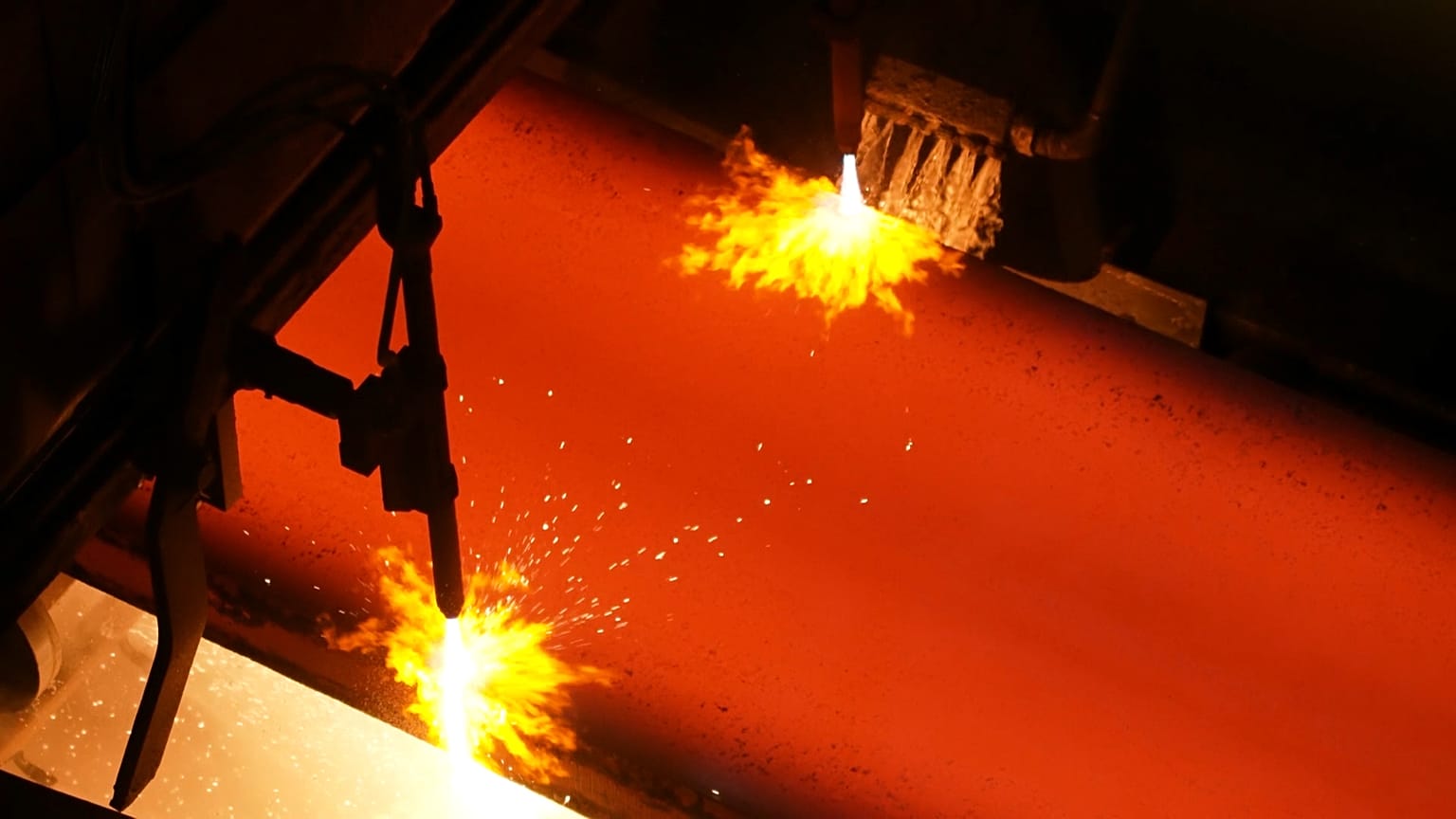














The CO₂-free production revolution is coming to heavy industry. In Sweden, SSAB, the country's leading steel mill, has kicked off this radical shift. By the end of 2029 it will produce green steel, in a compact plant with an electric arc furnace.
The blast furnaces of Luleå, northeast Sweden, are saying goodbye to fossil fuels. SSAB, the country's leading steel mill, is pivoting its production model to produce environmentally friendly, so-called ‘green steel’, free of fossil fuels. Steel production is highly polluting, and the challenge is colossal in both financial and technological terms. According to Jonas Lövgren, head of SSAB's production and processing department, “Today at SSAB at Lulea, we have a blast furnace root steel production. When we are building this new plant in Luleå, we will take away all of that coal and we will use fossil-free electricity instead to melt this scrap coming into the plant. We will reduce the total CO2 amount emitted to the atmosphere by 7% in Sweden.”
 ADVERTISEMENT
ADVERTISEMENT
ADVERTISEMENT
Carbon neutrality: Sweden, a top pupil
Traditionally, in steel production, the main source of CO₂ emissions comes from coal and coke, when removing oxygen from iron ore. The steelworks plans to phase out the current coal-fired production as well as the blast furnaces in Luleå, replacing them with a compact electric steelworks using an electric arc furnace.
The decision to build the new plant was taken in 2023 and it is expected to produce green steel by 2030. A target in line with the goal of achieving carbon neutrality in the European Union by 2050.
According to Tillväxtverket, the Swedish Agency for Economic and Regional Growth, which manages, among others, the support of the Just Transition Fund, Sweden is an example of Europe’s greening of its heavy industry. Kristin Hedstöm, Programme Manager at Tillväxtverket, say, “The green transition in Sweden is happening in many, many ways and we have lowered CO2 emissions by almost 30% since 2010. So, the Swedish goal that has been agreed in Parliament is to be carbon neutral by 2045, so five years earlier than the EU.”
At SSAB, this transition to fossil fuel-free steel has been estimated at €4.5 billion, most of which comes from their own funds. The European Union's Just Transition Fund supports it with €71 million, part of which is used for staff training.
More sustainable and efficient production, safeguarding the workforce
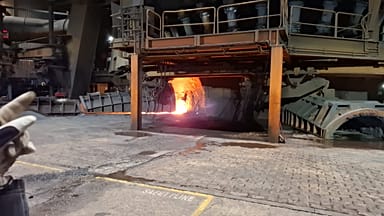
The steelworks produces around 6,500 tonnes of steel per day, the equivalent of an Eiffel Tower. In 2029, the new compact electric steelworks will produce more steel without using fossil energy. A technological challenge that goes hand-in-hand with a strategic one: training the workforce in new skills. “From today and until we are up and running with the new plant, all of these 1,100 people somehow need to be educated. So first of all, we have started actually with electricians.” comments Jonas Lövgren.
Victoria Blom was a machinist at the steelworks, but a year and a half ago she applied for an electrician training scheme at the SSAB Academy and was one of the ten people chosen out of sixty candidates. Training lasted seven months, with theoretical and practical classes. Before the training, she had no knowledge of electricity. She says that she now loves her job, “You use both body and mind, as problem solving starts with reading the plans, before going out to measure, check and observe with your own eyes.”
The Swedish steel mill is one of the first in Europe to develop fossil fuel-free steel.