




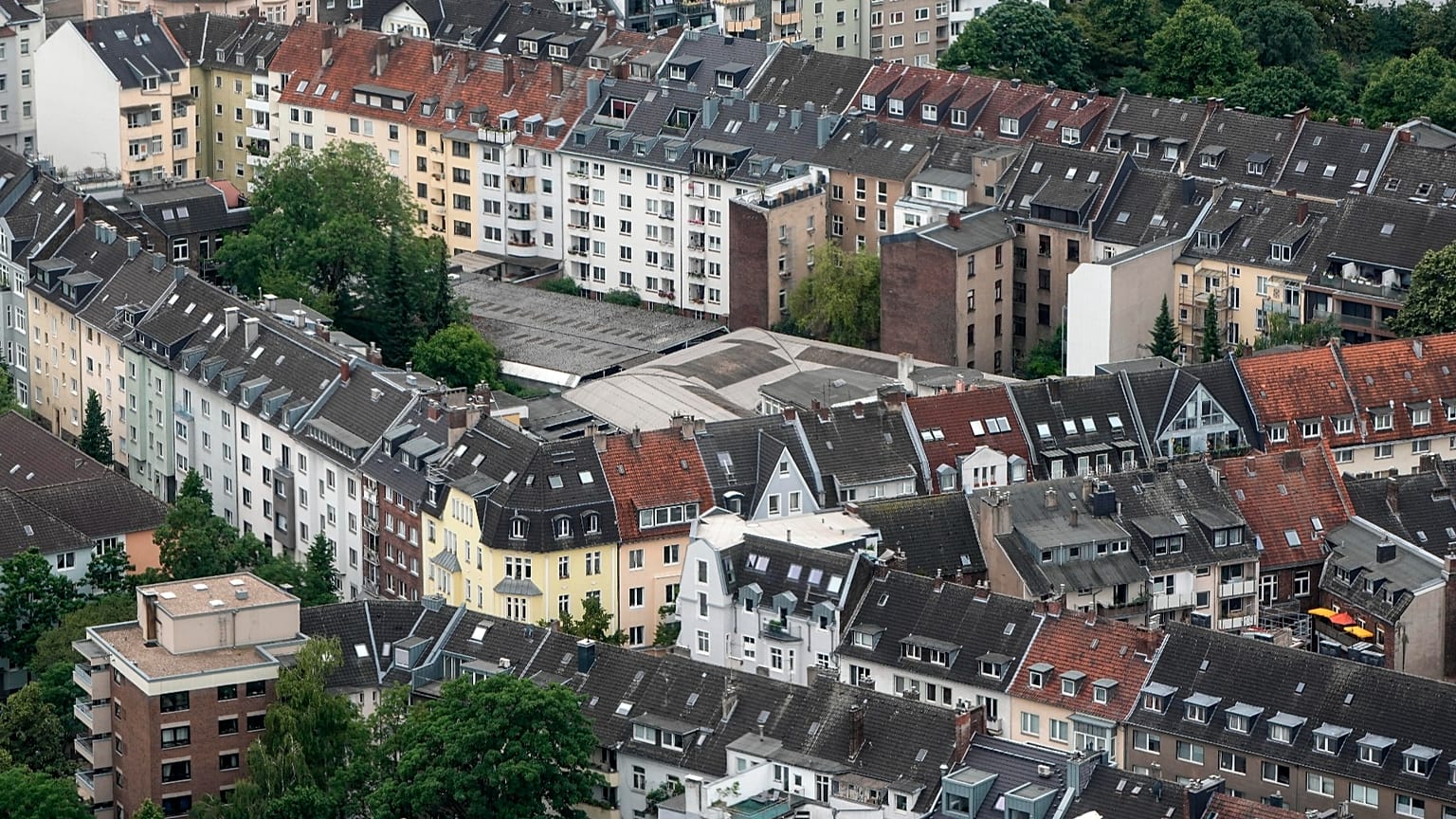













The European Commission has presented a plan to address the housing crisis in Europe, which includes relaxing rules on economic intervention by governments.
The European Commission has presented its first European Affordable Housing Plan, which includes measures to reduce home prices to address a housing crisis taking hold across the bloc.
 ADVERTISEMENT
ADVERTISEMENT
ADVERTISEMENT
The plan, released on Tuesday, focuses on increasing housing supply and triggering investments by relaxing the rules on state aid to allow more social spending on the sector. It also heralds new investment in student and social housing and promises an upcoming legislation on short-term rentals.
According to the Commission, since 2013, house prices in the EU have risen by more than 60%, while average rents have increased by around 20%.
This means that a large share of European households’ income is used to pay mortgages and rent: 19.7% on average in 2023, according to the Housing in Europe report. In countries such as Greece, Denmark, and Germany, this percentage is even higher, as more than 13% of households spent over 40% of their disposable income on housing.
The housing crisis affects citizens all across the EU. Some 16% of Europeans live in overcrowded places, while 10.6% cannot afford adequate heating. Nearly a million people are homeless, according to thelatest data, while 20% of dwellings are unoccupied.
The European Commission estimates that to address these issues, about 650,000 dwellings per year should be added to the current level of new building stocks, which amounts to around 1.6 million new units annually.
Delivering those extra units would cost about €150 billion a year, which would require stepping up public and private investments.
The Commission's plan
The Commission proposes actions in four strategic areas, including revising State aid rules to facilitate support for social and affordable housing projects, without prior notification and authorisation.
“Up to now, housing is eligible for state aid only for limited projects, targeted at the people in most need. This change would help to build houses also for the middle class," an EU official told Euronews.
Concrete legislation to address the issue of short-term rentals, which reduces the amount of dwellings available for citizens, will be presented at a later stage. Local authorities have more power than national governments on this front, and in some cases they have already acted.
“This plan only creates a framework to enable national and cities’ governments to tackle the issue," an EU official told Euronews.
In total, the EU will mobilise at least €11.5 billion in the next few years from its multiannual budget to be added to the €43 billion already committed to social, affordable, and sustainable housing. National and regional promotional banks and institutions are expected to invest €375 billion by 2029.
“Housing is not just a commodity; it is a fundamental right. We must mobilise every euro and do everything in our power to make sure that in Europe everyone can afford a decent place to call home, said Dan Jørgensen, Commissioner for Energy and Housing, the first person appointed to that portfolio in the Commission’s history.