




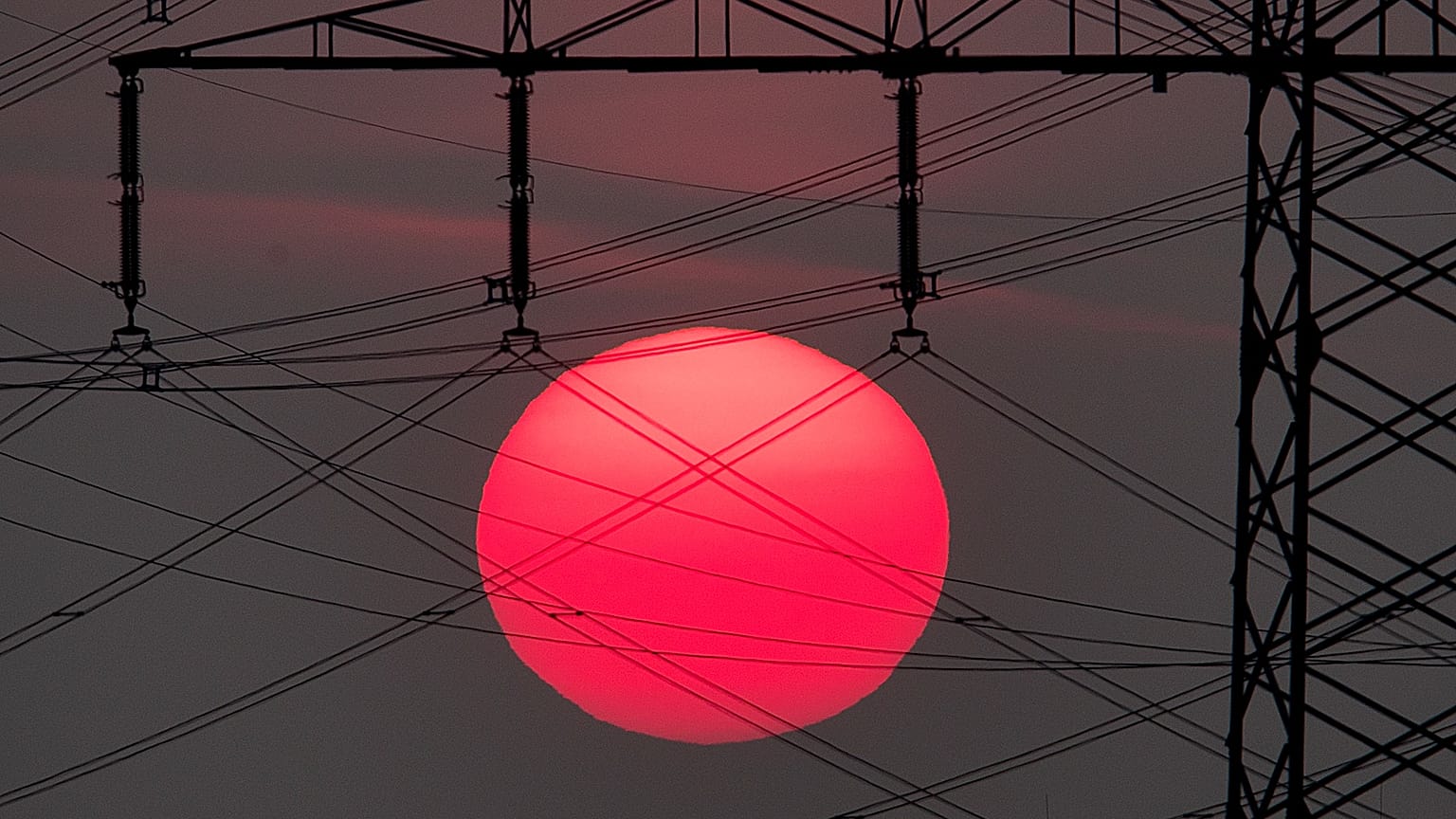













The Commission said it will work to broker a political compromise among member states to accelerate the development of electricity interconnections as part of the "Grids Package".
The European Commission announced on Wednesday that it will review the European Union's law on trans-European energy networks as part of a plan to revamp the bloc's obsolete electricity grid and speed up permits for infrastructure, storage and renewables integration.
 ADVERTISEMENT
ADVERTISEMENT
ADVERTISEMENT
The EU executive conceded that the issue of cost-sharing for grid financing will be a key sticking point among member states when negotiating on the future of the bloc's energy infrastructure.
France has long raised obstacles to further integration with the Iberian Peninsula in the Pyrenees, citing administrative, economic and environmental concerns.
On the other hand, Portugal and Spain remain insufficiently connected to the rest of the EU, and greater connectivity with France would significantly increase their resilience.
"The question of cost-sharing is not an easy one to solve and causes a lot of delays,” a Commission official told reporters.
The Commission said it wants to promote a joint political declaration between France, Portugal and Spain in the first quarter of 2026 to confirm the start of the implementation for at least one of the projects in the Pyrenees.
Commission officials added that "one big incentive" is the possibility of financing these projects through the bloc's Connecting Europe Facility, a fund used for projects contributing to the climate transition, which EU energy ministers will discuss on December 15.
"We propose to reinforce financing by allowing the exemption of environmental assessments for key selected projects under certain conditions," the Commission official said, referring to the Projects of Common Interest and Projects of Mutual Interest that the Commission fast-tracks to get EU funding.
The grid of the future
The law known as Trans-European Networks for Energy, or TEN-E, has been in force since 2022. It is meant to enhance the EU’s energy infrastructure and align the bloc's climate and energy goals with investment opportunities.
Under the plan to revamp the 27-member bloc's electricity grid, the EU executive has identified eight projects to "strengthen existing structures" and "ensure resources". These include electricity interconnections, storage, natural gas and hydrogen.
The EU executive has estimated a mammoth €1.2 trillion to revamp the bloc's grid infrastructure by 2040. Roughly €730 billion will be needed for distribution grid investments and €477 billion for transmission grids, according to the Commission.
To address the scale of the overall plan, the Commission proposed a fivefold increase in EU funding for these projects in the bloc's 2028-2034 budget, from €5.84 billion to €29.91 billion.
Slow permits, fewer renewables
The bloc’s existing grid planning and permitting system has been criticised as fragmented and inadequate to the pace of needed expansion, a significant obstacle to renewable energy integration and the bloc's goal of reaching climate neutrality by 2050.
The Commission said that laws on renewable energy, gas and the electricity market design will be revisited by the EU co-legislators to better respond to the interconnections needs.
Lawmaker Christian Ehler, European People's Party spokesperson for the European Parliament's industry, research and energy committee, said the revamping of European grids is "crucial" to lowering energy prices, but also asked for more regulatory oversight for the EU – even where its decisions might go against environmental standards.
"We also need to be way bolder on the permitting part," said Ehler. "Certain exemptions from parts of the environmental legislation are not enough."
"We need to change the underlying legislation and turn the permitting procedures upside down. Energy projects deliver on the energy transition; environmental protectionism should not stand in the way of that."
Kristian Ruby, secretary general at the lobby group representing the electricity industry Eurelectric, welcomed the Commission's grids package and urged pragmatic implementation.
“The process must be steered carefully to ensure predictability and investor confidence across the wide electricity sector," Ruby said.
Tom Lewis, energy policy expert at the NGO Climate Action Network Europe, urged EU leaders to maintain "robust environmental protection".
"Reopening the bloc's renewable energy law and its environmental provisions for permitting would carry a real risk of delaying transposition and implementation, and with it, Europe’s ability to rapidly deploy the renewables it urgently needs,” Lewis cautioned.