




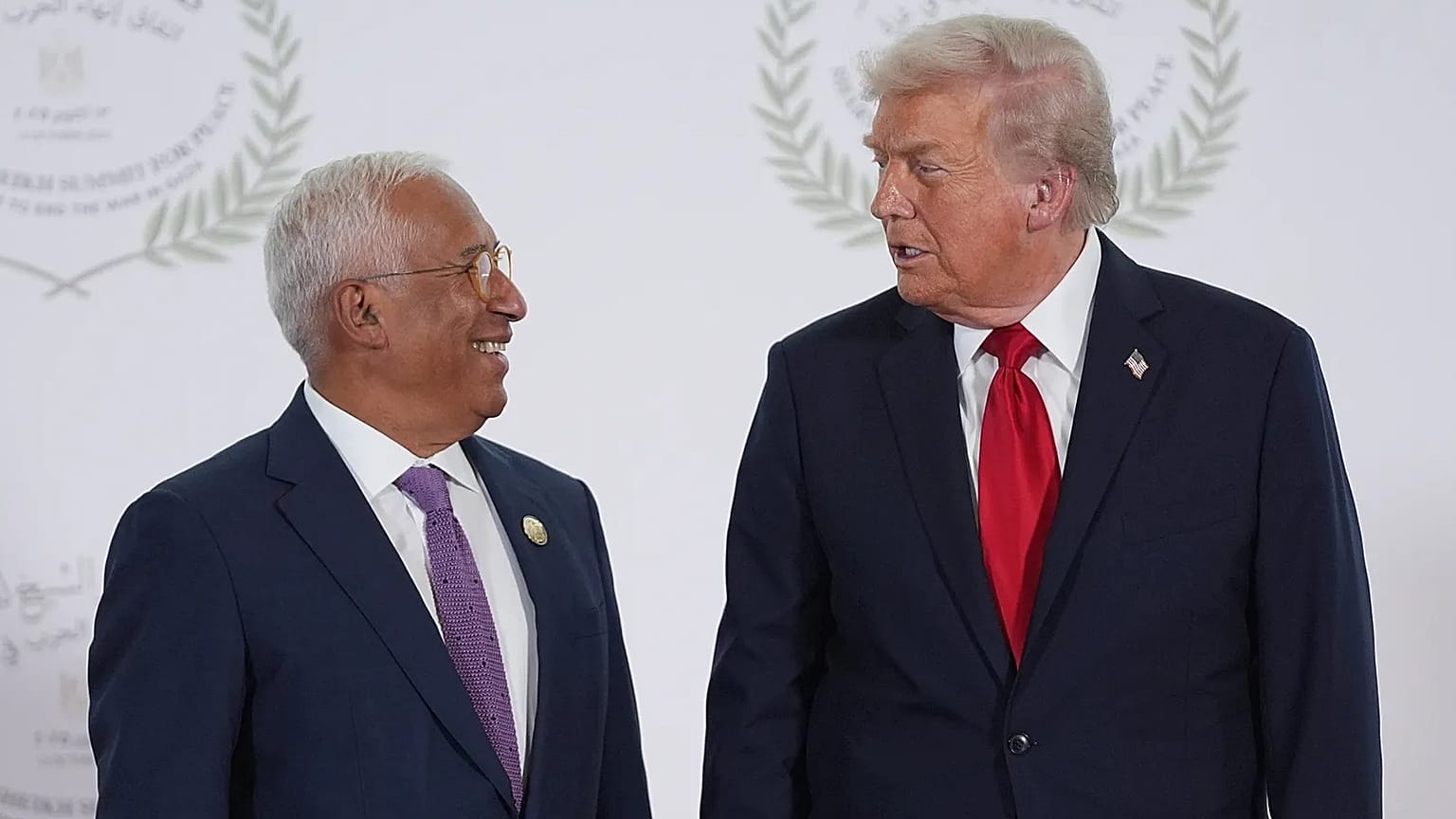














The Council president said the EU will not tolerate political interference in response to a controversial US government document warning of "civilisational erasure" as a result of the bloc's domestic policies, while stating Washington remains an ally and partner.
European Council President António Costa rejected any attempt at "political interference" in response to a controversial US government document published last week calling on Europe to change course or face "civilisational erasure".
 ADVERTISEMENT
ADVERTISEMENT
ADVERTISEMENT
Speaking at a conference in Paris on Monday, Costa said Washington does not get to choose on behalf of European citizens which policies are right or who they should vote for, in the strongest rebuff to date from a sitting EU official to the Trump administration.
His comment comes after the US updated its National Security Strategy, calling on Europe to revert course and praising "patriotic European parties" resisting Brussels' policies.
The 33-page document argued that a combination of ill-designed economic policies, illegal migration and excessive regulation could lead to Europe's demise as a civilisation.
The US suggested its goal is to "help Europe change its current trajectory."
Costa pushed back, saying "allies do not threaten to interfere in the political life or the internal democratic choices of other allies" and defended Europe's autonomy to choose its own path when setting policy.
"The United States cannot replace Europe to say what vision we have, and what is the freedom of expression," Costa said.
US an ally and partner
The Council chief said the US remains an ally and partner, but Europe must become stronger and more sovereign. "If you want to be strong on the international stage, you have to be strong at home," Costa added.
He also said that Europe should be more confident in its own abilities and strengths on the global stage.
Political tensions between the US and the EU escalated over the weekend.
On Friday, the European Commission fined tech billionaire Elon Musk’s social media platform X, formerly known as Twitter, €120 million for breaching transparency rules under EU legislation.
Musk responded by saying the 27-member bloc should be dismantled and “return to individual countries” in a series of posts in which he directed his anger at the EU.
The penalty, which the Commission defends as legally sound and Musk could challenge in court, added to US criticism that the EU punishes US Big Tech unfairly and serves to censor content online.
That point was echoed by US Vice President JD Vance at the Munich Security Conference earlier this year, where he argued that European Commissioners acted as Soviet-style commissars, and it also appeared in the National Security Strategy review.
The document accused Europe of "subversion of democratic processes" and condemned the bloc as an international organisation that undermines political liberty and sovereignty.
The EU has routinely defended digital rules as tools to protect consumers and has rejected accusations of censorship.