




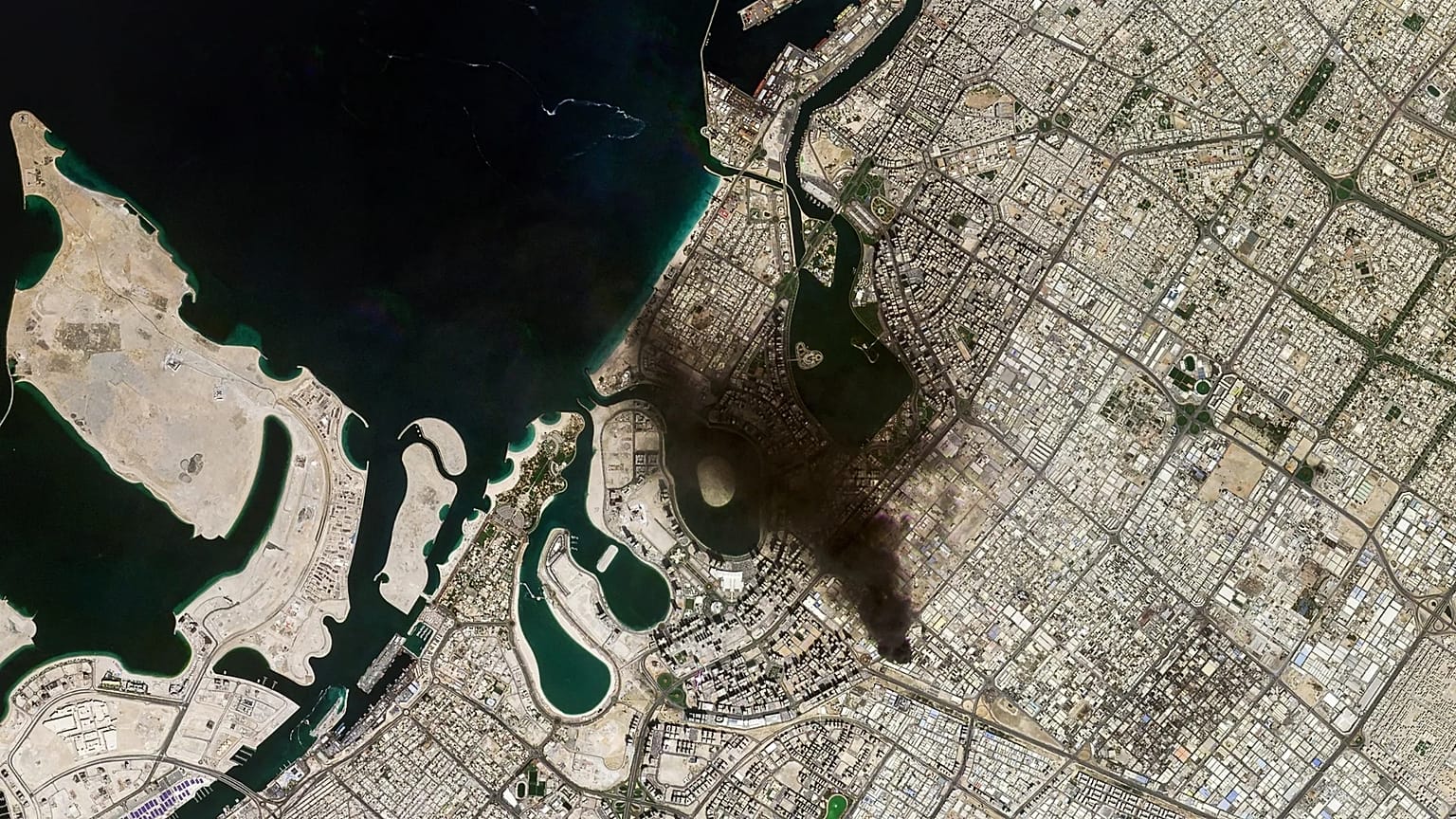














In a briefing to Euronews and select media, a senior UAE official outlined the country’s defensive strategy, international support and the warning that trust with Iran may take decades to rebuild.
As Iranian drones and missiles target parts of the Gulf, the United Arab Emirates says it is defending its territory while working to prevent the conflict from spreading further across the region.
 ADVERTISEMENT
ADVERTISEMENT
ADVERTISEMENT
In a briefing to Euronews and select media outlets in Abu Dhabi, Emirati officials say the country had been preparing for instability long before the latest escalation.
“We’ve been getting ready. Not expecting war but getting ready for a sort of emergency, such as the one that we are facing today. The UAE is a country that prepares, and we have been preparing now for a long time because of our readout of the situation in the region. We’ve been preparing in terms of food stock, in terms of facilities, and so on,” a UAE official said.
The remarks offer rare insight into how the country anticipated the possibility of a broader regional crisis even as it pursued diplomatic engagement with Tehran.
“We’ve been acting in a very, let’s say, constructive way with Iran, along with other GCC countries,” the official said.
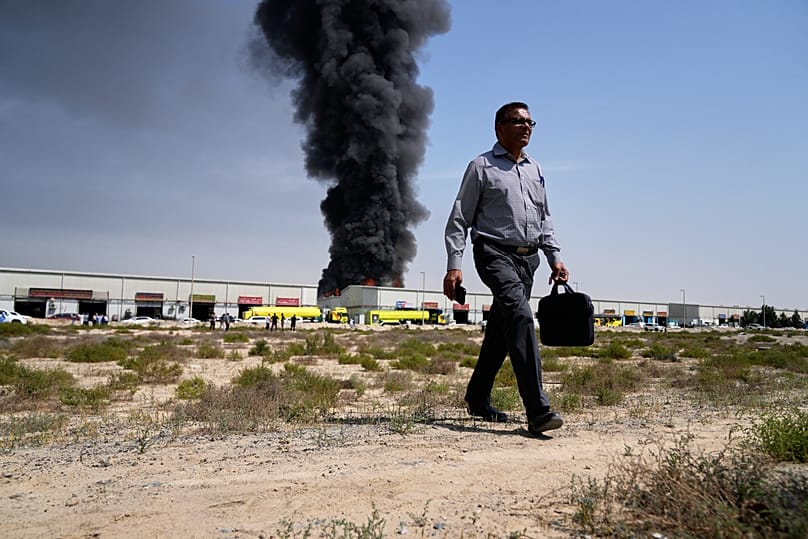
Despite those preparations, the scale of the attacks has come as a shock.
“What we have seen is something that we did not expect. Time has proven that we have been ready for it, but we definitely did not expect it. We did not think that Iran would actually risk the relations of all its neighbours,” the official said.
Officials say the UAE is now focused on defending its population and infrastructure while keeping the wider conflict contained.
“The UAE wants the Iranian aggression against the non-combatant states, the Gulf states, to end immediately,” the official said.
Across the UAE and neighbouring Gulf states, air defence systems have been intercepting incoming threats.
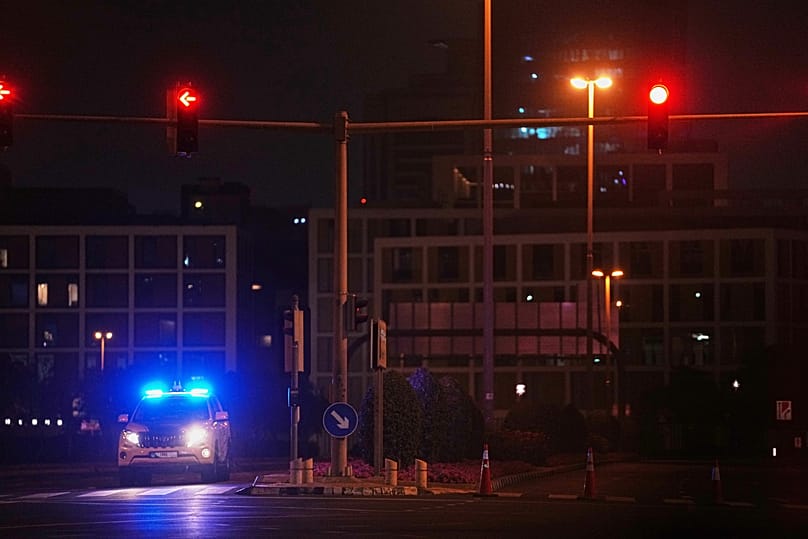
“The Iranian strategy is to try to create regional havoc”, but they “did not expect air defences in the Gulf to do so well. Our air defence has done a great job. We have a multi-layered system,” the official said.
Those defensive operations have also involved international partners.
“I have to say that the French support has been stellar. You know, their Rafales have moved in from day one; they’ve kicked in their agreement with us from day one. They are part of our continuing air patrols, taking down, you know, missiles and taking down mainly drones, etc. This is something the French demonstrated when the Houthis attacked in 2021. And then again, this time also, this has kicked in,” the official said.
Authorities say the priority remains protecting the country while maintaining stability across the economy and daily life.
“We will continue defending the country, defending everybody here, and making sure that slowly we go back to normal. We’re seeing more flights go out. They’re still nowhere near the number of flights that were taking place. We’re still seeing some ports moving,” the official said.
At the same time, officials warn the attacks may reshape how the region approaches negotiations with Iran in the future.
“Any new negotiated settlement with Iran will no longer be confined to the nuclear aspect. Missiles are now centre stage, because missiles now are not seen as self-defence,” the official said.
While the UAE has emphasised the need for defence and deterrence, officials also say the country does not want the conflict to widen.
“In a region of conflict, we’ve often seen that conflict does not really resolve issues, critical issues,” the official said.
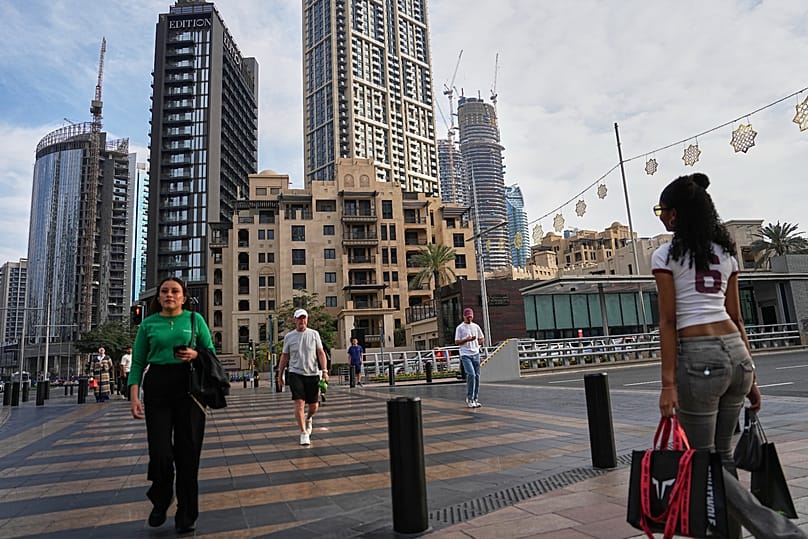
“Any sort of escalation is worrying. We want to contain the war. We don’t want the war to expand. We want to start with the Iranians, realising that they are not helping themselves by attacking their whole neighbourhood, and to stop there and realise that. And that I think also will open up more avenues towards active mediation in my opinion.”
The UAE has also drawn a clear distinction between the Iranian government and the Iranian people.
“We have a very clear definition between the Iranian regime and between individual Iranians,” the official said.
But the political fallout from the attacks could last long after the immediate crisis subsides.
“I am not saying relations between Gulf states and Iran are not going to go back, because at the end of the day, you are neighbours, but it creates a huge trust gap that, in my opinion, will last for decades to come,” the official said.
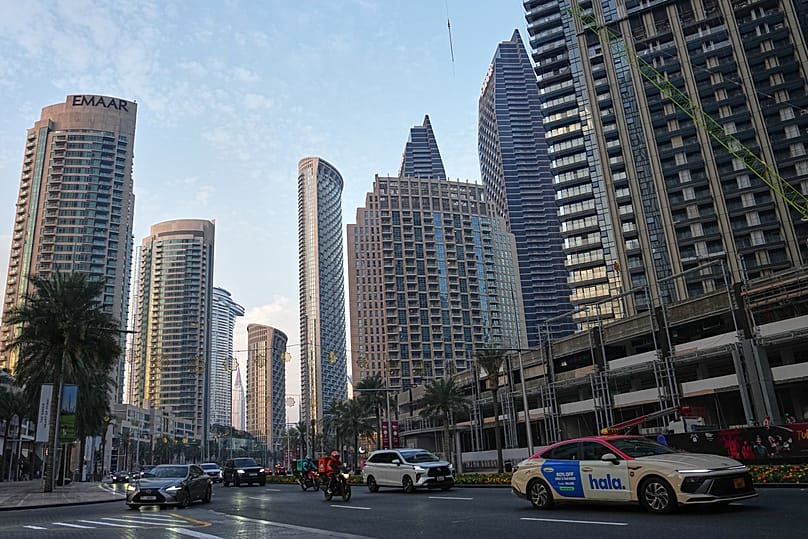
Despite the uncertainty created by the conflict, officials believe the country’s economic and social fundamentals will remain strong once the crisis eventually ends.
“I think the UAE is strong on fundamentals. Ultimately, at the end of the day, this war will end, and my reading is it’ll be the danger of it will end sooner rather than later. But the formal end of the war might take a little bit longer. But I think then you will see that the fundamentals will kick in. The UAE is an attractive society, it’s a stable society, it is a dynamic economy, an economy of opportunity. The tax regime of the UAE remains one of the most attractive. The business environment, the sort of social plus economic premise of the UAE, still remains one of the most attractive in the region, and so on and so forth. So, from that perspective, I think the fundamentals are there, and they will kick in,” the official said.
For the UAE and its Gulf neighbours, the coming weeks may determine whether the confrontation with Iran remains contained or evolves into a broader regional crisis. Officials say their focus remains on defence, stability and preventing further escalation.