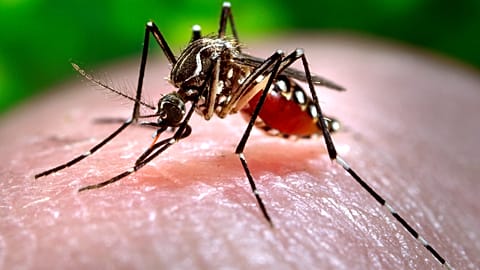
















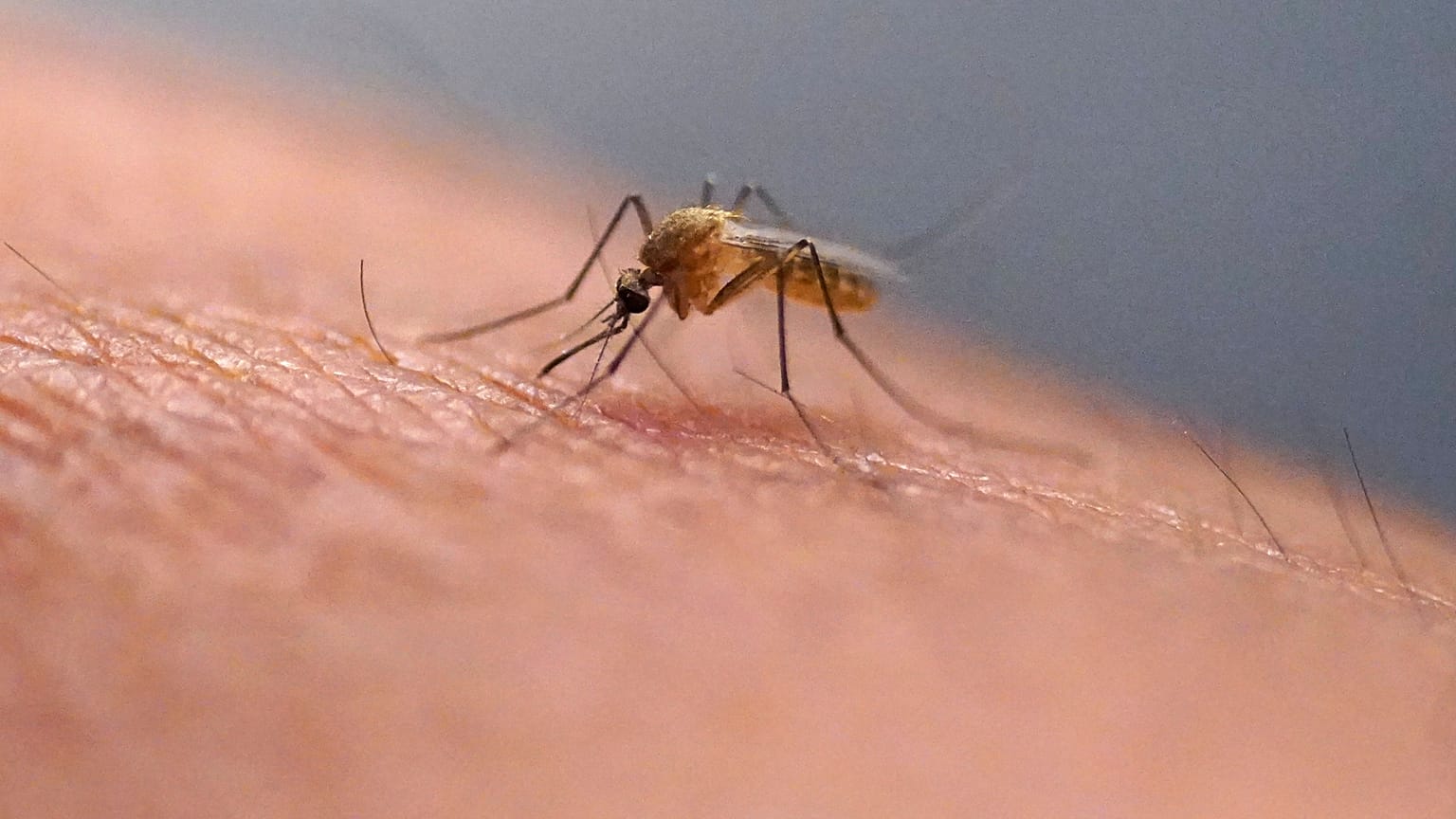













Different mosquito species prefer different people. Understanding what makes some people “mosquitoe magnets” could help scientists develop new ways to combat mosquito-borne diseases.
Each mosquito species has its own type, according to research published in iScience, which tested the attraction of three mosquito species — yellow-fever mosquito (Aedes aegypti), Asian tiger mosquito (Aedes albopictus) and southern house mosquito (Culex quinquefasciatus) — to 119 people in Miami, Florida.
 ADVERTISEMENT
ADVERTISEMENT
ADVERTISEMENT
Mosquitoes find hosts using a combination of signals, including carbon dioxide, body odour, heat, humidity and visual cues. Human scent is itself an extraordinarily complex chemical mixture, containing hundreds of volatile compounds. Differences in those compounds — some produced or modified by bacteria living on the skin — can help mosquitoes distinguish between people.
Researchers found that some people were highly attractive to more than one mosquito species, but no one in the study was among the most attractive to all three. In other words, being particularly appealing to one species did not necessarily make someone particularly appealing to another.
“We didn’t expect the species to prefer different people when we started the study,” Kaylee Marrero, the study's lead author, said in a press release. “Each species having a distinct microbial signature that they use as a cue was so surprising to me.”
The yellow-fever mosquito showed a slight preference for male participants and was associated with particular patterns of volatile compounds and skin bacteria, while the Asian tiger mosquito was drawn to elevated ketones and plant-like volatile compounds naturally secreted by skin. The southern house mosquito is active at night and was attracted by the microscopic ecosystem of bacteria, fungi and microbes naturally living on people’s skin.
Targeted approach to mosquito-borne diseases
Understanding the cues that attract different mosquito species could help scientists develop more targeted strategies against diseases spread by mosquitoes, including dengue, Zika, yellow fever and West Nile virus.
"Isolating the components of human odor that attract or repel mosquitoes could lead to novel strategies to combat vector-borne diseases," said Matthew DeGennaro, a neurogeneticist who leads the research team and directs the Biomolecular Sciences Institute at FIU, Miami’s state university.
The three species tested in the study are not equally relevant to Europe.
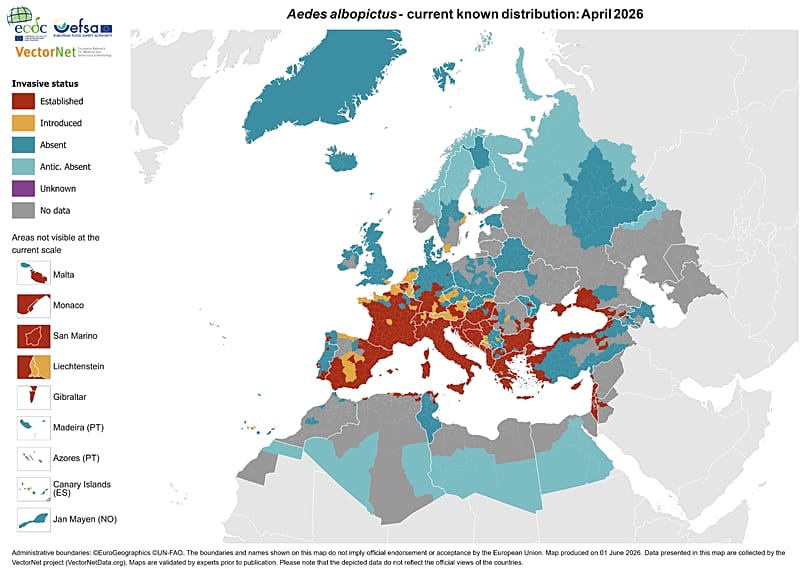
The Asian tiger mosquito is now established across large parts of Europe, found in Austria, Belgium, Bulgaria, Croatia, Cyprus, France, Germany, Greece, Hungary, Italy, Malta, Portugal, Romania, Slovakia, Slovenia, and Spain and continues to expand its range. The mosquito “undergone a dramatic global expansion facilitated by human activities” and due to climate change is expected to “continue to be a successful invasive species that will spread beyond its current geographical boundaries,” according to ECDC.
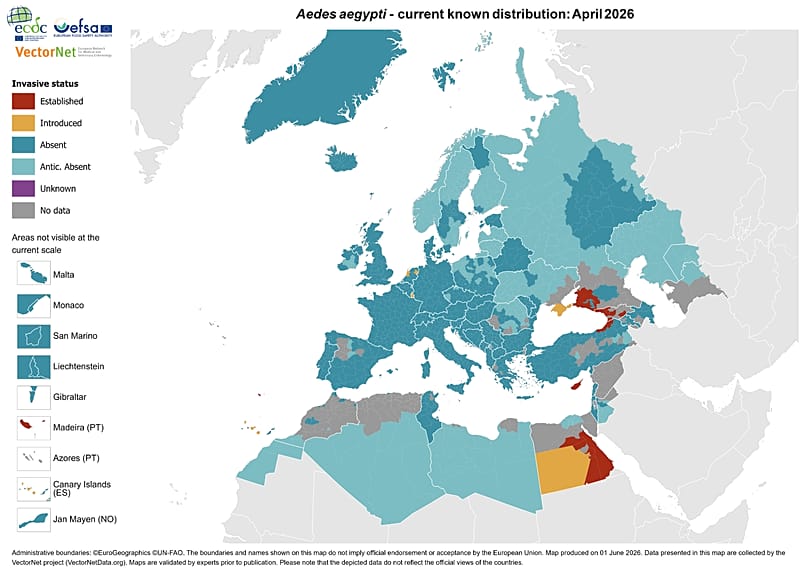
The yellow-fever mosquito has a much more limited European distribution, according to ECDC.
The southern house mosquito, meanwhile, is generally absent from mainland Europe, preferring tropical and subtropical regions.
The researchers stress that the study was conducted under laboratory conditions and does not show that a particular person would necessarily receive more mosquito bites in the real world. They say field studies will be needed to determine how closely the laboratory rankings correspond to actual biting behaviour.