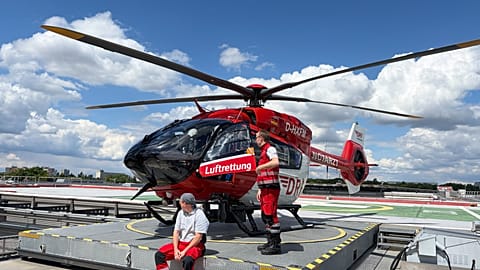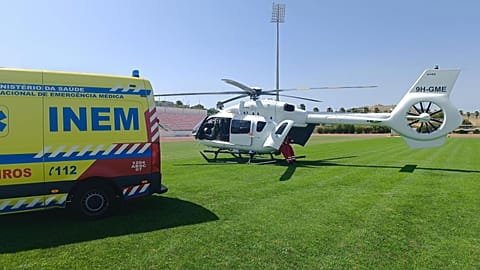















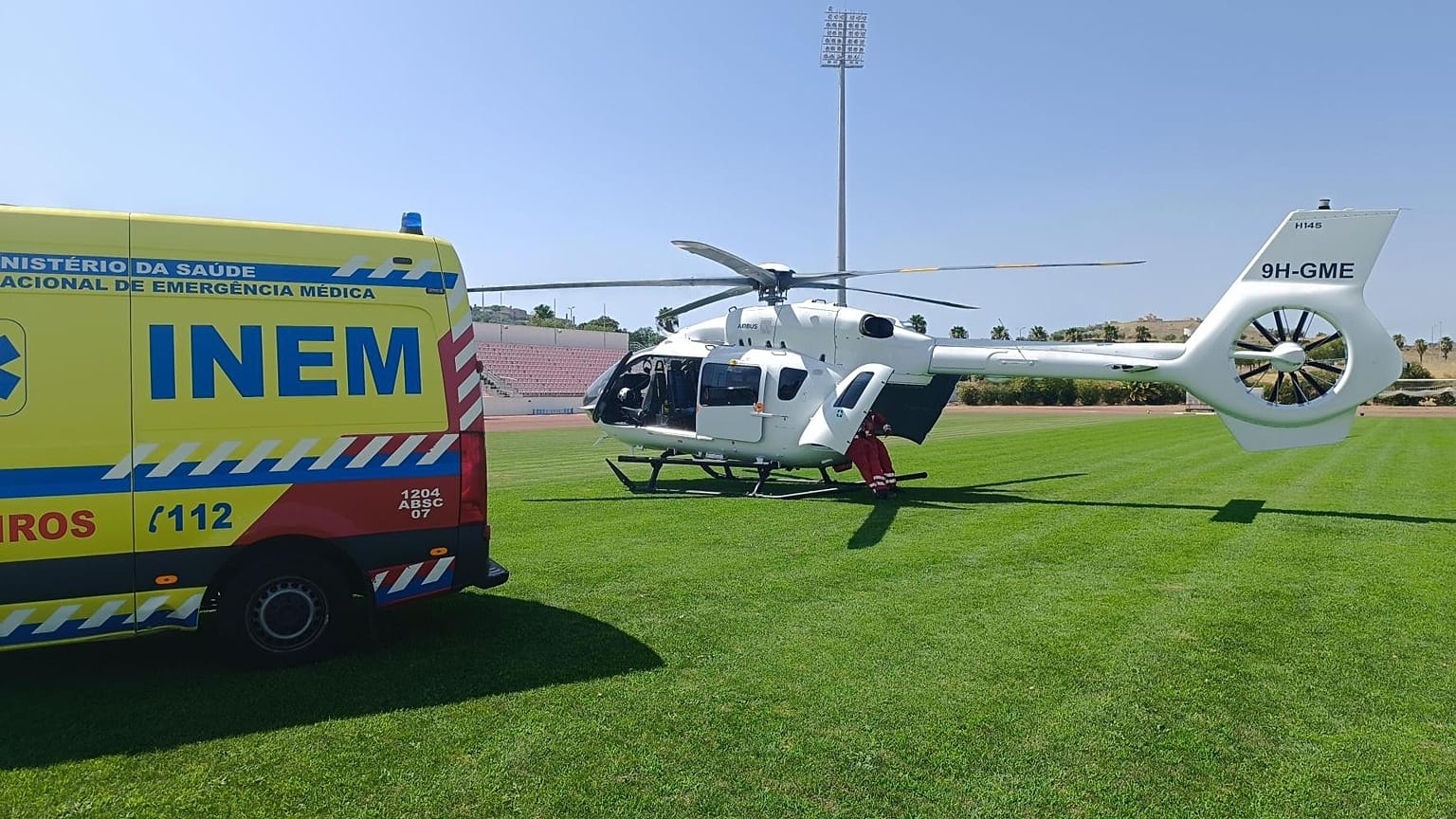













In Portugal, INEM medical helicopters stand ready, taking off in under five minutes to reach remote areas where every second can mean life or death.
Before the day has even begun, teams are on standby at Portugal's emergency medical helicopter bases. A call can come in at any moment and, when it does, every second counts.
 ADVERTISEMENT
ADVERTISEMENT
ADVERTISEMENT
On the ground, there is often no time to spare. In the air, the response gains speed. On average, the reaction time between the alert and take-off is three minutes.
"Response time in medical emergencies is the critical factor for success. We are currently operating at an excellent level, within three minutes. In certain cases we can reduce it even further. Our average is three minutes from activation to response," explains Hugo Chambel, director of Gulf Med Aviation Services for the Iberian Peninsula, speaking to Euronews.
The operation is run by Gulf Med, a company of Malta-based Medilink, in partnership with medical teams from the National Institute of Medical Emergency (INEM). The network is spread across four permanent bases: Loulé, Évora, Viseu and Macedo de Cavaleiros, ensuring coverage of almost the entire country.
Gulf Med began operating in Portugal in July 2025, under a direct award contract signed with INEM worth around four million euros, which remained in force until October last year.
From October onwards, the company has been working under a 77.5 million euro contract, awarded following the international public tender for INEM's Emergency Medical Helicopter Service (SHEM), which provides for four aircraft to be available 24 hours a day.
The five-year contract runs until mid-2030 and has a total value of more than 77 million euros.
In April 2026, the company strengthened the system with the addition of a fifth helicopter, bringing the overall investment in the fleet in Portugal to around 50 million euros. This extra helicopter serves as a backup aircraft, ensuring the operational continuity of the four bases in service during maintenance periods or any temporary withdrawals for technical reasons.
The Airbus H145 D3 can land almost anywhere
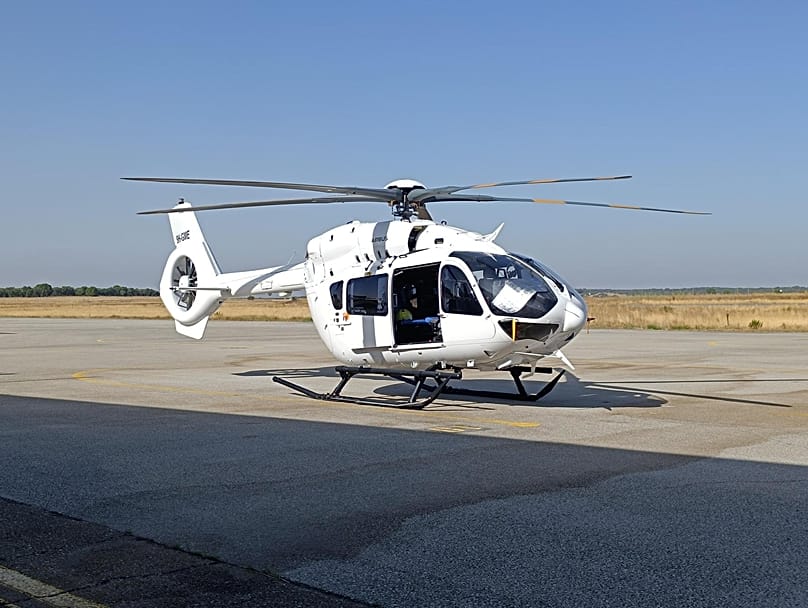
From remote inland areas to roads and even coastal zones, the helicopter is often the only means capable of providing rapid assistance. The Airbus H145 D3 aircraft, equipped with skis instead of wheels, can land on virtually any type of terrain.
"We are certain of that, not only because these aircraft are designed for this kind of mission. Their weight and payload capacity are very well balanced, which makes them extremely flexible. That means they are able to land practically anywhere: on a road, an estate or in places where there is very limited space for landing. They are outstanding, well-balanced aircraft for our kind of territory and our operational needs," says the Gulf Med representative.
Inside, the spacious cabin and specialised medical equipment are designed for immediate intervention. On board are doctors and nurses trained to operate in critical situations.
"Each mission is made up of several stages. While we are still en route, and based on the initial information, we discuss possible scenarios and anticipate difficulties so we can save time when we approach the patient," says Leila Duarte, an INEM internal and emergency medicine doctor, speaking to Euronews.
"We then assess, stabilise and decide, in contact with the control centre, where to transport the patient. During the flight, we maintain constant monitoring and inform the destination hospital of any change in the patient's condition," she adds.
In the cockpit, the priority is to ensure safe operations in all circumstances.
"We always check the weather conditions so we can react quickly when a primary call comes in. At night, it is more demanding because we have to take several factors into account, including the landing site. Even so, we are normally able to respond within five minutes," says Craig Dewar, a pilot with INEM's Emergency Medical Helicopter Service.
The missions fall into two categories: primary, when the team is sent directly to the scene of the incident, and secondary, which are more planned transfers between hospital units. SHEM also carries out organ transport and ECMO transport (Extracorporeal Membrane Oxygenation), for critically ill patients dependent on advanced mechanical cardiopulmonary support between healthcare facilities.
However, the number of primary missions has been increasing, underlining the importance of this resource in critical situations. "One of our first objectives was to change the mission profile. We now carry out more primary missions than secondary ones," notes Hugo Chambel.
Since the beginning of the year, the Heli Sul base in Évora has already completed around 230 missions, 160 of which were primary incidents, highlighting the growing importance of air transport in the medical emergency response, particularly in inland regions.
Whatever the scenario, the goal remains the same: getting there quickly and saving lives.