















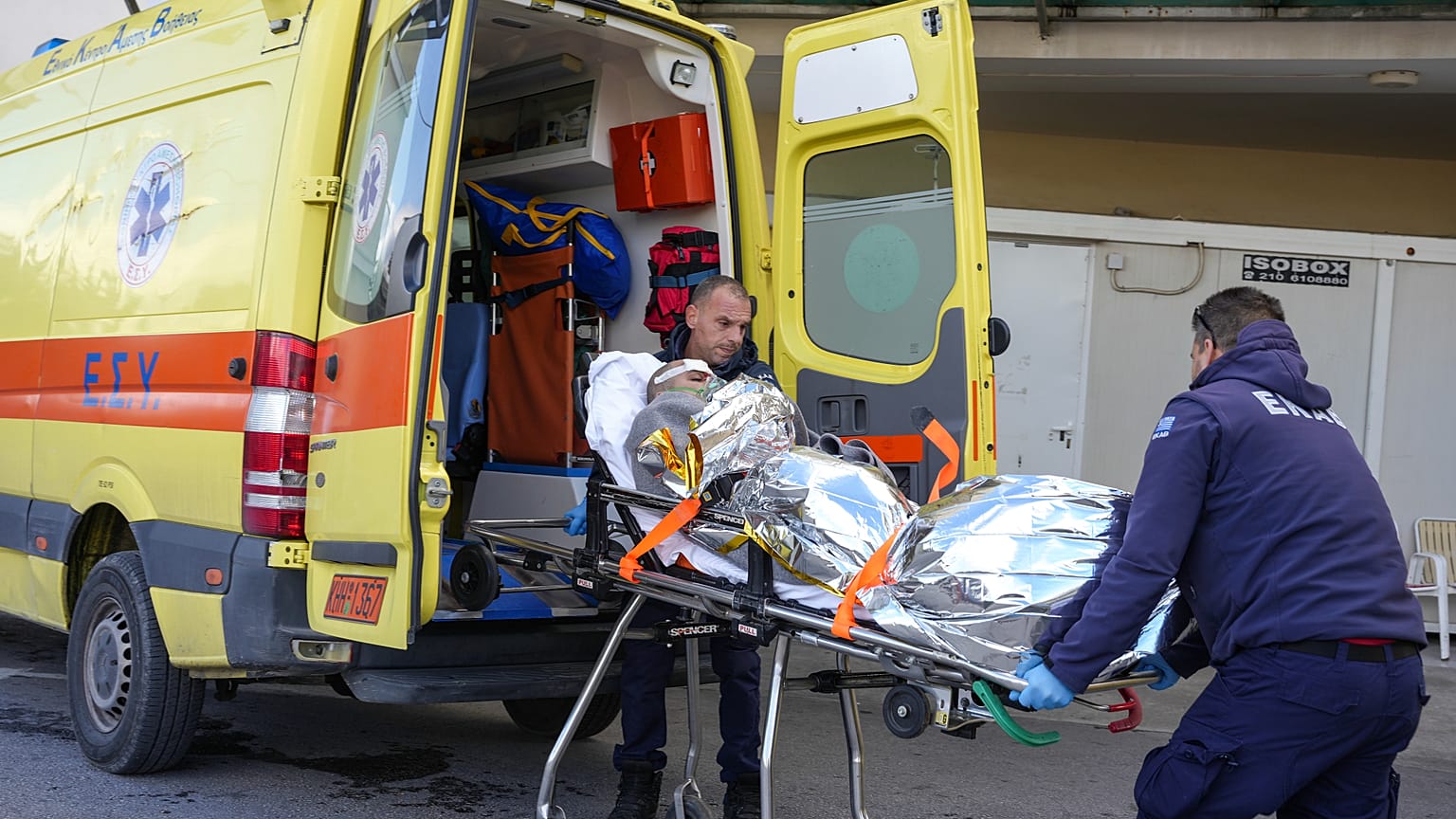













Greece’s National Health System is coming under severe strain from chronic understaffing, the POEDHN union representing hospital workers warns.
Hospitals and health facilities across Crete, the Ionian Islands, the Aegean and the Cyclades are facing critical staff shortages, forcing clinics to close, intensive care units to operate below capacity and leaving staff exhausted by relentless shifts and chronic understaffing.
 ADVERTISEMENT
ADVERTISEMENT
ADVERTISEMENT
The situation is particularly difficult in island and remote areas, where the shortage of doctors, nurses and support staff has pushed many hospitals below safe staffing levels. They now rely heavily on auxiliary workers, private contractors and the constant redeployment of personnel from other regions.
Severe staff shortages in Crete
In Crete, major hospitals such as Venizeleio Hospital and PAGNI are reporting extensive shortages in almost all specialties. At Venizeleio, three of the 15 ICU beds remain closed due to lack of staff, while only five of the eight operating theatres are functioning. In nursing alone, more than 100 posts are vacant.
At Chania General Hospital, shortages affect 40%–45% of established posts. The Pulmonology Clinic has closed, the Accident and Emergency departments operate with just two doctors, and only three of the seven operating tables are available. At the same time, staff report a rise in incidents of violence because of a lack of security personnel.
Other hospitals in Crete face similar problems. At Agios Nikolaos General Hospital, staff numbers have fallen by 20% over the past four years, while ICU beds have been reduced from six to four. The hospital operates on many days without an anaesthetist or a radiologist. At Ierapetra General Hospital, there is currently just one anaesthetist, one physician and one paediatrician in post.

Ionian Islands: The Kefalonia ICU that has never operated
A similar picture is seen in the Ionian Islands. At Kefalonia General Hospital, the ICU has never gone into operation because of a lack of intensivists and nurses, while at Lefkada General Hospital the facility is effectively running on skeleton staff. Up to 50% of nurses are employed on fixed-term contracts.
At Corfu General Hospital, both medical and nursing staffing stand at around 45% of established posts. At the same time, Corfu Psychiatric Hospital has seen its permanent workforce shrink from 300 employees to around 100, while there has not been a child psychiatrist for more than a decade.
Aegean: Thousands of days off in arrears on Rhodes
Across the Aegean islands, many facilities are now struggling to meet basic healthcare needs. At Rhodes General Hospital, more than 15,000 days off and leave are owed to staff because of severe understaffing, while only two of the seven operating theatres are functioning. Modern medical equipment, such as an MRI scanner and a digital mammography unit, remains largely unused due to a lack of specialist doctors.
Samos General Hospital is operating without an internist, ophthalmologist, ENT specialist, neurosurgeon or oncologist, while nurses are often left alone on shifts that fall below safe staffing levels. At Chios General Hospital, ICU capacity is being reduced because of staff shortages, while part of the on-call rota is covered remotely by private companies.
Cyclades: Serious shortages at health centres
The situation is especially pressing on the smaller islands. Health centres on Milos, Tinos, Ios and Amorgos report serious shortages of doctors, nurses and paramedics, while on some islands there is not a single paediatrician.
Staff and trade union representatives warn that continued understaffing is pushing many healthcare facilities to the brink of operational collapse, particularly with the tourist season approaching, when island populations soar.
At the same time, the public health system’s growing dependence on fixed-term staff, outsourced cleaning and catering services, and the constant redeployment of personnel between hospitals to cover basic needs is becoming ever more apparent. In many cases, state-of-the-art medical equipment and entire hospital wings remain idle because there is not enough staff to operate them.