



























As Europeans brace for higher oil and gas prices, G7 nations are being urged to tax fossil fuel giants profiting from the war on Iran.
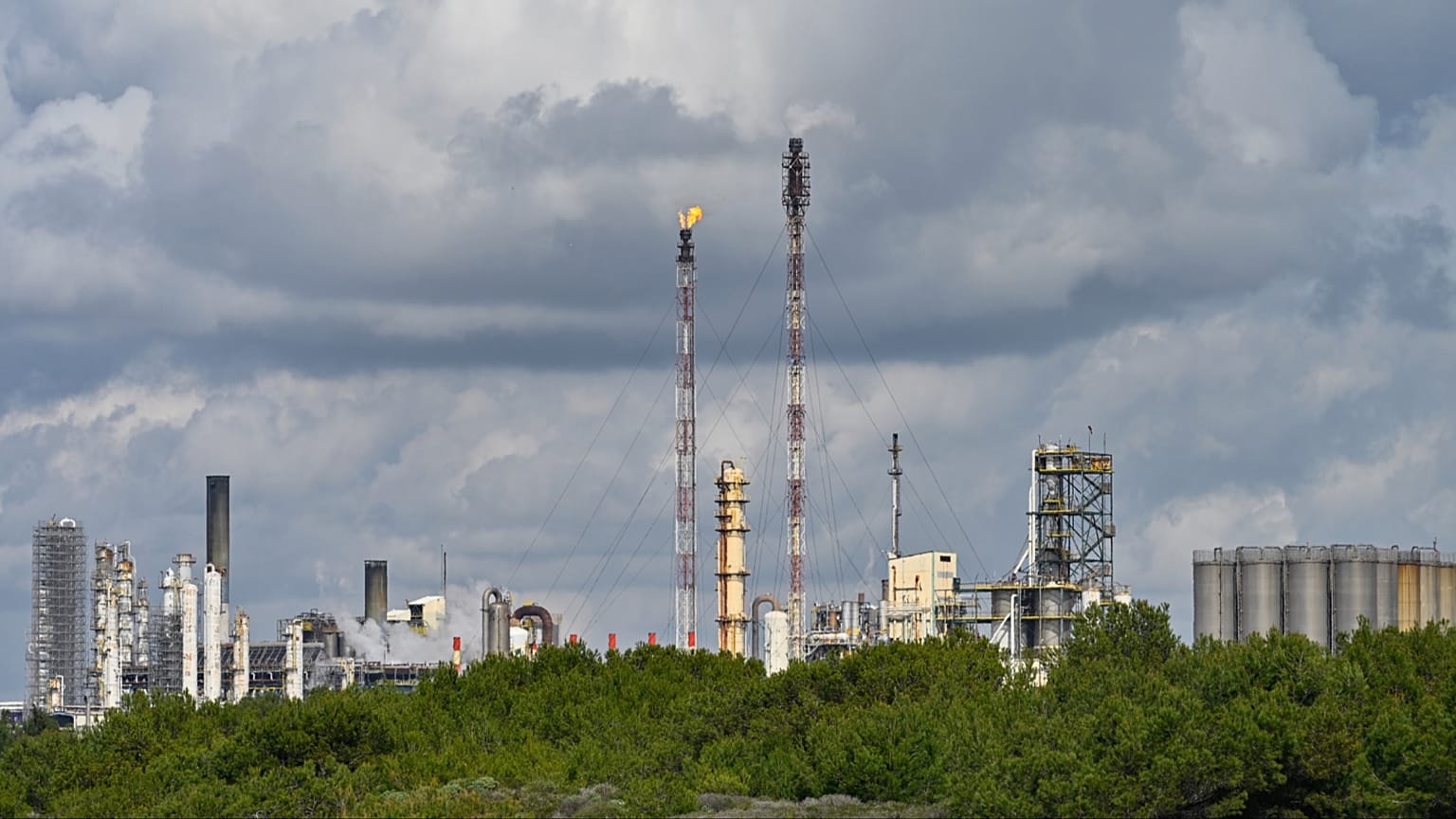
Fossil fuel giants have been accused of “cashing in” on escalating conflict in the Middle East, as global oil prices remain volatile.
 ADVERTISEMENT
ADVERTISEMENT
ADVERTISEMENT
Before the war on Iran, Brent crude – which is used as the worldwide benchmark for oil prices – traded in the range of $60-$70 (€52 - €60) per barrel.
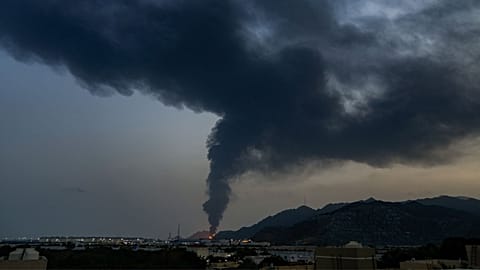
Following a slight decrease, prices jumped back above $100 per barrel (around €86.53) yesterday (12 March) as three more cargo ships were attacked in the Gulf.
Why is the war on Iran impacting oil prices?
The Strait of Hormuz – a 38km passage between the Persian Gulf and the Gulf of Oman – is one of the world’s most strategically important choke points. It carries around one-fifth of global oil supplies, which is around 20 million barrels every day.
Tehran continues to fire strikes at commercial ships in the Strait of Hormuz, and previously warned that the passage was closed for navigation. Failure to re-establish flows through this route could keep oil prices above the $100 threshold.
Analysts at Wood Mackenzine say Middle East producers may have to increase exports via the East-West pipeline to the Red Sea, while additional volumes could be supplied into the Mediterranean from Iraq.
“Higher prices will incentivise upstream producers elsewhere to maximise output, by foregoing maintenance, pushing assets harder and accelerating activity,” the firm says. “But it’s not a tap that can just be turned on.”
Is tapping into emergency oil reserves the solution?
On Wednesday 11 March, dozens of countries – including most of Europe – agreed to release a record amount of oil from their emergency reserves to tackle supply shortages and sky-high prices.
All 32 members of the International Energy Agency will release 400 million barrels of oil, more than double the previous record released following Russia’s full-scale invasion of Ukraine.
However, this only equates to around four days’ worth of global supply. Fanny Petitbon of environmental organisation 350.org argues this is like putting a “band-aid on a gaping wound”.
“If G7 countries are serious about stabilising the market, they need to stop protecting profits and start taxing companies that fuel the climate crisis,” she says.
“Working people shouldn’t be paying the price while oil majors treat the war in the Middle East like a winning lottery ticket.”
As president of the G7, the French government must confront the “elephant in the room” by urgently phasing out fossil fuels, Petitbon adds.
“It can no longer look away from the reality which is that we cannot stay addicted to oil and gas,” she says.
How much will gas cost Europeans?
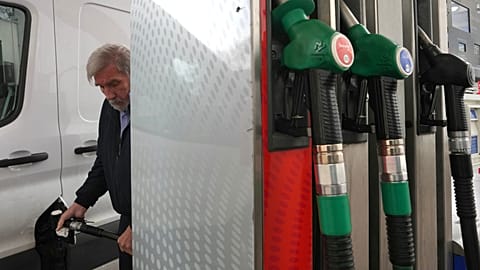
New research from Transport & Environment found that Europeans are set to pay a “geopolitical premium” of an extra €150 million a day as oil prices pass $100 a barrel.
In 2022, which is the last time oil prices exceeded this threshold, Europeans spent an additional €55 billion at the pumps. Across the EU, by mid-2022, diesel prices were up by 45 per cent while petrol also increased by 36 per cent.
Towards the end of June 2022, petrol and diesel prices were above €2 per litre. This means that drivers were spending up to €31 more to fill up a 50-litre tank than they were before the crisis.
“Europe’s 7.7 million electric cars have cut Europe’s oil consumption already by 126,000 barrels a day,” T&E states. “At 2022 fuel prices, European EV drivers would save around €39 million daily.”
A fossil fuel windfall tax
Climate experts have long argued that the ties between fossil fuels and conflict further support the case for home-grown clean energy, such as solar and wind. These green methods keep their cost-effectiveness regardless of geopolitical tension, and aren’t reliant on geographical chokepoints.
Clémence Dubois of 350.org says that wars expose a “deep flaw” in our energy system.
“When prices spike, fossil fuel companies stand ready to cash in while households and businesses struggle,” Dubois adds.
“That’s not just market volatility, it’s the result of governments allowing fossil fuel companies to keep the power to shape the energy system and pass the costs onto everyone else.”
She argues that G7 governments must stop reinforcing this model with fossil fuel tax cuts that help oil bosses inflate their earnings.
“The right response is a strong windfall tax, which should be redirected to households and accelerate the transition to clean energy that reduces our dependence on the very fuels driving both climate disruption and global instability,” she adds.