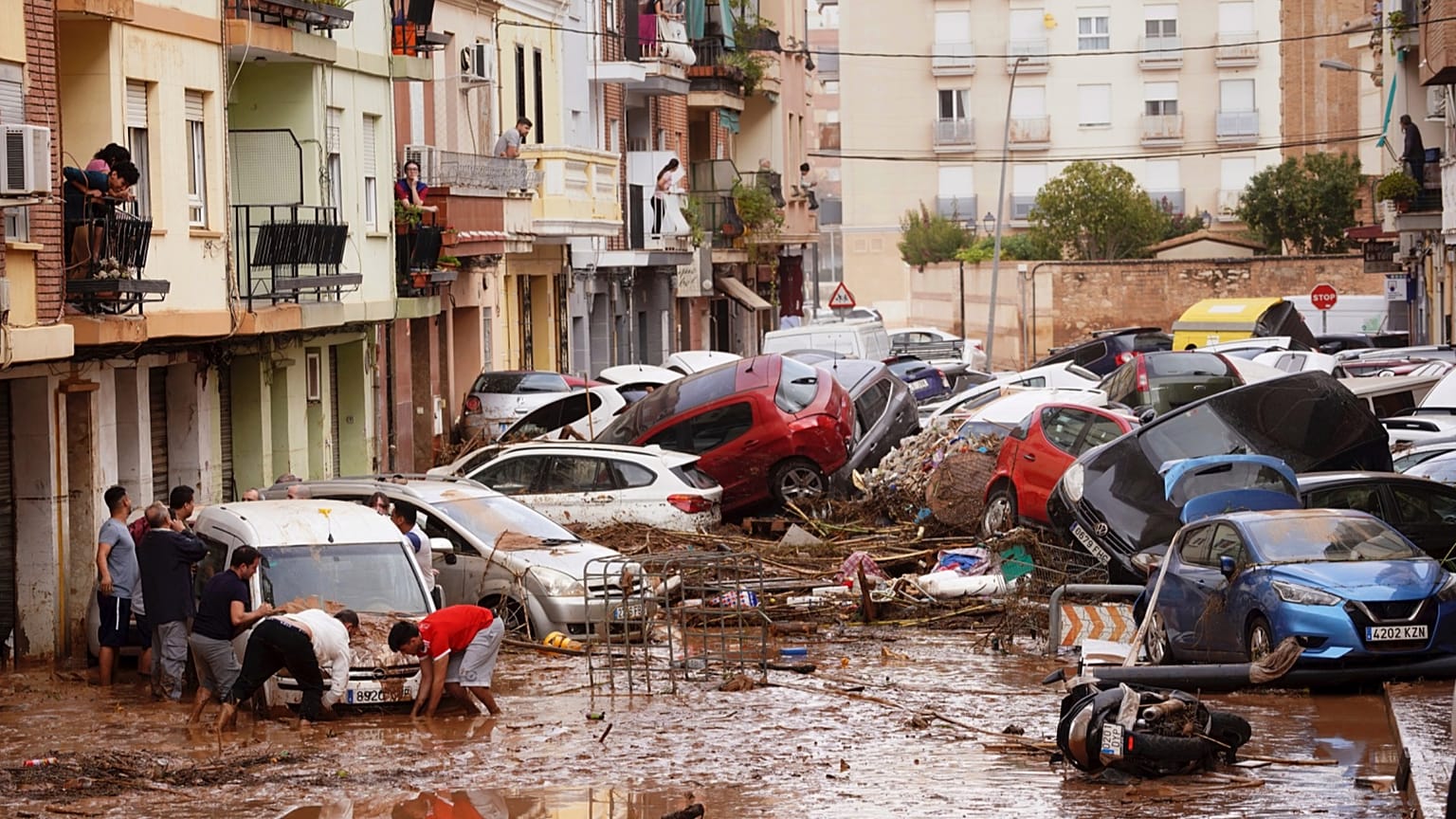













A major study has confirmed that the flash flooding that devastated Valencia in 2024 was ‘intensified’ by human-made climate change.
Spain is still desperately trying to heal its wounds and understand exactly what went wrong almost two years after one of its worst floods in history.
 ADVERTISEMENT
ADVERTISEMENT
ADVERTISEMENT
On 29 October 2024, an intense DANA (Depresión Aislada en Niveles Altos) struck the city of Valencia. This unique weather system forms when a pocket of cold air breaks away from the polar jet stream and settles over the warm Mediterranean.
It sparked catastrophic flash flooding that transformed streets into fast-flowing rivers, overwhelmed infrastructure, damaged houses and even derailed a train.
At least 230 people were killed during the relentless downpour, which experts estimate triggered €29 billion worth of damage. It led to nationwide outrage as officials fumbled to mitigate the disaster.
How Valencia’s floods were fuelled by climate change
Now, a new study, published in the science journal Nature Communications, has found that human-made climate change from burning fossil fuels made Valencia’s flooding worse.
Researchers used simulation models to predict the rate and coverage of rainfall in our warming world compared to hypothetical cooler conditions – assuming that human activities hadn’t baked the planet since the Industrial Revolution.
They concluded that there was a 21 per cent increase in the rainfall rate over a critical six-hour period, a 56 per cent increase in the area with rainfall more than 180 millimetres, and a 19 per cent increase in total rainfall in the Júcar River basin due to rising temperatures.
For every 1℃ rise in air temperature, the atmosphere can hold around seven per cent more moisture, which can lead to more intense and heavy rainfall.
The Mediterranean Sea and the North Atlantic both witnessed record-high temperatures during the summer of 2024, just before the DANA hit Spain. This increased the amount of water vapor in the atmosphere, contributing to the intensity of the storm.
“Although it remains uncertain whether, and in what way, the frequency of such weather systems may change in a warmer climate, comparing simulations of the same storm under cooler and warmer conditions makes it possible to estimate the extent to which the storm was intensified once it had developed,” says climate researcher Markus Donat, who is not an author of the study.
“Overall, this study makes a highly significant contribution to understanding the processes that amplify episodes of heavy rainfall in a warmer climate, pushing them beyond the threshold of an ‘ordinary’ extreme event and into the realm of disaster.”
Climate change adaptation in Spain
Researchers say the study emphasises the “immediate need” to accelerate the development and implementation of climate change adaptation, enhancing urban resilience in response to the “growing threat” of flooding in the Western Mediterranean region.
Spain has already announced its plans to set up a national network of climate shelters in public buildings to offer people refuge from intense heat ahead of this summer.
Shelters will be funded by the government in areas where scorching temperatures impact the country the hardest, including in Catalonia, the Basque Country and Murcia.
The government has also confirmed it will fund flood prevention plans in small towns, with €20 million additionally allocated for fire prevention plans following record-breaking blazes that burnt down large swathes of woodland last year.