






























With the European Union debating a wide restriction of the so-called “forever chemicals”, can European companies work with PFAS-free alternatives? From textiles to batteries and semiconductors, progress is real, but some challenging applications remain.
At Stockholm University, Professor Ian Cousins and his team, working within the EU-funded Horizon 2020 project ZeroPM, have catalogued 530 potential chemical substitutes for PFAS.
 ADVERTISEMENT
ADVERTISEMENT
ADVERTISEMENT
French researcher Romain Figuière, a member of the project, has mapped more than 300 distinct 'services' that PFAS provide across 18 major economic sectors.
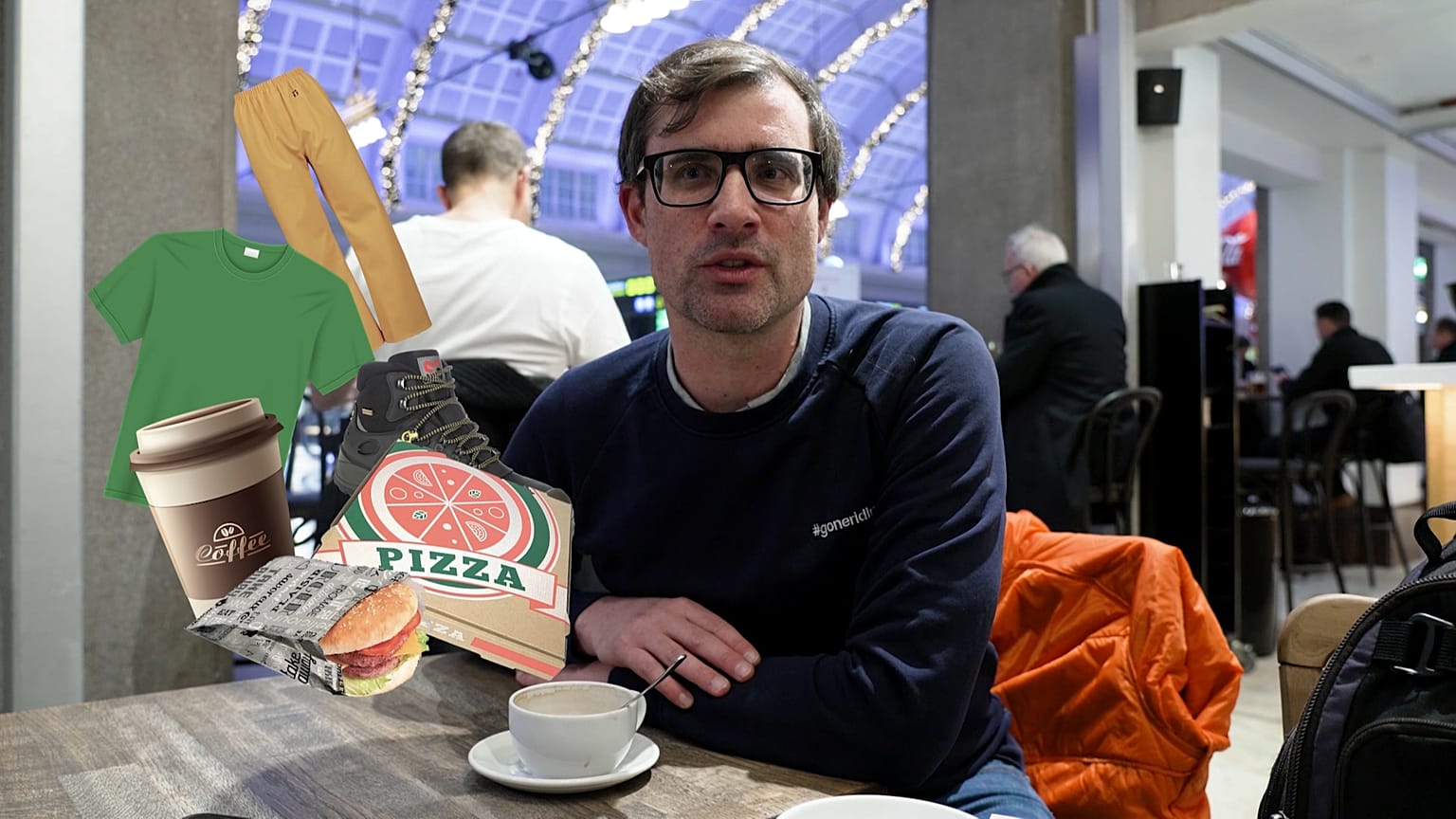
“PFAS applications reach far beyond the well-known examples of non-stick cookware and waterproof outdoor clothing,” Figuière explains. “They are embedded in paints and coatings, metal processing, pharmaceutical manufacturing, automotive components, mobile phones, semiconductors... They are really everywhere.”
Creating a complete overview of PFAS uses and alternatives is proving extremely laborious. Some molecular compositions and applications remain closely guarded industrial secrets.
“More and more alternatives are being developed, but they often stay invisible unless we actively keep track,” Figuière notes. He calls for the establishment of an open, collaborative platform where companies and researchers could record PFAS functions and emerging substitutes.
“A large part of our effort consists in verifying that proposed alternatives are genuinely safer, in order to avoid regrettable substitutions”, Professor Cousins said. “Replacing PFAS with more biodegradable compounds that we don't know well could create new problems.”
A shift already gathering momentum
The Swedish NGO ChemSec has launched an online marketplace that currently lists more than 200 commercially available PFAS alternatives for industrial applications. Businesses can for example find 'Flourine-free water-repellents for textile finishing'' or 'PFAS-free back sheets for solar panels'.
Jonatan Kleimark, Director of Programmes at ChemSec, sees the PFAS-free transition as a major economic opportunity: “Europe’s chemical industry is highly innovative. The rest of the world will need these alternatives. Strong legislation is now essential to move the whole industry.”
Based in Gothenburg and also involved in the ZeroPM project, the NGO supports several companies seeking to reduce or eliminate their use of PFAS, including Ikea, H&M and Marshall.
Marshall, the Stockholm manufacturer of speakers and headphones, has succeeded in removing PFAS from most uses, such as plastics used around cables and batteries, after several years of intensive collaboration with Asian subcontractors.
“They knew this was not just another product requirement for our customers. They felt that we cared about their drinking water and the health of their children”, says sustainability manager Anna Forsgren.
“They ended up finding solutions, and this gave us a lot of energy to never take no for an answer,” she adds.
However, Marshall still faces particularly challenging applications, particularly in batteries and semiconductors. In the run-up to future European regulations, Forsgren regrets a kind of wait-and-see attitude in the industry.
Emphasise on Research and Innovation
Around 10,000 different PFAS substances are estimated to be on the European market. The 'universal' restriction proposal, put forward by Germany, the Netherlands, Denmark, Norway and Sweden, has encountered fierce opposition from segments of industry. Manufacturers warn of risks to competitiveness, jobs and potential delays to both the green and the digital transitions.
The forthcoming regulation is widely expected to include time-limited 'transitioning derogations' for essential uses where no technically or economically viable alternatives currently exist.
Researchers from Stockholm University have so far been unable to identify satisfactory substitutes for roughly 80 critical applications, notably in certain medical devices, digital components and high-performance batteries.
Romain Figuière remains optimistic: “For some sectors, the transition will take longer, but I am convinced that a PFAS-free industry is possible.”
Professor Cousins says he is watching the negotiations closely: “It will be very interesting to see how big the compromise will be and the duration of the derogations. I hope we will maintain the initial ambition of the restriction project.”
Read more