




























Azerbaijan is set to overhaul its national water management system this year, introducing an integrated, digital and climate-adaptive framework.
Azerbaijan is preparing to overhaul its national water management system in 2026, introducing what experts describe as one of the most integrated, climate-smart and digitally enabled water governance frameworks in the wider Caspian region.
 ADVERTISEMENT
ADVERTISEMENT
ADVERTISEMENT
According to environmental and water expert Dr. Rovshan Abbasov, the reform marks a structural shift away from fragmented sectoral management and towards a more unified system that links water security directly with economic planning, climate risk management and urban development.
“Azerbaijan is moving faster than most of its neighbours because water scarcity and transboundary dependence leave little margin for delay,” says Dr. Abbasov. “With per-capita water availability of roughly 1,000 to 1,200 cubic metres per year and around 70 per cent of surface water coming from outside its borders, climate-adaptive governance is no longer optional.”
A single national framework for water governance
Azerbaijan’s approach stands out within the region. Iran and Turkmenistan continue to rely heavily on traditional irrigation systems, groundwater abstraction and legacy infrastructure. Kazakhstan and Russia focus primarily on large-scale river basin and reservoir management.
Azerbaijan’s modernisation combines infrastructure renewal with governance reform and digital tools.
“What differentiates Azerbaijan is not only infrastructure investment, but the way digital monitoring, flood and drought forecasting, and governance reforms are being integrated into a single national framework,” says Dr. Abbasov. “This level of coordination is still largely absent elsewhere in the Caspian region.”
Dr. Abbasov points out that water-abundant countries such as Russia and Kazakhstan have faced less immediate pressure to modernise governance models, while water-scarce countries like Iran remain constrained by outdated irrigation practices and limited climate-adaptive reporting.
Reduced drought risk and urban drainage improvements
The Asian Development Bank (ADB) has reported measurable improvements in Azerbaijan’s performance across water supply, sanitation, environmental safety and climate risk management. These include reduced exposure to drought and strengthened urban drainage systems — particularly important for flood-prone urban areas such as Baku and the Absheron Peninsula.
Dr. Abbasov links these gains directly to Azerbaijan’s reform trajectory. “Moderate scarcity combined with transboundary dependence has acted as a catalyst,” he says. “It has pushed Azerbaijan to adopt climate-smart planning and digital water management tools earlier and more comprehensively than many of its neighbours.”
Urban focus: Baku and the Absheron Peninsula
The reform is closely tied to the State Program for Improving Water Supply, Rainwater and Wastewater Systems in Baku and the Absheron Peninsula (2026–2035), which targets Azerbaijan’s most densely populated and economically vital region.
The program is structured in two stages. The first phase focuses on rehabilitating aging pipelines, reducing water losses, expanding wastewater services, and improving stormwater management to reduce flooding risks.
The second phase emphasises long-term resilience through new reservoirs, pumping stations, and diversified water sources, including treated wastewater reuse and desalination.
“Baku’s complete dependence on interregional water transfers is both costly and vulnerable under climate stress,” Dr. Abbasov explains. “Diversifying sources — especially through desalination and reuse — is essential for long-term urban resilience.”
Strategic desalination and long-term targets
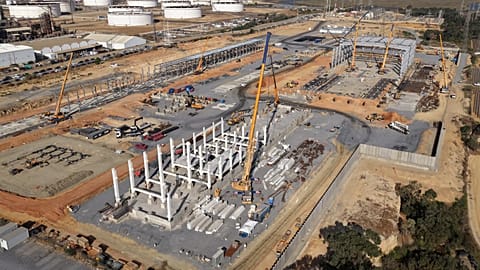
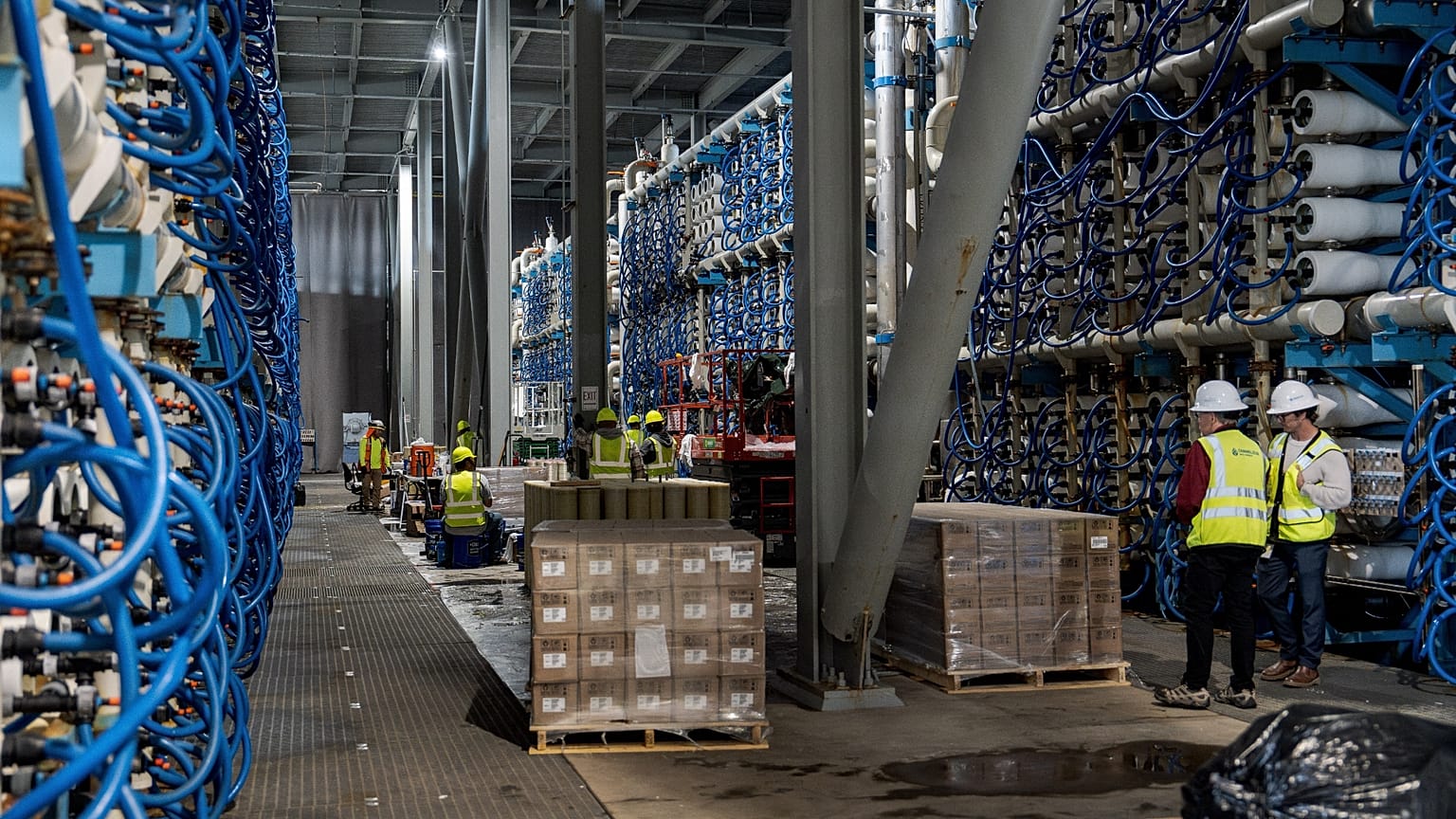
As part of the reform, Azerbaijan is prioritising large-scale seawater desalination on the Absheron Peninsula. A flagship plant expected to be commissioned in 2028 is projected to supply more than 300,000 cubic metres of potable water per day, easing pressure on inland water sources.
The reform sets clear national targets, including 95 per cent continuous water supply coverage, reducing water losses below 20 per cent, full consumer metering, construction of 28 new reservoirs, and the commissioning of nine wastewater treatment plants.
“This is no longer about isolated projects,” Dr. Abbasov says. “It is a systemic transformation aimed at reducing climate risk, restoring ecosystems and securing water for long-term economic growth.”
By addressing both immediate infrastructure deficits and deeper structural vulnerabilities, Azerbaijan is positioning itself as a regional frontrunner in climate-adaptive water governance, with reforms that could serve as a reference point for other water-stressed countries across the Caspian basin.