












A hypertropical climate has not occurred on Earth in at least 10 million years.
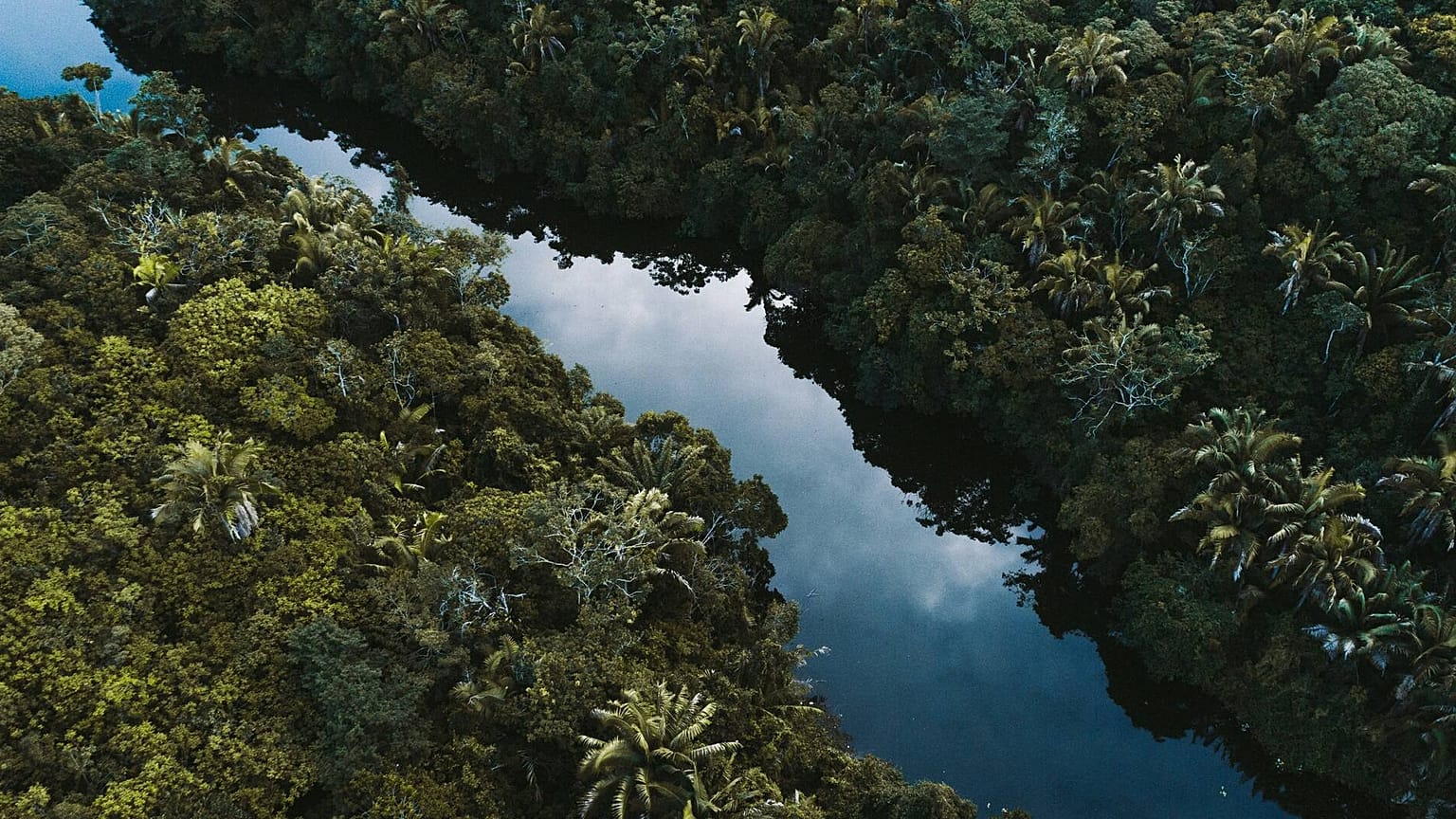
The Amazon rainforest may be developing a climate unseen on Earth for tens of millions of years.
 ADVERTISEMENT
ADVERTISEMENT
ADVERTISEMENT
In a study published this week in Nature, scientists argue the region is nearing what they call a ‘hypertropical’ climate, a hotter, drier and more volatile state that could trigger widespread tree die-offs and weaken one of the planet’s most important carbon sinks.
The study’s authors warn that, without steep cuts to greenhouse gas emissions, the Amazon could experience up to 150 days of ‘hot drought’ conditions – periods of intense dryness worsened by extreme heat – each year by 2100.
That includes during the months that make up the peak of the wet season, such as March, April and May, when extremes like these are virtually unheard of today.
“When these hot droughts occur, that’s the climate we associate with a hypertropical forest,” lead author Jeff Chambers, a professor at the University of California, Berkeley, said in a statement. “It’s beyond the boundary of what we consider a tropical forest now.”
How scientists uncovered the Amazon’s breaking point
Led by researchers at the University of California, Berkeley, the study draws on more than 30 years of temperature, humidity, soil moisture and light-intensity data from research plots north of Manaus in central Brazil.
Sensors installed in tree trunks here allowed the team to observe how trees respond to rising heat and declining moisture. During recent El Niño-driven droughts, the researchers identified two main stress points.
When soil moisture dropped to roughly one-third of normal levels, many trees closed their leaf pores to conserve water. That cut off their ability to absorb carbon dioxide, which they need to build and repair tissue.
Prolonged heat then caused bubbles to form in the sap, disrupting water transport in a process the researchers compared to an embolism – a sudden blockage in a blood vessel that leads to a stroke.
Fast-growing, low wood-density species were especially vulnerable, dying in greater numbers than high wood-density trees, the researchers said.
“That implies that secondary forests might be more vulnerable … because secondary forests have a larger fraction of these types of trees,” said Chambers. These are forests that have naturally regenerated following damage caused by humans or natural phenomena.
The researchers found the same warning signs across multiple sites and droughts, too. That means the Amazon likely reacts to heat and dryness in a similar, predictable way.
Although annual tree mortality in the Amazon is currently just above 1 per cent, the researchers estimate it could rise to about 1.55 per cent by 2100. Though it may seem like a small change, an increase of just half a percentage point across a forest the size of the Amazon represents a massive number of lost trees, Chambers added.
What is a ‘hypertropical’ climate, and why does it matter?
The authors define the hypertropics as regions hotterthan 99 per cent of historical tropical climates and marked by far more frequent and intense droughts.
Such a climate has no equal in modern history, they say. It was only found in the tropics when the Earth was much hotter between 10 and 40 million years ago.
Unlike today’s tropical zones, where temperatures remain relatively stable and rainfall cycles support dense vegetation year-round, a hypertropical climate would bring about extreme heat, extended dry seasons and the potential for powerful storms.
The change could have dire consequences that register far beyond the Amazon.
Tropical forests absorb more of our carbon than any other ecosystem. But when they come under stress, they take up much less – in especially dry years, the Amazon has even released more carbon than it absorbed, the authors noted.
As global temperatures keep rising, any drop in the Amazon’s ability to store carbon could speed up warming worldwide. In fact, it may even contribute to it. In recent years, parts of some rainforests have endured severe fire seasons driven by heat and drought, leading them to release large amounts of carbon and stress their ecosystems.
What is happening in the Amazon could easily impact other forests, too. The authors make it clear that rainforests in western Africa and Southeast Asia may face similar risks as temperatures rise, depending on the speed and scale of emission reductions.
“It all depends on what we do,” Chambers said.
“If we’re just going to emit greenhouse gases as much as we want, without any control, then we’re going to create this hypertropical climate sooner.”