




























Scholars are still uncovering works by the Granada poet and playwright, shot 90 years ago for his politics and sexuality. Two biopics about him are due between 2026 and 2027.
Federico García Lorca chose to devote a few minutes to love from his Huerta de San Vicente during the uprising of 18 July 1936, once the news that would change Spain's recent history had already spread across the peninsula and sealed the fate, a month later, of the most universal of Andalusian poets.
 ADVERTISEMENT
ADVERTISEMENT
ADVERTISEMENT
The recipient of these lines is believed to have been Juan Ramírez de Lucas, a journalist and art critic from Albacete. De Lucas, who died in 2010 and was at the time still a student, may have been the lover who inspired Lorca's 'Sonnets of Dark Love', although for obvious reasons he remained discreet about this, even after the end of the Franco dictatorship.
The letter between the 38-year-old artist and the student, barely 16, was kept by Ramírez de Lucas for 70 years. Shortly before he died, he handed his siblings a collection of drawings, letters and a diary about his relationship with the artist, among which the letter came to light. The experts who examined the material after it was made public in 2012 consider this to be the last letter written by Lorca before his arrest and execution at an as yet unidentified spot between the municipalities of Víznar and Alfacar.
Ninety years have passed since these events, yet manuscripts and works by the Andalusian are still being recovered, even though his body, like that of so many other Spaniards, has yet to be found. The Ministry of Territorial Policy and Democratic Memory has registered more than 3,000 mass graves in which victims' associations estimate that between 114,000 and 130,000 people still lie unexhumed.
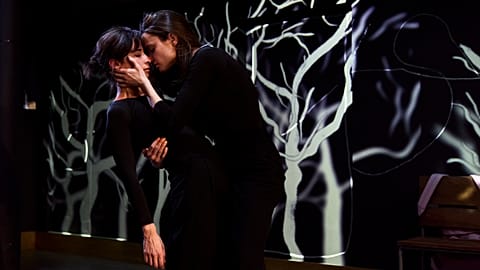
Another example of this cultural recovery is a poem about time, one of the themes that have survived to this day as a Lorca cliché thanks to the version Camarón made of an extract from the play "Así que pasen cinco años" and which Los Javis have now reworked for the trailer of a new feature film inspired by Lorca's story, his lovers and his universe, "La Bola Negra", recently awarded the Best Director Prize at the Cannes Film Festival.
As well as overseeing the restoration of the house in the Nasrid jewel of Granada where the poet lived as a child between 1900 and 1916, a ground-floor flat at 50 Acera del Darro, the flamenco singer Miguel Poveda managed to acquire a manuscript on the back of which appears an unpublished poem by Lorca, whose handwriting has been authenticated by Lorca scholar Pepa Merlo.
Both Merlo and Poveda have written "Las cosas del otro lado. Lo inédito en Federico García Lorca", published in April this year, to examine the latest discoveries concerning the artist's literary universe, which will become part of the catalogue of the newly reopened cultural centre housed in what was his childhood home.
A second feature film about Lorca, by director Fernando Franco, is due for release in 2027. It will reconstruct precisely the final weeks of Federico's life, from his escape from Madrid after the uprising to his execution in Granada. It will be several months before we know whether the film will devote a few minutes to paying tribute to the letter addressed to Ramírez De Lucas, which never received a reply.