















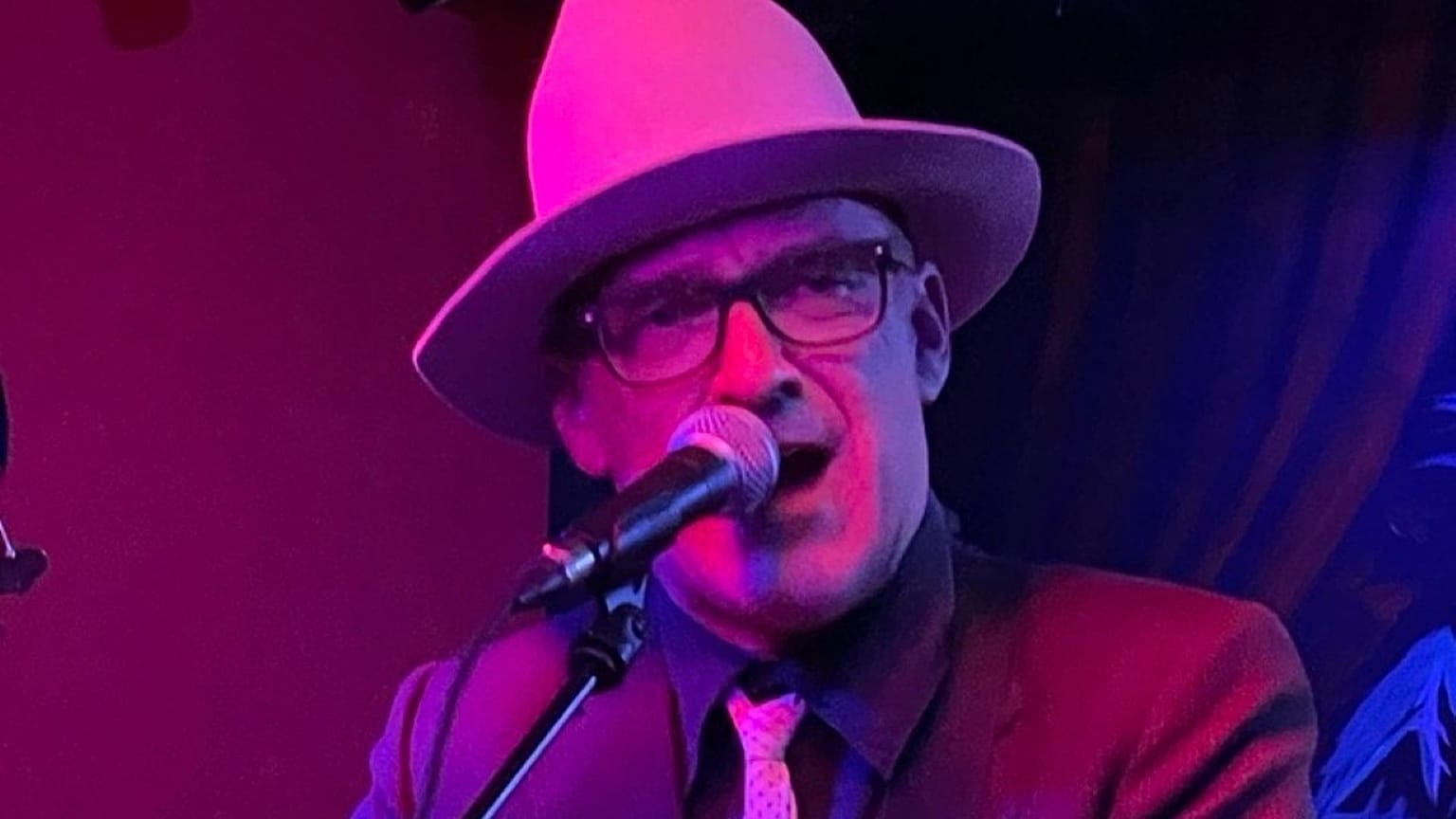













Víctor Coyote, stage name of Víctor María Aparicio Abundancia, died on Thursday in Galicia in a cycling accident. He was 67 and left behind a four-decade career spanning music, comics, film and music videos.
Few labels ever really fitted Víctor Coyote, and that was always his best calling card. Born in Tui in 1958, he died this Thursday in a cycling accident, leaving behind a career that began in late-seventies punk and ended, close to the age of seventy, without him ever stopping reinventing himself.
 ADVERTISEMENT
ADVERTISEMENT
ADVERTISEMENT
His musical career began in 1979 with the founding of Los Coyotes, the band he fronted together with Fernando Gilabert and from which he took his stage name. The group was born out of psychobilly, but soon shifted towards Latin rhythms, becoming pioneers of that sonic crossover in Spain long before others popularised it.
Their first album, 'Mujer y sentimiento' (1985), put them on the map of the movida, a scene straddling Vigo and Madrid in which Víctor Coyote was one of the most restless figures. The band changed its name in 1988 to Los Coyotes de Víctor Abundancia and released one of its most memorable tracks, 'Esta noche me voy a bailar', before finally splitting up in 1992.
Videos, comics and Xabarín Clun
The band’s break-up did not mean a pause but a change of format. Víctor Coyote had already spent years combining music with comics, contributing to the magazine 'Madriz' between 1984 and 1987, and he threw himself fully into directing music videos and drawing.
He directed the video for 'Milonga' by Los Rodríguez, and for 'Carmiña Vacaloura', a song that was part of the soundtrack of Xabarín Club and is still lodged in the memories of much of a generation of Galicians. At the same time he published comic monographs such as 'Come yuca' (1998) and took part in collective publications that confirmed his place on Spain’s graphic scene.
A solo career impossible to pigeonhole
In 1995 he returned to the studio on his own with 'Lo bueno, dentro, disco', from which came 'Jaguarundi', that year’s theme tune for the Vuelta a España. From then on he kept releasing music, drawing and filming, never tying himself to a single medium.
In a recent interview he described his work as that of someone with "more eye than ear", and in 2024, when presenting his comic 'Si te falta calle', he explained that humour was an inevitable ingredient in his work, though never the only one: to reflect life, he said, always requires a bit of it.
Víctor Coyote did not stop working or appearing in public in his final years. Last May he acted as a guide to his own trajectory in an interview, and he was a leading figure at the Festival de Cans, revisiting eight of his most remembered works. His death this Thursday, in a cycling accident, brings to an abrupt close a career that, right to the end, refused to stay still in a single line of work.