
















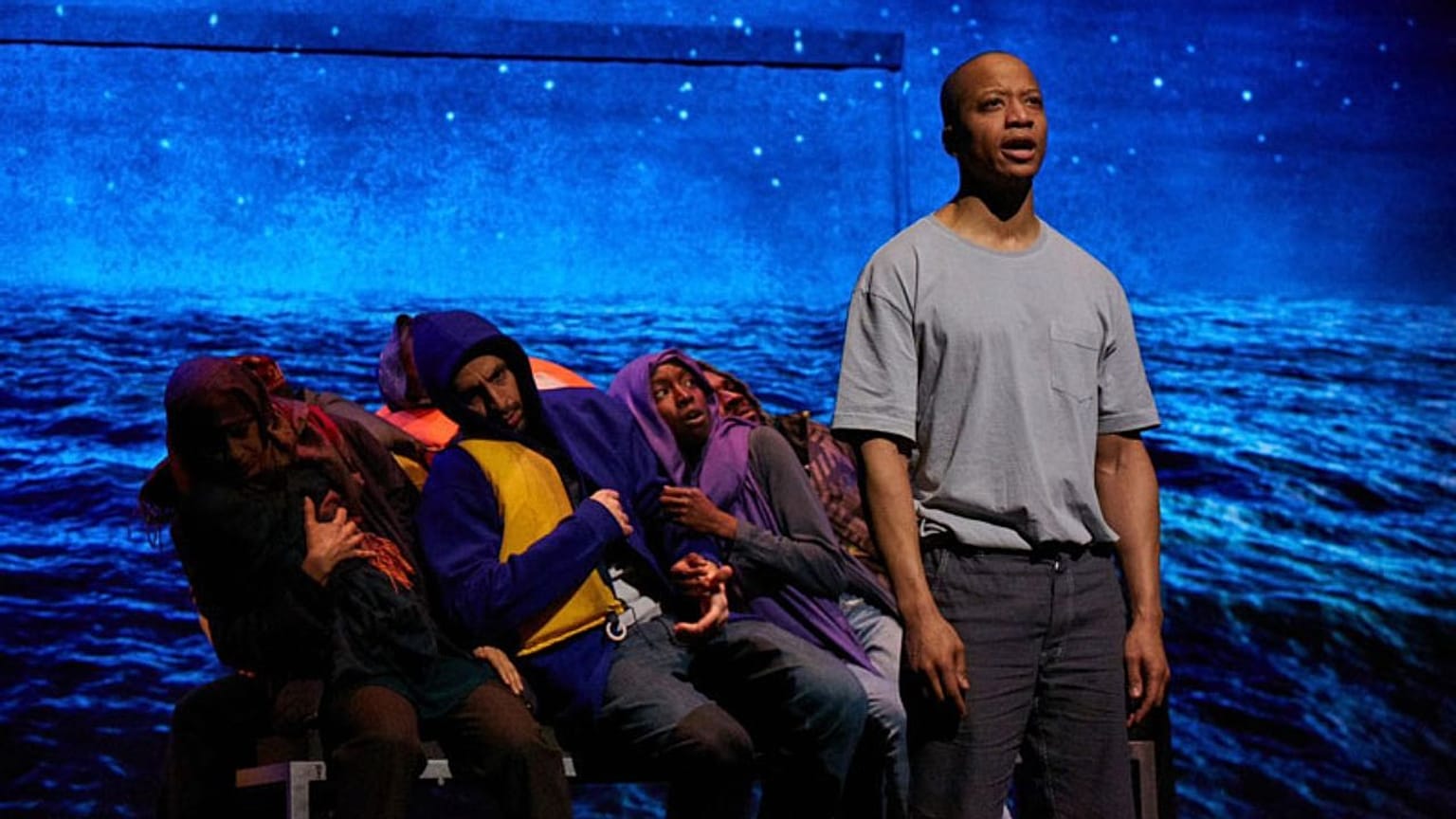













A mayor's decision to cancel a play about refugees has caused uproar in France and raised concerns about the far-right's grip on culture.
Hundreds of people gathered on Saturday in front of the theatre of Castres, in southern France, despite the scorching heat. They were not waiting in line to watch a play but rather protesting the cancellation of one.
 ADVERTISEMENT
ADVERTISEMENT
ADVERTISEMENT
The reason for this demonstration is a controversy opposing the newly-elected mayor of Castres and one of France’s most successful current playwrights.
On 10 June, Alexis Michalik took both the theatre industry and the public by surprise when he announced that a February 2027 performance of his play "Passeport" in Castres had been cancelled.
The writer and director said on Instagram that the decision was made “last minute, at the request of the city’s newly-elected RN [National Rally, France’s far-right party] officials.”
First created in 2024, "Passeport" follows Issa, a young man from Eritrea suffering from amnesia in a refugee camp in northern France, who goes on a journey to obtain a residence permit. The play tells “stories of exile, identity, integration and exchange,” themes which did not delight Castres mayor Florian Azéma.
The elected official pulled the show from the city’s 2026-2027 cultural programme, a choice he claimed to have “every right” to make.
“These decisions had been made under the previous majority, and I had complete freedom to reverse them,” Azéma told the AFP news agency. The far-right mayor denounced a play that “promotes illegal immigrants and [presents] a rather peculiar portrayal of the police, obviously that does not reflect what I stood for during the [mayoral] race.”
Azéma’s move comes amid rising questions over the far-right’s handling of culture in France. In recent months, members of the publishing and film industries have spoken out against conservative billionaire Vincent Bolloré’s growing stranglehold on culture.
Musicians have also voiced their concerns, with an op-ed published last week in French magazine Politis to defend “creative freedom” and call for “resistance against the far-right.”
This year’s municipal elections especially put the spotlight on the issue locally, as the National Rally and its allies won 63 additional cities in 2026 — including Castres.
“I’m not just worried about ‘Passeport’,” Michalik wrote on Instagram. “I’m worried about all the works, all the artists and all the programme curators who might face the same fate tomorrow.”
The playwright has received wide support, including from Culture Minister Catherine Pégard, who called artistic freedom “a cornerstone of our democratic society.”
“I condemn the cancellation of this show on the sole grounds that its subject matter does not align with the political views of the mayor of Castres,” she told the National Assembly on 16 June.
The director of France's leading and celebrated theatre event Festival d’Avignon, Tiago Rodrigues, also expressed his “solidarity” with Michalik and reiterated his claim that he “would not work with an RN elected representative.”
Although “Passeport” won’t be showing in Castres, its yearslong run in the Parisian Théâtre de la Renaissance continues, with the theatre even offering a 50% discount for people born or living in Castres.
The socialist mayor of Lomme, in northern France, also offered to schedule the play in December. The show will even come back to the south of the country for a special performance in January.
“The role of an elected representative is not to decide what the people are allowed to see or think,” the socialist president of the southern Tarn department, Christophe Ramond, said on X. “Culture must never be held hostage by politicians.”